
What Republicans won’t tell you about the threat of climate change
Jackson, the capital of Mississippi, is without clean running water in 21st century America. A power grid in Texas seems to get overwhelmed by wild short-term weather shifts, which has led to tragedies such as poor children freezing to death even as longer-term climate changes have led to discoveries of dinosaur tracks that were once hidden by bodies of water that are drying up fast. Historic flooding in Pakistan has claimed the lives of more than 1,100 people and been described as a “climate disaster of biblical proportions.” China is experiencing the worst heatwave in human history. A “heat belt” across the U.S. means tens of millions of Americans are expected to start experiencing an alarming number of 125-degree heat index days over the next few decades. And those of us on the Carolina coast are always aware of the threat of hurricanes even during periods of relative calm because though previous storms have left decades of ecological scars, they are expected to become more frequent and fiercer.
No matter if we can draw a direct line from climate change to each instance of extreme weather, we know green houses gasses reached a new record in 2021. We know that as these changes continue, the most vulnerable among us will shoulder the greatest burden. They have fewer resources to move out of harm’s way and are relegated to areas in which the infrastructure has been the most neglected. The residents of Jackson are suffering not only from floodwaters but a long-time refusal of state officials to heed warnings about potential disaster, even as they turned down federal help. Same with Texas and its electrical grid, where the rich and well-connected, such as Sen. Ted Cruz, can take their families to Cancun on a moment’s notice while parents such as those of 11-year-old Cristian Pineda have to watch their children freeze to death in mobile homes.
And yet, politicians have been able to convince a sufficient number of struggling Americans that the greater threat is higher taxes on the wealthy or “big government.” Or we all get distracted by momentary scares, like the non-fatal shark bites recently experienced by visitors in Myrtle Beach, S.C., the kind of thing that remains as infrequent as people being struck by lightning despite similar shark headlines in Myrtle Beach a decade ago.
It’s why a man like Herschel Walker, a Georgia Republican, can oppose the Inflation Reduction Act, this nation’s most significant federal-level attempt to tackle climate change, by making the absurd claim that we already have enough trees and remain in a dead-heat with an obviously more-qualified opponent for a seat in the U.S. Senate.
“They continue to try to fool you that they are helping you out. But they’re not,” said Walker, according to the Atlanta-Journal Constitution. “Because a lot of money it’s going to trees. Don’t we have enough trees around here?”
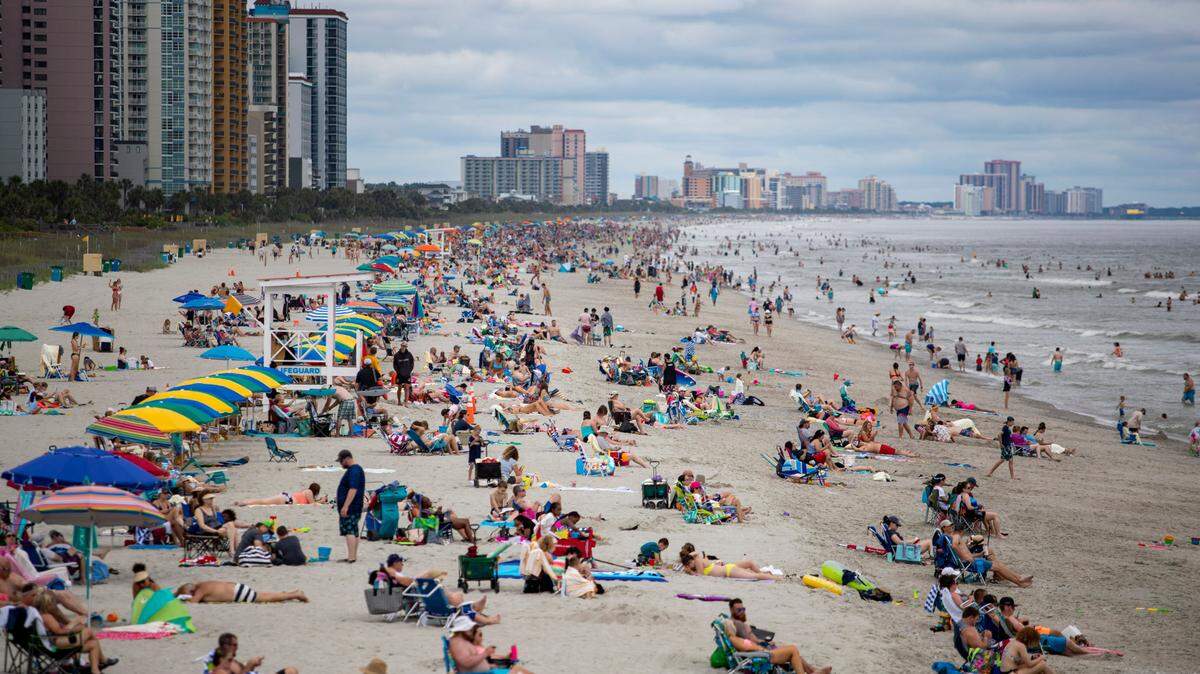
He also bizarrely claimed that China’s “bad air” will float over here and our “good air” might decide to float over to China. Here’s what he won’t tell you, that while climate disasters will always hurt the vulnerable most severely, they will eventually undermine entire economies, which include the rich and poor alike. An estimated 20 million people flock to the Myrtle Beach area every year largely between Memorial Day and Labor Day. The amusement-park type amusements and ocean are real draws. But if the stable-subtropical weather we’ve long benefited from becomes less reliable, everything we’ve grown accustomed to would be undermined. That’s why we can’t afford to ignore the clear early-warning signs from Jackson, Mississippi or Pakistan. Too much is at stake.
This story was originally published September 8, 2022 at 11:00 AM.