
Lockdowns like the one we just had at North Meck are terrifying
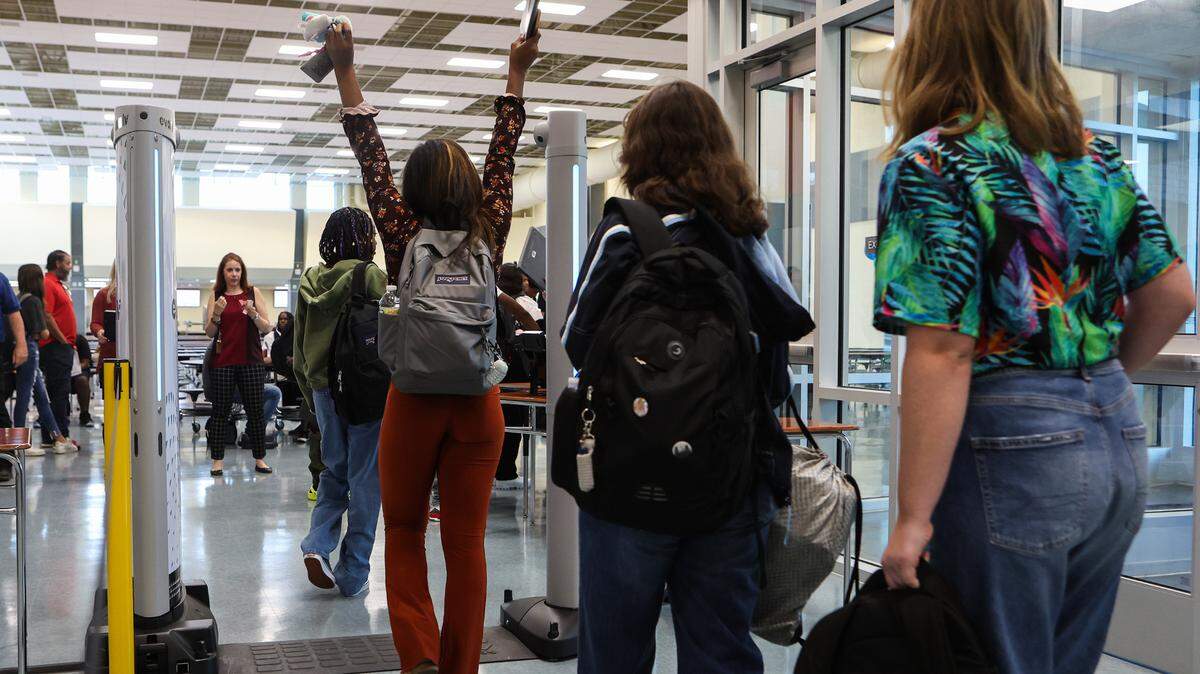
I’m a student at North Mecklenburg High School in Huntersville, and on Sept. 13 my classmates and I were subjected to a form of psychological torment produced by several converging factors that have made school lockdowns longer-lasting, more terrifying, and simultaneously more common.
At approximately 2 p.m. Tuesday, my school received an anonymous threat. School officials notified police and took the action required to protect students and staff.
While eventually “no credible threat was found” at North Meck, lockdown procedures — and their oft-ignored effects — are an important consequence of gun violence in American schools.
To initiate a lockdown, the school simply makes an announcement over the public address system. Neither students nor staff receive any official information about the cause of the lockdown.
Without any of the crucial information needed to make rational decisions about what actions to take to keep ourselves safe, students and staff carry out lockdown procedures to shelter in place, regardless of the threat.
Many students — myself included — often spend the first five minutes of a lockdown unsure about whether the procedure itself is a drill. Once the first five minutes pass, reality slowly sets in. Anxiety comes with it.

Students like me become increasingly concerned about our situation as time passes and a series of inevitable thoughts cross our minds: “What if there’s an active shooter?” “What if today is the day I die?” We scramble to text our families: “if anything happens I love you.”
These thoughts, and others like them, are exemplary of the psychological reality that American children must confront each day in our schools. As school shootings only accelerate around the country, — and our culture normalizes them, reducing them to an unchanging constant of everyday life — we are forced to spend more of our time worrying about the possibility of a shooting happening at our school.
The National Association of School Psychologists highlights the importance of mitigating these psychological impacts, saying “...lockdowns may produce anxiety, stress, and traumatic symptoms in some students or staff.” The experts at NASP emphasize providing “...as much clear, direct information as possible.”
By providing this information to staff, school officials could increase the likelihood of safe, rational decision-making and reduce the psychological stress placed on students.
As any lockdown stretches past the half-hour mark, rumors begin flying among students, unimpeded due to the lack of any official information. Tuesday, several rumors spread like wildfire. At any given point, I could find classmates around me convinced there had been a stabbing across the street, that a student had brought a weapon to school, or that a student had been taken into custody on campus.
It goes without saying that these rumors have the potential to be dangerous. The spread of misinformation at a time where it is potentially crucial to make an informed decision is something that could be addressed by improving communication between officials and staff.
After the lockdown was finally lifted at 3:30 p.m. — almost 90 minutes after it was issued — local news outlets began reporting that the threat to our school was “not credible.” But our fear, stress, and anxiety most certainly were real and justified.
As lockdowns become more frequent, schools risk becoming centers of terror instead of beacons of knowledge.
The central problem, of course, is the persistent gun epidemic in America. A year ago I wrote an op-ed about guns in schools which seems to have gone unanswered by lawmakers. I repeat my plea from that: Legislators and other powerful individuals must take action to keep children safe in our schools. There is not a single moment to lose.