
It’s been 10 years since UNC President Bill Friday died. UNC could use him today.
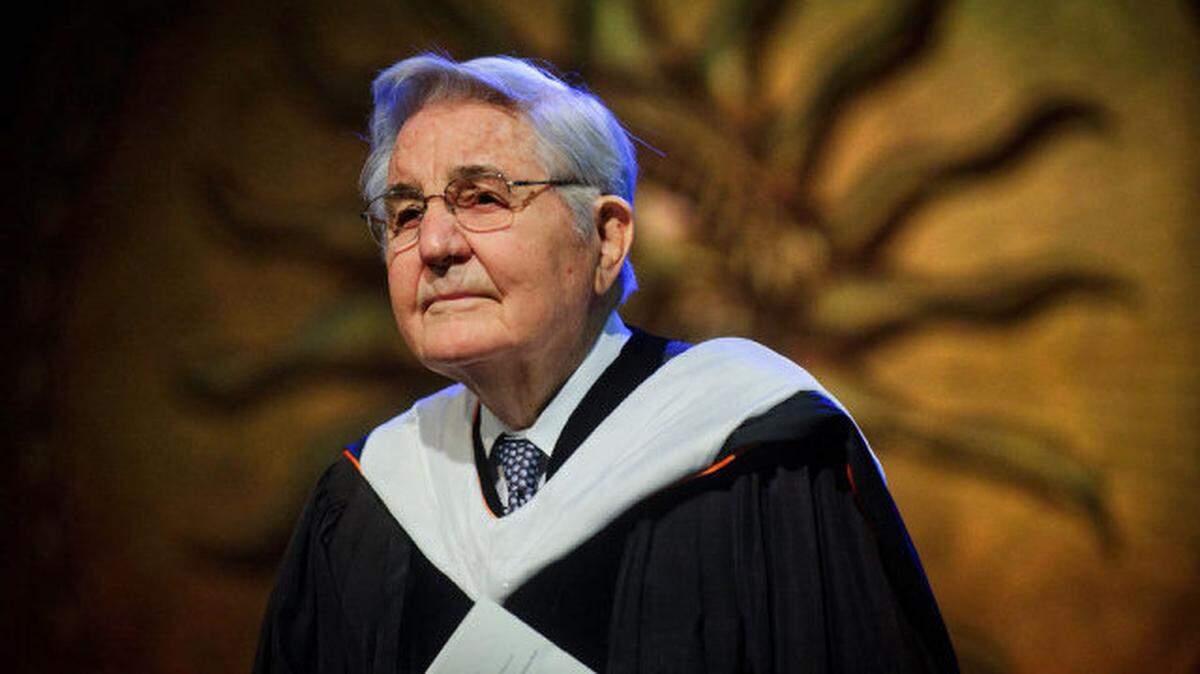
Even now, his name is invoked in every exchange from gentle conversations to heated debate. William “Bill” Friday carried influence like no other North Carolinian of the 20th century, and with it a respect of generations of North Carolinians, primarily because of his 30-year tenure as president of what is now called the University of North Carolina System and his long-running television show, “North Carolina People.”
Wednesday, Oct. 12, 2022, marks the 10th anniversary of his death at 92. Even in his last days, he was planning the next editions of the TV show and talking with chancellors, professors and students who sought his advice.
Today, the university he shaped is struggling with a contentious General Assembly, with rivalries among its member institutions, and with free speech issues at the core of what the UNC System is all about. More than one UNC System chancellor has quietly said to herself or himself, “I wish I could talk to Bill Friday….”
I claim no definitive insight, but my father worked at Friday’s right hand for 15 years and was by his side as a friend since the early 1950s, before Friday was named president in 1956. It was my good fortune to have the UNC president as a mentor and really, as a second dad for 10 years after my father’s death.
What would he do in the midst of the turbulence now surrounding the UNC System?
He had great persuasive powers and an ability to reason even with those who were regular critics of the university. He and the late U.S. Sen. Jesse Helms were both children of the Depression and the N.C. foothills, and Helms, of course, regularly criticized the university’s liberal faculty members and students. But Bill Friday meant something to him, and Friday understood Helms because they had shared some common challenges. Did either turn the other around on fundamental questions? No, but they listened to each other.
The same was true with Friday and his dealings with the General Assembly. The infamous “Speaker Ban Law” of the early 1960s banning Communists from speaking on UNC campuses was abhorrent to Friday and Gov. Terry Sanford, but they didn’t answer bombast with bombast. The law faded, thanks to their efforts and some righteous allies.
Friday fought for racial equality throughout his public and private life, and even before the Historically Black Colleges and Universities were in the UNC fold, he helped boost their funding behind the scenes. That comes not from idle speculation, or from Friday, but from a former chancellor of one of the HBCUs who told me that story in the 1970s.
Friday took some bumps and bruises along the way — in 30 years it would have been a sign of weakness if he hadn’t — but his reputation prevails today not because of his political acumen or his fundraising skill or his adept management of a complicated and then-new system of higher education. Sure, he was good at all those things.
But the core, the heart of his success was the heart itself. Time and again, I saw this scene with William Friday: He’d be at a public function, or at a campus restaurant, or at an athletic event, and a student would walk up to him and nervously make an introduction. Friday would fix a laser focus on the youngster and ask him or her questions about family, about courses. Then, a donor/trustee/mover/shaker would approach and expect attention. Bill Friday would only glance at the person and say, firmly, “I’m talking to this young student now.” And his eyes were back on that kid.
Sometimes, it’s the little stories that define greatness.