
My son’s answer was suicide. I know the pain of NCSU students and families.
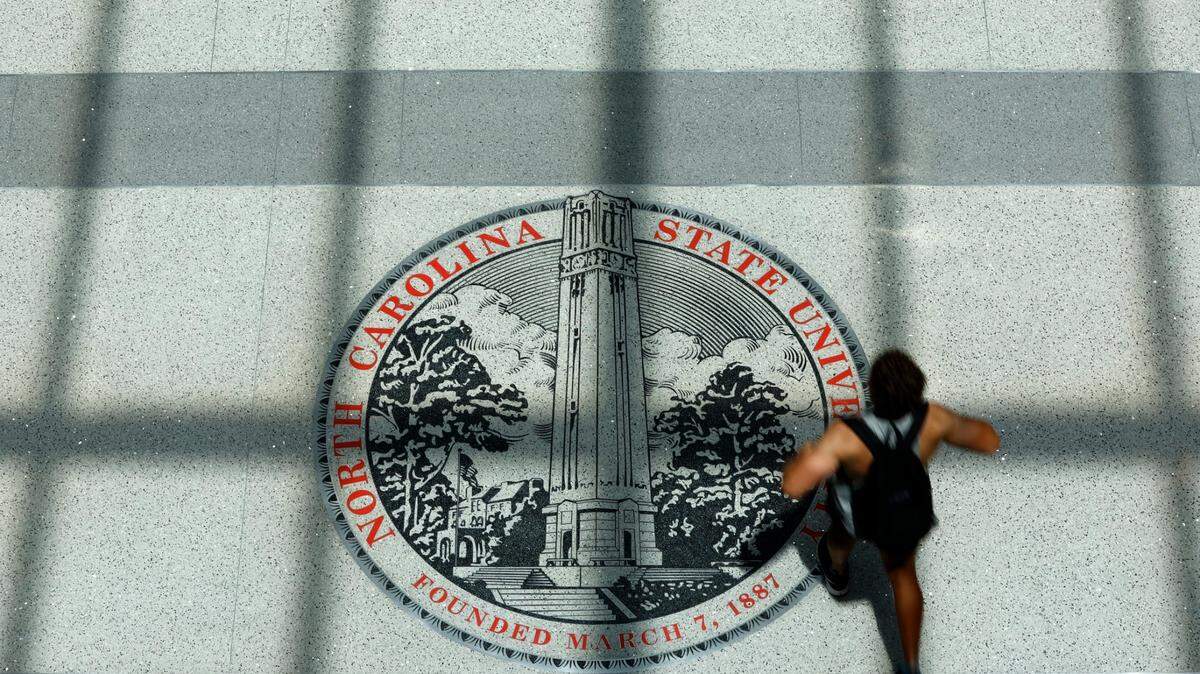
Three suicides at N.C. State University this semester are sad and sobering news. The student population is huge — over 37,000 — so three may seem small. But each death leaves family and friends devastated, wondering what they could have done.
I connect with these families and the university. I lost my son, Charlie, to suicide in 2007. He was 28. And I spent 35 years in the English department, teaching thousands of students.
I learned a lot about their hopes, fears, disappointments and achievements. There is nothing more valuable than the stories each student can tell. Now, these deaths represent three stories that had only the opening chapters.
Privacy rules prevent the university from saying anything about who these students were, and that’s a shame. It is hard to share sorrow when we know the students only as a compiled number.
Charlie was a gentle soul, handsome, musical and very funny. A terrible addiction drove him to his end. He had spent 10 months behind bars for addiction-related crimes, and vowed he’d never return. I’m sure that — and the constant drumbeat of always needing more heroin — drove him to what seemed a logical cure for his deep, penetrating pain.
How could suicide seem a reasonable solution for these NCSU students? We should resolve to make these irretrievable solutions as rare as possible. To start, let’s lose the phrase “committed suicide.” It sounds too much like the language of crime and arrest, instead of what it is — the hopeless end to a person’s dispiriting world.
Charlie died in July, and the next semester began in August. I had a quandary — stay miserable at home, or head back to school and try to carry on. I decided to teach, and it was one of the best decisions of my life.
I suspected that having students around me would be a balm, a reassurance that the world had not gone completely topsy-turvy. When I reminisce about that time, I think of those 23 students as the class that saved me.
I did not mention Charlie until the final meeting, because I did not want to add a vibe of weirdness. At the end of that last class, I said I had something to share. Without saying more, I put a copy of Charlie’s obituary on the projector.
“Read this,” I said.
One student, an older woman, burst into tears, and then several others followed. I spoke about Charlie and his struggles. I encouraged them to seek therapy for their own issues, and not to be afraid or embarrassed. I referred to my own therapy.
A cloud of emotion filled the room, and I felt a buzz of understanding. As students began to file out of the room, one young man walked up and shook my hand. He was not an outstanding student, but the look in his eyes said a lot. Was he depressed, too? More students shook my hand, most wordlessly, and some of the young women gave me a hug.
In the next weeks I heard from two students that they had decided to seek therapy for personal problems. Ten years later I was surprised to hear from another student that my words nudged her to get help, which got her back on track, married and in a good job.
Even in 2007, long before today’s acid politics have threatened democracy and COVID has threatened our lives, students were vulnerable. Today it’s harder for students to keep an even emotional keel while facing the stresses of classes, family, health and the future. If my students 15 years ago needed my words to push them toward self-care, then students today need that encouragement even more.
The three suicides are only the tip of a sobering iceberg of depression and worry, and the university must not falter in responding. In a perfect world I’d send therapists and social workers to meet with every single NCSU class. Making help available is good, but even better would be to put it in the students’ hands.
The university is at a critical point, and its actions today will determine whether we have those valuable, human stories tomorrow.
Get help: The National Suicide Prevention Lifeline is a hotline for individuals in crisis or for those looking to help someone else. To speak with someone, dial 988.
This story was originally published November 2, 2022 at 11:18 AM.