‘Insulting as can be’: In this NC House race, Republican campaign ads reek of sexism
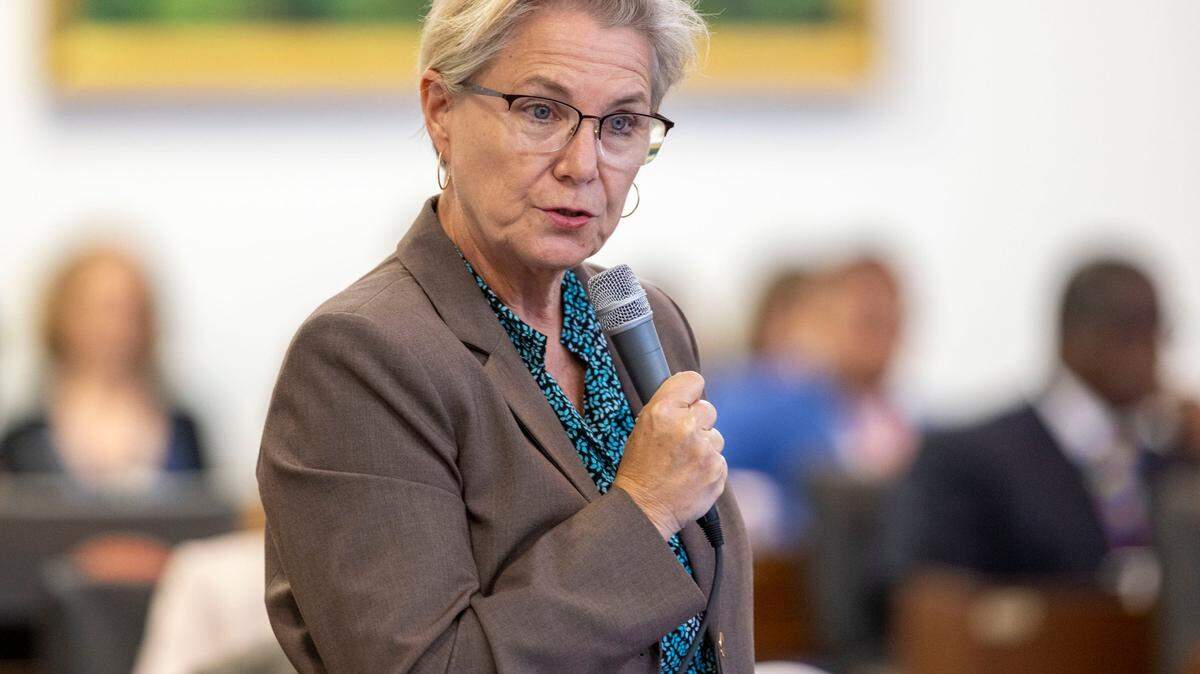
The Republican playbook for winning in 2022 seems to go a little bit like this: first, blame your Democratic opponents for rising inflation. Next, accuse them of wanting to defund the police. And finally, if all else fails, throw in a healthy dose of good old-fashioned sexism.
At least, that’s the case in New Hanover County, where Democratic Rep. Deb Butler is seeking re-election. Instead of making his campaign about policy, Republican John Hinnant has targeted Butler’s personality — specifically through ads that paint Butler as “disagreeable.”
“When Butler doesn’t get her way, she screams across the aisle,” a voice states in the ad. It includes footage that went viral in 2019, when Butler rose in protest after House Republicans held a surprise vote to override Gov. Roy Cooper’s veto of the state budget despite telling Democrats there would be no votes that day.
“Here’s Deb Butler smiling for the camera,” a second ad released this week says. The ad then cuts to a clip of Butler’s 2019 speech on the House floor, adding, “Here’s Deb Butler when you’re not watching.” Both ads were shared by Republicans on social media with the tagline “Disagreeable Deb Butler.”
“I’m a 61-year-old attorney and legislator who is the chief whip in the North Carolina House, and to suggest I’m some sort of unhinged, crazy woman is just insulting as can be,” Butler told me.
On Twitter, Hinnant has invoked similar stereotypes. In one tweet, Hinnant shared a meme depicting a mock Halloween costume for an “unpopular politician,” with Butler’s face on the packaging.
“Earlier this evening, my opponent was apparently easily triggered when kids showed up at her home to trick or treat in this costume. Apparently she threw all the candy at them - LOL,” Hinnant wrote in the tweet. (No, that didn’t happen, and no, it’s not funny.) In another tweet, Hinnant refers to Butler’s “lack of emotional control.”
Let’s just call this what it is: misogyny. It is, after all, the oldest trick in the book: women are constantly told we’re too emotional, that we’re crazy, that we’re overreacting. We’re told to smile more, talk less and, overall, just be a little more agreeable.
This brand of sexism is especially prevalent in politics. Female candidates — and especially women of color — are measured against an unfair and elusive standard of “likability.” We debate whether they’re actually “electable.” They’re shrill, too ambitious, maybe; they’re stiff and inauthentic. They don’t smile enough — or they smile too much.
“I’m an articulate, well-spoken critic of theirs. And they don’t like it,” Butler said. “They don’t want this voice to be heard. They’d like to silence it.”
And that’s exactly the goal: to shame women into silence. When a man calls a woman disagreeable, the implication is that she should be quiet. That she should be compliant. It’s old. It’s tired. And, frankly, it’s just lazy.
It’s easy to see how sexism seeps into the public discourse in demeaning ways. Just this week, former North Carolina Supreme Court Justice Bob Orr mocked Sarah Huckabee Sanders’ choice of clothing on Twitter, saying her dress looked like it came from a “Walmart sales rack.”
More famously, a Republican congressman called Rep. Alexandria Ocasio-Cortez a “f–----- b-tch.” Donald Trump told Hillary Clinton she was a “nasty woman.” Elizabeth Warren was “angry,” Kamala Harris “condescending.” And guess what? The only sin they were guilty of was daring to speak up, to take up space, to do all the things that men do with impunity.
These moments don’t stick out because they’re rare. They stick out because they’re relatable — as women, we all know how it feels to be told we exist too much.
“Do you think for one moment, if John Hinnant had a male opponent, that he would call him disagreeable? Would he say that he is emotionally out of control? Absolutely not,” Butler said. “This is a dog whistle for misogynistic behavior. And every woman, I think, will understand that.”
Yes. We do.
This story was originally published November 5, 2022 at 5:00 AM.