
On ‘stolen election’ claims, President Biden has a hypocrisy problem
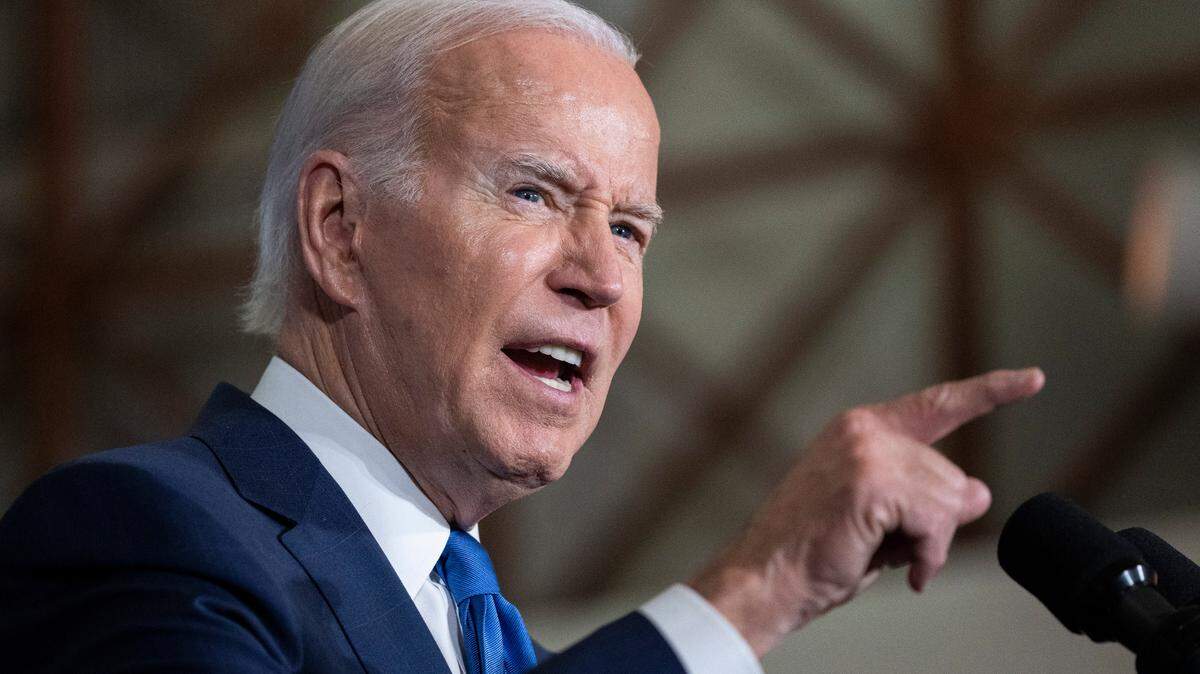
In the run-up to the midterms, President Joe Biden insisted time and again that people must vote for Democrats or risk democracy’s demise.
It was a dangerous gambit that invited accusations of hypocrisy and exacerbated the very problems he purported to address.
Biden had a choice: Target the overcharged rhetoric questioning the legitimacy of our political process wherever it resides, or leverage waning faith in our system to drive turnout for one party. He chose the latter.
Days before Election Day, Biden said in a prime-time address, “...there are candidates running for every level of office in America...they will not commit to accepting the results of elections that they’re running in. This is a path to chaos in America. It’s unprecedented. It’s unlawful, and it’s un-American.”

It is a path to chaos in America. A riotous mob’s obstruction of the peaceful transfer of power should indeed compel political leaders to choose their words about election legitimacy with great care. Accusations of stolen elections should only be made with hard evidence.
But I can’t think of a less effective way to move towards that vision than the way Biden operated over the past month.
He went on to say in his speech, “...extreme MAGA Republicans aim to question not only the legitimacy of past elections, but elections being held now and into the future.”
Just days earlier, Hillary Clinton said, “Right-wing extremists already have a plan to literally steal the next presidential election.” If Biden views that rhetoric as “unprecedented” and “un-American,” he didn’t say so.
There’s more.
Biden’s own press secretary said both the 2016 presidential and 2018 Georgia gubernatorial elections were “stolen.” High-profile Democrat Stacey Abrams famously refused to concede in 2018, claiming she actually won.
These are not fringe players in American politics.
Biden’s failure to address the behavior of his party — of his own staff — destroys his credibility in all eyes except those who already believe him.
Former President Barack Obama understood this. He was a master orator in part because of his delivery, but also because of the substance of his speeches.
He gave a little. He conceded some points to make his broader argument more effective. That is how a leader builds credibility, not by lambasting “mega-MAGA Republicans” for behavior Hillary Clinton mimicked just days prior.
A rebuttal to this argument goes something like this: Sure, Democrats are a little reckless with their rhetoric, but they didn’t storm the Capitol Jan. 6.
That’s true, but I’ve heard for nearly two years now that Donald Trump’s rhetoric incited the mob. It can’t possibly be true that stolen election rhetoric is dangerous because it incites mobs and stolen election rhetoric isn’t dangerous because it hasn’t yet incited a mob. Pick one.
Prominent Democrats can’t claim to be noble defenders of democracy without addressing prominent Democrats who claim past elections were stolen and future elections will be, too.
In North Carolina, a slightly different story has played out. Democrats here have a credibility problem, but it’s not because of hypocrisy. It’s because the policies they object to are eminently reasonable.
Making Election Day the election deadline for absentee ballots, for example, is the law of the land in many blue states, including Biden’s home state of Delaware. Requiring a photo ID for voting is widely popular and already in the state constitution.
Five million dollars for a mobile unit to print out voter ID cards right at people’s homes sounds fair to me. Banning private interests from donating to the agency that counts votes isn’t dangerous — it’s an easy call.
Yet, all these policies threaten democracy, according to some N.C. Democrats.
That losing candidates this year have conceded without incident may signal a return to a more traditional political environment. North Carolina Democrats would do well to focus their arguments on the policies themselves, not hollow admonitions that they presage democracy’s demise.