
GOP leaders said they would expand Medicaid in NC. Is that still a post-election priority?
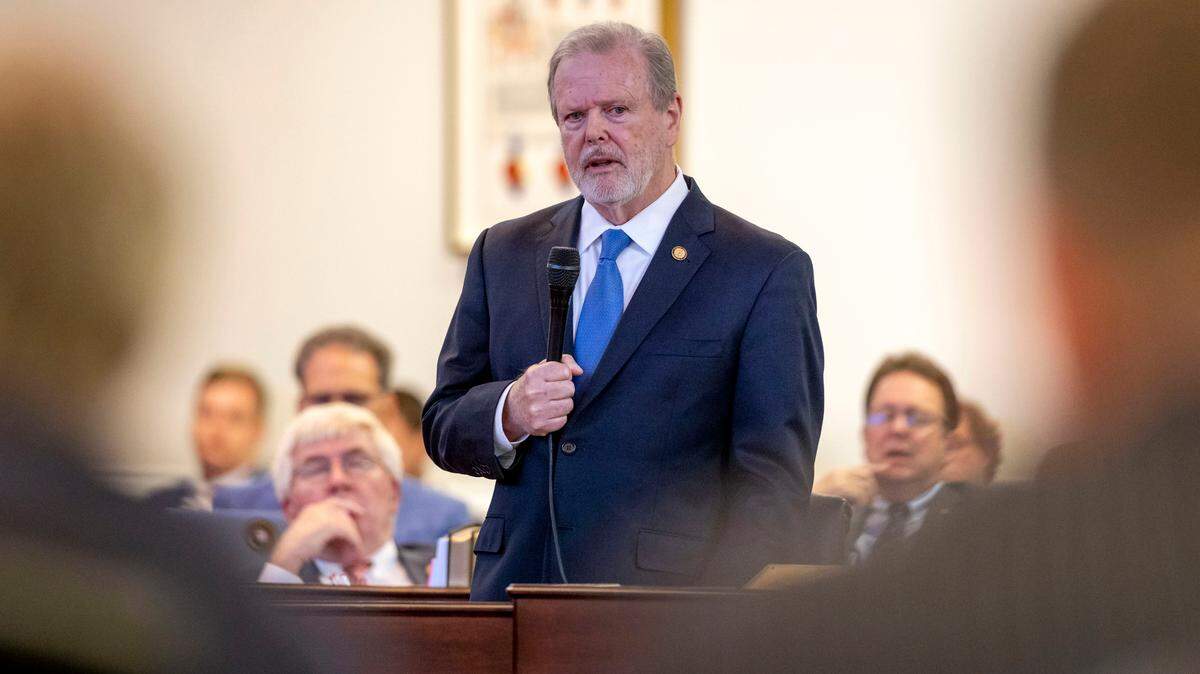
State Senate leader Phil Berger said in a recent op-ed on these pages that the November election results confirmed North Carolina voters’ “preference for Republican governance.”
Maybe that’s true, but it’s also notable that going into the midterms Berger defused a glaring example of Republican misgovernance that could have been a potent issue for Democrats – the state’s failure to expand Medicaid.
After blocking expansion for nearly a decade, Berger took to the Senate floor on June 1 to speak in favor of it. Medicaid expansion would make 600,000 low-income North Carolinians eligible for the state and federal health insurance plan. “This is the right thing to do,” Berger said then, “and it’s not even close.”
Now, five months later, it’s Medicaid expansion that’s not even close.
Instead of a simple “yes” or “no” vote on expanding the program, Berger yoked Medicaid expansion to proposed changes in the state’s Certificate of Need (CON) law. The law requires health care providers to show the state there is a genuine need for new facilities, equipment or services.
The law is intended to hold down health care costs by discouraging duplication, but its effect has been to protect hospitals’ monopoly on profitable screenings and procedures. Hospitals and health care systems say they can’t afford to lose that revenue to new competitors and have opposed the extent of CON changes that Berger wants.
There’s clearly a need to adjust the CON law and other states have modified or eliminated their versions. But there’s no legitimate reason to tie Medicaid expansion to CON changes. The linkage has created a political impasse that leaves more than half a million North Carolinians uninsured.
Apart from the human cost, the failure to move forward is exacting a mind-boggling financial cost. Advocates say that the state is forgoing $7.8 million in federal support for each day it delays Medicaid expansion.
To encourage holdout states to expand, the Biden administration has offered to boost the federal share of all those states’ total Medicaid costs by 5 percent for three years. In North Carolina, that incentive would be worth $1.7 billion. The cost to the state of expanding would be $700 million. That means North Carolina could have an extra $1 billion to spend on other needs. Yet itq remains among the dwindling number of holdout states.
Republican legislative leaders have said there will be no major votes when the General Assembly returns in December. The next opportunity to vote on expansion could come in the first half of 2023, but there’s no sign of movement in the standoff between Berger and the hospitals and health care systems.
Cynthia Charles, spokeswoman for the North Carolina Healthcare Association, which represents hospitals and health care systems, said her group’s latest offer on CON changes has “received no formal response” but “we look forward to reengaging.” Sen. Berger’s office did not respond to a request for comment.
Charles said hospitals, especially those in rural areas, cannot afford to lose key revenue sources while they are confronting labor shortages and inflation is driving up operating costs.
Care4Carolina, a statewide coalition of 157 organizations, has been pushing for Medicaid expansion for nine years. Peg O’Connell, the coalition’s chair, said, “I’m hoping 2023 will be the year we get there.”
But the longer the delay, the more the risk of losing momentum. An agreement on CON changes may not be reachable, or a majority of lawmakers may insist on linking Medicaid expansion to work requirements for the newly eligible, which the Biden administration won’t approve.
Lives are at stake. The legislature should act on its first opportunity to expand Medicaid without the complications of CON concerns.
Financially and morally, expanding Medicaid now, as Berger once said, “is the right thing to do.”
This story was originally published November 20, 2022 at 4:30 AM with the headline "GOP leaders said they would expand Medicaid in NC. Is that still a post-election priority?."