
Colorado Springs shooting is a reminder: LGBTQ hate is at home in NC, too
This is what the right-wing war on gender and sexuality has created: a gunman opening fire at an LGBTQ nightclub in Colorado Springs.
This is what happens when politicians make LGBTQ people their villains: five dead and 17 wounded, on Transgender Day of Remembrance, a day meant to commemorate transgender people who died at the hands of bigotry. The suspect faces multiple murder and hate crime charges.
This is not just a problem of guns. It is a problem of hate. Rhetoric espoused by right-wing politicians has made the world far less safe for LGBTQ people — even in the supposedly safe spaces they’ve created for themselves.
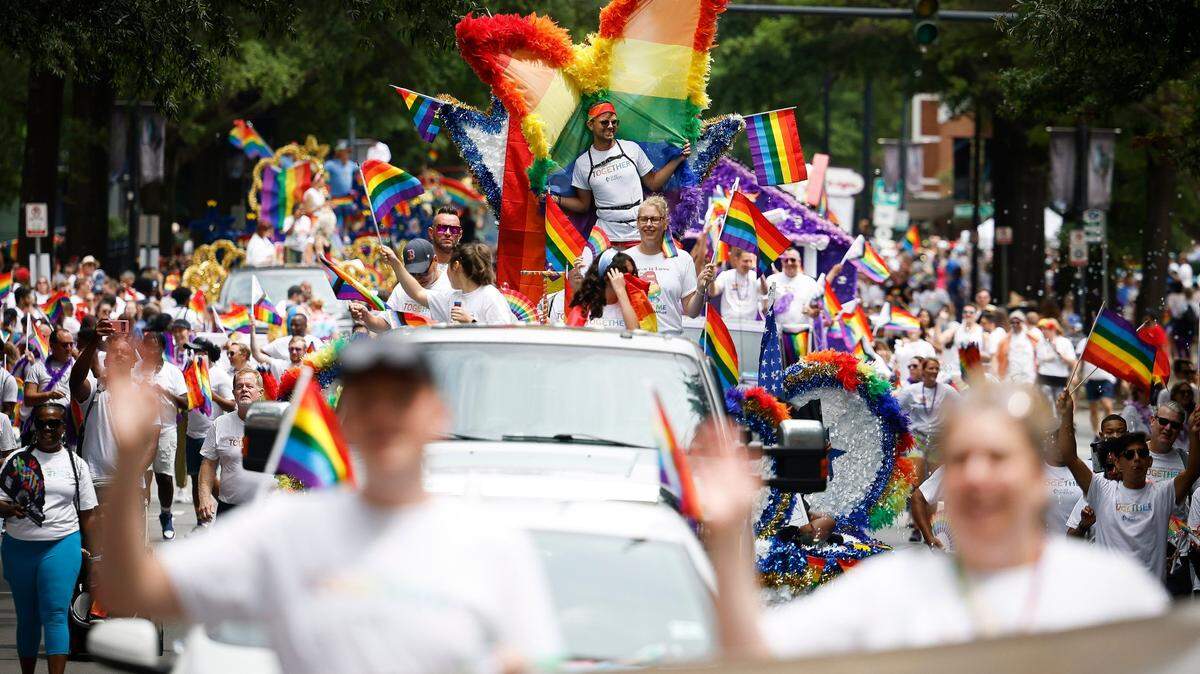
For the second year in a row, a record-breaking number of anti-LGBTQ bills have been introduced in state legislatures across the country. It’s fueled an epidemic of violence: extremist groups have intimidated drag performances and Pride celebrations in Sanford, in Apex, in Raleigh. Pediatric hospitals who provide gender-affirming medical treatment have had to be evacuated due to bomb threats.
And now, another uniquely American tragedy, which, by all appearances, is cast against a backdrop of hate.
In every corner of the country, including in North Carolina, LGBTQ people live in fear. Club Q, one of the few gathering places for the LGBTQ community in Colorado Springs, was described by many as a “safe haven.” And yet, six years after the Pulse nightclub shooting in Orlando that killed 49 people, members of the LGBTQ community are again reminded that even their safest places are not safe — not when their very existence is under attack.
North Carolina politicians have participated in this moral panic for years, doing their part to legislate the LGBTQ community out of existence. Our state was one of the last to give up the fight against same-sex marriage — it’s still banned in our constitution — and one of the first to pass a “bathroom bill” with House Bill 2 in 2016.
In 2021 — the deadliest year on record for transgender people — North Carolina Republicans introduced legislation that would restrict gender-affirming medical care for anyone under 21 and prevent transgender youth from competing in female sports. More recently, lawmakers rolled out their own version of Florida’s “Don’t Say Gay” bill, which limits instruction of sexuality and gender identity in the classroom and could result in the forced outing of LGBTQ students.
None of those bills have become law — at least not yet — but that doesn’t neutralize the threat posed by their introduction. Republicans are intentional in their framing. They insist it’s about protecting women in public bathrooms, or children in parks and classrooms. But that rhetoric sends a message. It implies that LGBTQ people are inherently dangerous. It casts them as the enemy. It’s meant to stoke anger and anxiety, so the notion that it might ultimately lead to violence should come as no surprise.
We have a Republican lieutenant governor, Mark Robinson, who likens gay and transgender people to “filth” and “what the cows leave behind.” He wants to become North Carolina’s next governor. Not once have party leaders spoken out against his remarks.
North Carolina towns have canceled or distanced themselves from Drag Queen Story Hour events, sometimes out of fear and sometimes due to concerns about their “impact on children.” State representatives and congressional candidates decry such events as “perverse” and smear drag performers as pedophiles and predators.
“Misinformation and hate speech broadcast by some of our most powerful leaders has emboldened extremists,” Equality North Carolina said in a statement over the weekend. “The result is clear: from death threats to pride organizers to bombings of bakeries hosting drag brunches, LGBTQ+ communities have been targeted across the country.”
What happened in Colorado Springs is not an accident — it is what people with power and a platform have created. It is predictable. It is preventable.
BEHIND THE STORY
MOREWhat is the Editorial Board?
The Charlotte Observer and Raleigh News & Observer editorial boards combined in 2019 to provide fuller and more diverse North Carolina opinion content to our readers. The editorial board operates independently from the newsrooms in Charlotte and Raleigh and does not influence the work of the reporting and editing staffs. The combined board is led by N.C. Opinion Editor Peter St. Onge, who is joined in Raleigh by deputy Opinion editor Ned Barnett and in Charlotte by deputy Opinion editor Paige Masten. Board members also include Observer editor Rana Cash and News & Observer editor Nicole Stockdale. For questions about the board or our editorials, email pstonge@charlotteobserver.com.