
What was Charles M. Schulz like? Peanuts offers clues
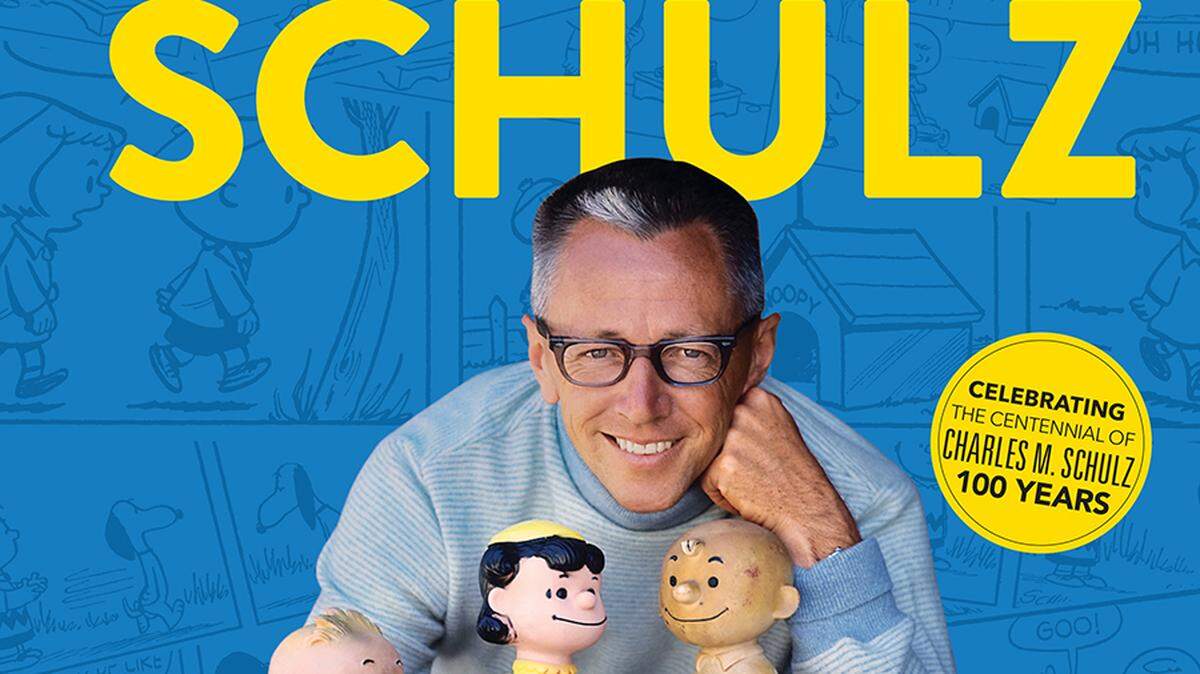
Peanuts cartoonist Charles M. (“Sparky”) Schulz would have been 100 on Nov. 26, 2022. That his Peanuts comic strip is still in syndication nearly 23 years after his death is testament to our affinity to the characters: from when we feel like a loser (Charlie Brown), to crabby (Lucy Van Pelt), to philosophical (Linus Van Pelt), to superfluous (Rerun Van Pelt), to naïve (Sally Brown), to just wanting to have fun (Snoopy).
How ironic it is then that the beloved 72-year-old strip debuted with the line “Good ol’ Charlie Brown…how I hate him.”

The question readers ask most about Sparky is what he was like. The answer: If you read Peanuts, you know Sparky.
He was the strip. Yes, his characters were often based upon people he knew (there was a real Charlie Brown), but within each personality was a piece of himself, even if it was a piece he didn’t particularly care for — such as the title, which Sparky hated. The syndicate, of course, liked the allusions to “peanut gallery” and “kids.”
To Sparky, “peanuts” sounded like something of little worth, a pittance. That’s another irony: The strip’s “worth.” In 2021, Sparky ranked third on Forbes’ list of the world’s highest paid deceased celebrities.
Besides drawing funny pictures (as he called them), Sparky was good at cultivating people, creating his own tribe. And so we come to irony number three: This man, who drew so many disparate groups of people together — cartoonists, golfers, skaters (hockey and figure), tennis players, celebrities, religious leaders, etc. — was rather introverted. Despite all the colleagues, friends and family a man could want (or abide), he exhibited a loner quality. His desk and drawing table stood at the end of his studio, as far as possible from the door. You even had to climb a step or two to get to them. His books and his stereo though? They were directly across from him.
Despite his introverted bent, Schulz was fiercely competitive. He always wanted his strip to be the best one on the page every day. He wanted to win every round of golf or hockey or tennis match.
People ask how you edit someone so gifted. Given Sparky’s competitiveness, you don’t. You make sure everything is spelled correctly. (My first five years as a comics editor, I didn’t find a single misspelling, not for lack of trying). When you do find a mistake, you check to make sure it wasn’t intentional. He even wanted to win at being errorless.
In December 1999, after he was diagnosed with cancer and knew it was terminal, Sparky agreed to an interview with the Today show’s Al Roker. Before Roker flew to California, a United Feature Syndicate public relations executive and I met with him in his Manhattan office. I asked Roker: What would he do if, say, Sparky’s nose started running during the interview and he didn’t realize it. Roker responded without hesitation: He would stop taping and hand Sparky a tissue. Roker did not want to embarrass Sparky, or reveal him as anything less than the brilliant, talented man he was, facing his mortality with all the dignity he could muster.
On Feb. 11, 2000, I picked up the phone to call Sparky. Then I put the phone down, resolving to call him on Monday instead because it would be Valentine’s Day. Early on Sunday, Feb. 13, my boss called to ask if I’d heard that Sparky had died during the night. It was late Saturday on the West Coast, but probably Sunday on the East Coast — the day the last original Peanuts strip appeared in newspapers.
Of everything there is to say about Charles M. Schulz, this might just epitomize him: In the mid-to late-1990s, I found time to flip through a thick file of old Peanuts correspondence. Amid the papers was a letter from a client in Mississippi, dated in the early ’70s. The editor asked Sparky to stop putting Franklin in the same classroom as Peppermint Patty, implying that it offended some of the paper’s (pro-segregation) readers. When doing later research for a book commemorating the strip’s 60th anniversary (in 2010), I came across the same letter among Sparky’s papers. So he had received a copy.
And he ignored it.
This story was originally published November 26, 2022 at 5:30 AM.