
All we wanted to do was house a struggling family in our church | Opinion
For nine years, the congregation I serve has been providing free housing to one family. They lived studio-apartment style in what used to be the church’s choir room. They used the bathrooms on the hall and the church kitchen on the first floor.
They got a safe, stable place to live. We got their support and leadership in our free after school program, community garden and other outreach ministries. The church property, which used to be deserted each night and large swaths of weekdays, got a consistent presence, making the whole neighborhood safer.

This was all in full compliance with city building use code, which allows churches to provide dormitory-style living accommodations to caretakers and ministry providers.
But in June 2022 we failed our annual fire inspection. The violation said the living quarters were out of compliance with City Building Use Codes. When we provided documentation showing we were in compliance, the report was amended to state that we were out of compliance with County Building Use Codes.
City Building Code allows churches to have dormitory-style living spaces. County Building Use Code does not.
On Nov. 29, 2022, during a meeting with the county to review construction plans for renovating another space in our building to meet residential codes, the fire inspector announced that if we did not evict the family by Jan. 1, 2023 he would begin fining the church and have the property disconnected from the power grid.
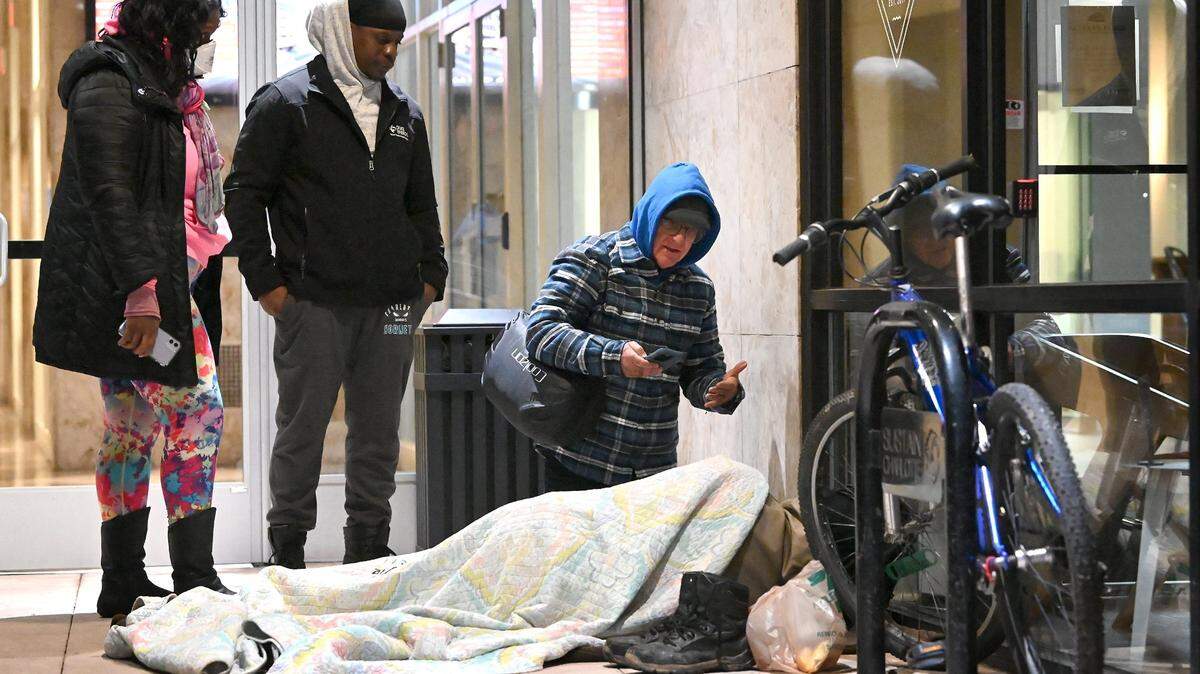
The day the family moved out two officials from the fire inspector’s office stood in the parking lot for hours to supervise. The next day we hosted Room in the Inn. Congregations are permitted by city, county and fire codes to offer one night of housing once a week to citizens experiencing homelessness, but the same buildings are not permitted to provide permanent housing that allows people to live with dignity and make vital contributions to our community. We can provide temporary shelter, but not homes.
There are no easy answers here, no bad actors.
Repeatedly, people told me that they wished they could help, but there was nothing anyone could do. Because of “the codes.” People speak about “the codes” like they are gravity or the tides — immutable forces impervious to human intervention. But they were created by people and can be recreated by people.
Perhaps the codes we currently have were necessary when Charlotte was a growing city with abundant housing stock. But we now have a decades-long affordable housing crisis and the current codes have become unconscionable. If, as every official says, affordable housing is our top priority, then our codes need to be modified to reflect that.
A fire inspector said the church living space put first responders at too great a risk, that firefighters would have to risk their lives to rescue the family. Officials said even though the risk was “one in a billion,” it was too great for them to take on.
Evicting the family, however, was zero risk.
I am in favor of lowering risk, and of oversight and accountability. But right now our system is set up to protect the most powerful institutions in our community from even a “one in a billion” risk, which forces the most vulnerable in our community to navigate extreme risk every day. It’s too much risk for the municipality for a family to live in stability in a cinder-block church, so families have to take on the risk of living in cars or hiding in unheated storage units.
Families without safe housing have no risk-free choices, and when they inevitably fail to manage these extreme risks, we often prosecute them for trespassing, child-endangerment or loitering. Right now, our system doesn’t lower risk. It lowers liability.
We need to come to the table to renegotiate building use codes in light of our housing crisis. I want the fire inspector at that table, his voice is essential. But I also want the voices of those experiencing homelessness and of folks who work in other critical systems like mental health, foster care, criminal justice and affordable housing.
It isn’t possible to create systems with zero-risk, but it is possible to distribute risk more equitably.
This story was originally published February 13, 2023 at 1:25 PM.