
Rosenwald Schools: an extraordinary story in need of telling and retelling in NC | Opinion
They are scattered throughout North Carolina, simple buildings mostly, in rural areas. One wouldn’t think there is a majestic story behind them, but there is — and a profound one.
The Rev. Lorenzo Lynch of Durham offered this eloquent summation of what these Rosenwald School buildings meant to hundreds of thousands of African American children in North Carolina: “This was the ladder up which many of us stepped.”
Rosenwald Schools were built throughout the South from 1912-1932 for the purpose of educating Black children who had been denied equal opportunity and dismissed to ramshackle buildings with a small fraction of the resources given to white schools. A disgraceful chapter in American and N.C history, to be sure.
Sears Roebuck magnate Julius Rosenwald and Booker T. Washington of the famed Tuskegee Institute decided to write a new chapter. They started a movement to invest Rosenwald’s money, public money, and local blood, sweat and tears into construction and operation of schools for Black children throughout the South. Nearly 800 were built in North Carolina, with some still standing today as community centers.
That history was unfamiliar to N.C. filmmakers Tom Lassiter of Greensboro and Jere Snyder of Wake County. After seeing a Rosenwald School, they decided to devote several years to telling the story in a documentary that airs Feb. 23 at 10 p.m. on PBS North Carolina and has been screened across the state. A screening is scheduled for 7 p.m. Feb. 24 at the Charlotte Museum of History.
“This school was being renovated along the Roanoke River as part of another project, and we saw this really cool old school and heard it was a Rosenwald School,” Snyder said. “We found out what the story was and wondered how come nobody ever heard of it. We decided to tell the story.”
It may be hard for students in North Carolina’s diverse public schools today to understand a time when Black children were denied anything approaching a decent public education. Rosenwald and Washington changed that, pure and simple.
In time, Rosenwald School alums — many of them now Baby Boomers — came to include the late John Lewis, a legendary civil rights leader. North Carolina Rosenwald alums include the late singer-songwriter Nina Simone and poet Maya Angelou.
”North Carolina built more Rosenwald Schools than any other state,” Lassiter said. “In Madison County (in the mountains) a one room school outside of Mars Hill has been renovated and turned back over to the Madison County Board of Education and they’re going to make it a learning center.
“Walnut Cove School in Stokes County is a senior center during the day and the city council meets there,” Lassiter said. “It was renovated by its alums in the late 1990s.”
Nathan Carter Newbold held the title of Director of Negro Education for the State Department of Public Instruction from 1913 to 1950. Lassiter said it was Newbold who pushed for Rosenwald Schools on the official level.
“He somehow managed to politic across the state to convince people it was good for education and for their communities to educate people of all races so they could support themselves and be contributing members of society,” Lassiter said. “...Counties across the state in many cases bought into that.”
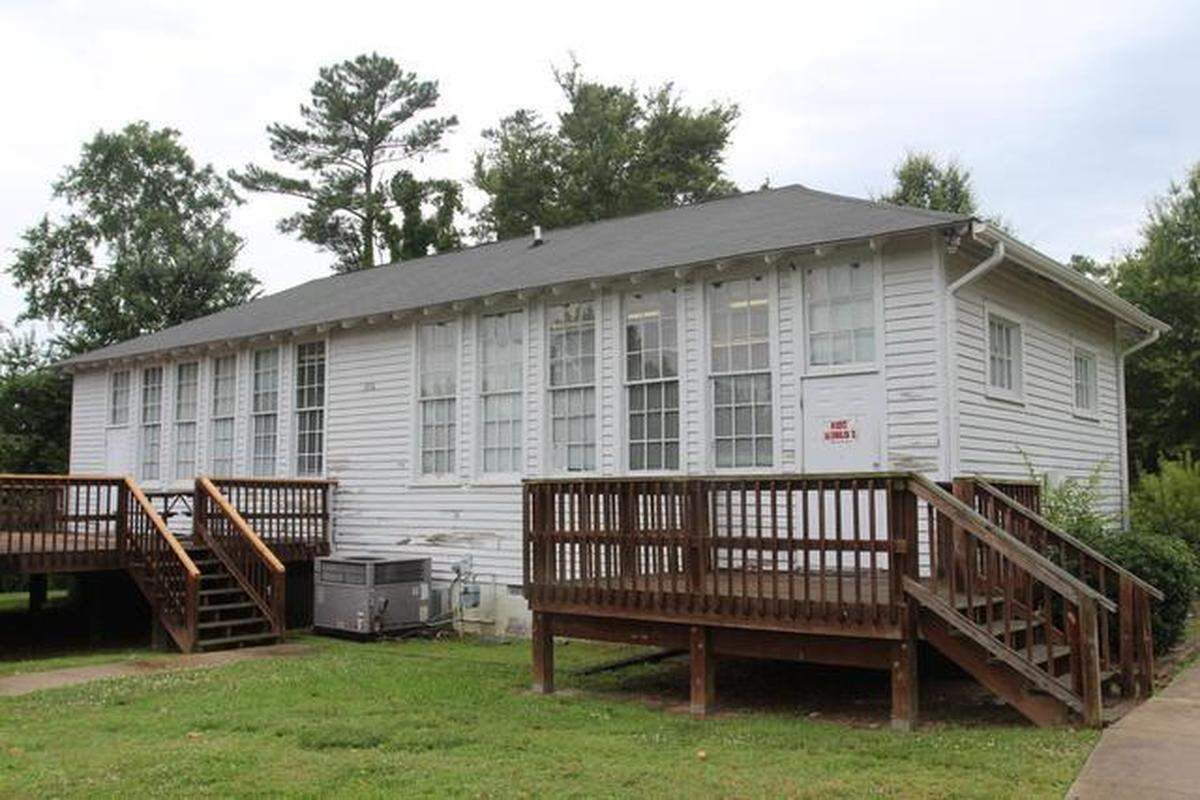
The state was spending eight or nine times more to educate white kids in those days, but part of the deal with Rosenwald was that communities had to invest in buildings and paying teachers. Lassiter and Snyder say that when all was said and done, it was the money, land and blood sweat and tears of Black communities that proved to be the driving force behind Rosenwald schools. Even the most onerous, often vicious, racial prejudice could not suppress the community’s desire to create opportunity for children.
This is an extraordinary story in need of telling. It comes out of a time of prejudice and suppression, but it is a story of triumph. And what’s good in the end is that the attention enjoyed by Rosenwald Schools, which is amplified by this film, is prompting a preservation movement that will ensure the schools — and the issues that created them — will not be forgotten.
This story was originally published February 22, 2023 at 5:30 AM.