
My patients’ stories show how desperate they are to get politics out of NC exam rooms | Opinion
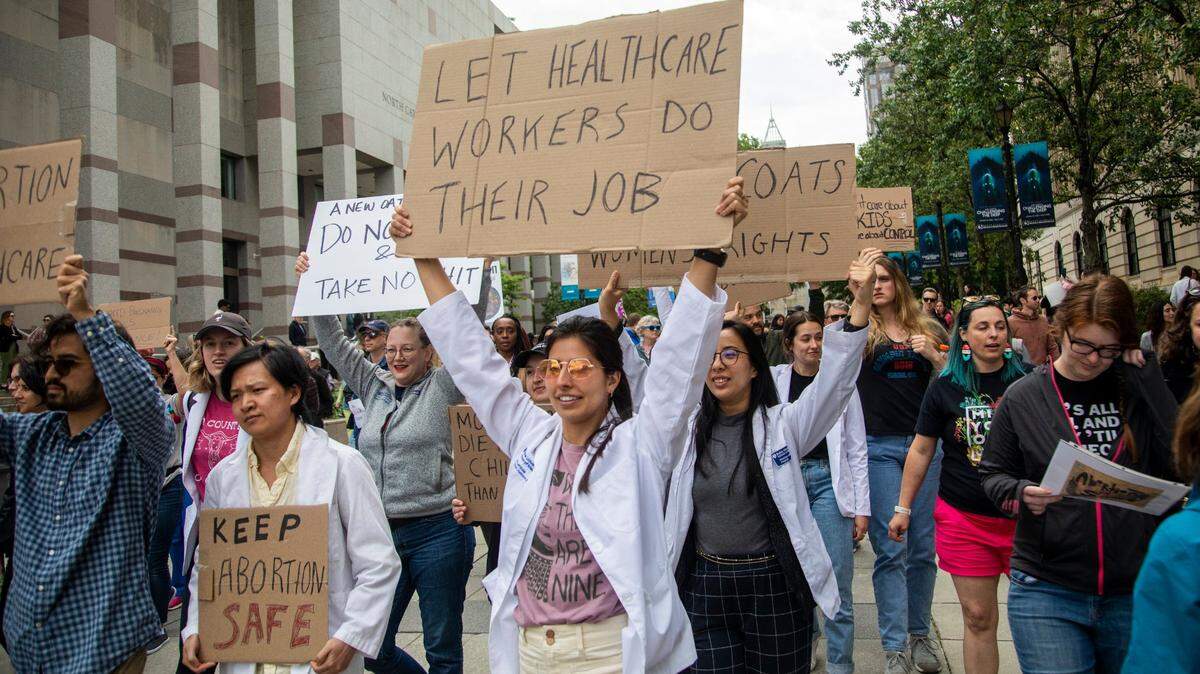
I am a family medicine doctor in North Carolina. When I see patients, we are not discussing politics or asking elected officials to weigh in on healthcare decisions. Politicizing healthcare is dangerous. Banning healthcare is dangerous.
Everyone needs to feel safe with their healthcare provider. Folks need to be able to learn about their bodies, ask questions and explore options. North Carolinians increasingly do not have that basic right.
The stories below, shared with my patients’ permission, illuminate just how scared people are and how desperately they want politics out of their exam rooms.
A teenager comes to my primary care clinic for a physical. She asks if you can overdose on vitamin C. Why, I ask. “Because it is trending on TikTok as a good morning after pill.” We spend the rest of the visit discussing the menstrual cycle, birth control and consensual sex. She hasn’t had any sexual health education outside of TikTok and friends swapping stories.
A woman calls asking for a serum pregnancy test. She doesn’t trust the negative home pregnancy tests. She is moving to a state where abortion is illegal and needs confirmation she isn’t pregnant before she leaves. “What if I can’t come back?”
A mom brings her 13-year-old daughter in for a physical. Before I even bring up the topic of puberty, the woman asks “please scare her about sex, Doc. I can’t be having her getting pregnant. What if we can’t get an abortion?”
There is a thrum of fear amongst my patients with a uterus. Apprehension about birth control, the reliability of a pharmacy to dispense pills or a patch, and laws getting announced every day that could change what’s available or legal. What if I get pregnant and don’t want to be? What if I get pregnant and there is a problem with the fetus? What if I get pregnant and something happens during the pregnancy? Will they take care of the fetus or me? Should I move to a state where abortion is legal throughout my pregnancy? Is it safe to go to an emergency department with vaginal bleeding in a state where abortion is illegal? Will bleeding, pregnant or not, somehow get me in trouble?
I hear these questions every day.
As someone with a uterus, I share many of these concerns. Being a physician does not protect me from the raw fear that my body is under attack. I voice this fear with patients, use it to inform my counseling, convey the seriousness of the reality of being female in America. It feels like a small act of solidarity. It is not nearly enough to keep us safe.
The abortion ban (Senate Bill 20) and the anti-transgender bill (HB 808) voted on by the N.C. General Assembly will further exacerbate my concerns and my patients.’ These bills will lead to worse health outcomes and alienate medical providers seeking to provide evidence-based medical care.
These laws also demonstrate that all of healthcare is under attack — when the basic science around pregnancy care is questioned, everyone should be afraid. If the government can undercut how prenatal care is delivered or what a doctor is allowed to discuss with a patient, they can also threaten care for high blood pressure, diabetes, joint replacements, or erectile dysfunction.
Any time elected officials with no medical background insert themselves into exam rooms, standards of care protocols, or even health insurance markets, it has the potential to be a political act, rather than one centered on patient care. Everyone should be terrified about what could happen next.
This story was originally published May 11, 2023 at 8:28 AM.