
If absolute power corrupts, NC Republicans are well on their way | Opinion
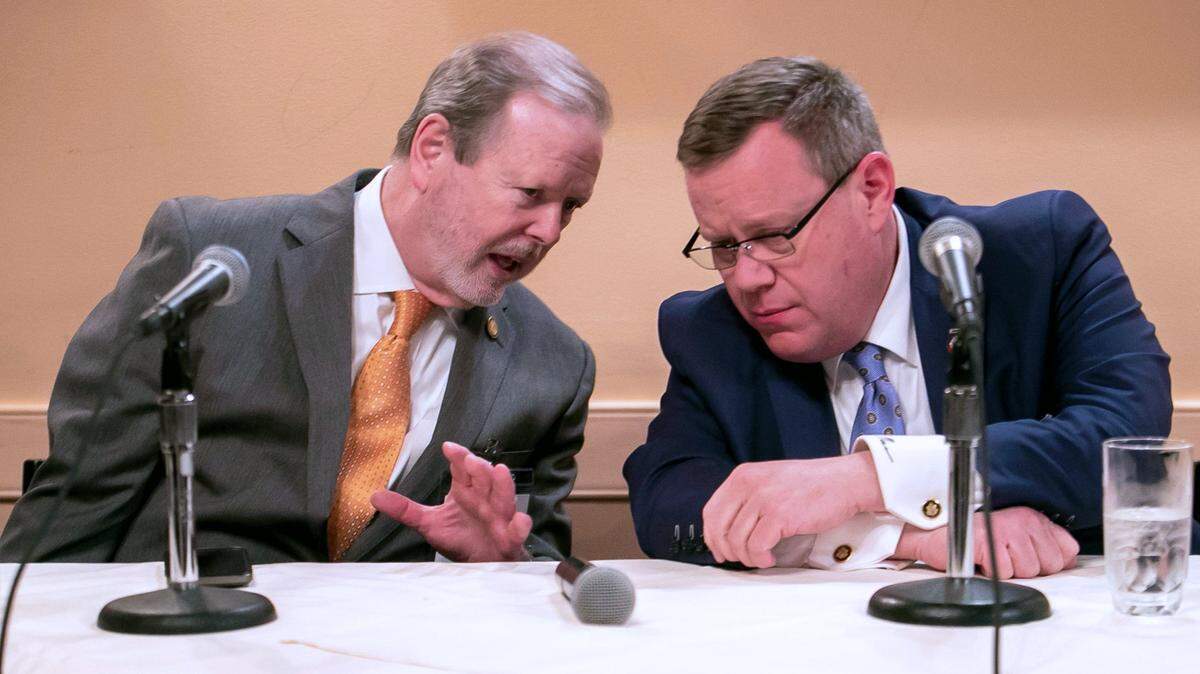
Lord John Acton wrote “power tends to corrupt and absolute power corrupts absolutely.” Senator Phil Berger must think Acton was wrong.
We’ve entered the season of usurpation. Permanent, encompassing, usurpation. And North Carolina Republicans are wicked good at it.
To refresh, having earlier eliminated the governor’s long-held power to appoint University of North Carolina trustees, the N.C. Senate recently moved to diminish the governor’s oversight of the state’s residential schools for blind and deaf students and introduced a bill to give lawmakers power to accept or reject the president of the community college system. Another proposal seeks to give the Senate leader and the House Speaker even greater authority over UNC Board of Governors selections. And the Senate budget bill, amazingly, gives lawmakers authority to appoint various special judges.

Berger also pressed a bill that would reduce the governor’s authority over appointments to the Utilities Commission, Board of Transportation, Economic Investment Committee, Commission for Public Health, Environmental Management Commission, Coastal Resources Commission, and Railroad Board — in favor of wider prerogative for Berger and Moore.
Now, though, Berger has bigger fish to fry. He proposes to remake the State Board of Elections by adding additional positions and taking all appointment power away from the governor, placing it in the legislature. The Senate leader, House speaker, Senate minority leader and House minority leader would each make two appointments to an expanded board. They would also make all selections to the state’s 100 local election boards. An analogous, more complicated, scheme was earlier declared unconstitutional by the N.C. Supreme Court. Then in 2018, Republicans placed similar election board changes on the ballot, but voters rejected the proposal by huge margins.
Moore and Berger think the people and the high court got it wrong. For them, it’s not enough that Republican lawmakers get to draw their own election districts, cheating freely for partisan advantage. They should also appoint the board members who will enforce the electoral process and the judges who will rule on its propriety. Nice system if you can get it. It just doesn’t have much in common with constitutional democracy.
Yet again, they seek to aggrandize their own individual and institutional powers. They aim to introduce a new hybrid system of government — where legislative leaders control the appointment of a potent array of state and local officials, including the spoils and loyalties which flow from such arrangements. NC House and Senate leaders would operate like twin versions of Huey Long -- managing to effectively pass the laws as well as administer them. The governor of North Carolina, in turn, would get to keep the mansion. For now.
There’s one tiny snag in this ambitious project. Article I, Section 6 of the N.C. Constitution says: “The legislative, executive, and supreme judicial powers of state government shall be forever separate and distinct.” There can be no doubt the State Board of Elections exercises core executive power. As the N.C. Supreme Court held five years ago, the “General Assembly cannot structure an executive (agency) in such a manner that the Governor is unable ‘to take care that the laws be faithfully executed.” Sen. Dan Blue explained: “Republican lawmakers have tried and failed to take over state and local elections for years. This is not the role of the legislature to oversee our elections, it is an executive function.”
I understand, of course, Berger and Moore have a ready answer for this — they now hold sway over the N.C. Supreme Court, which has shown it is ready to do whatever they ask. But maybe that’s where Lord Acton comes in. Absolute power is corrupt. And dangerous.