
Two critical, colliding moments on race and history in NC | Opinion
There has been much discussion of race and history in North Carolina of late. Sometimes the stances collide.
In late March, for example, the N.C. House of Representatives followed the national Republican playbook by passing a purported anti-Critical Race Theory bill, House Bill 187. There, the almost all-white Republican House caucus sought to instruct the state’s teachers on how our racial (and sexual) history can be addressed in schools.

Comically titled the “Equality in Education Act,” HB 187 seeks to make it unlawful to “promote” racial discussions or studies that cause students to “feel discomfort, guilt, anguish, or any other psychological distress” or suggest that law reflects “a series of power relationships and struggles among racial and other groups.”
It also demands that schools give notice to the Department of Public Instruction if a speaker is to address such discomfiting matters. But as Democrat Rep. Marcia Morey unsurprisingly objected: “Much of our history is race-related, and teaching and learning about lynchings and slavery and the effects of Jim Crow laws will make students feel uncomfortable.” The goal seems to be to stop the inquiry.
The language of HB 187 borrows heavily from a Donald Trump 2020 executive order concerning the federal workforce. Who better to set the boundaries of the study of American history than the president who knows the least about it?
North Carolina Republicans, who have for the last 13 years demonstrated an utter and replete disregard for the claims and challenges of racial justice — regularly using their authorities instead to violate the essential rights of African Americans — are out to secure a curriculum that matches their ideology. They seem to believe it’s essential to deceive our children about the past in order to achieve their desired exclusionary future.
It’s also likely HB 187 will be passed by the Senate — which has embraced its terms before.
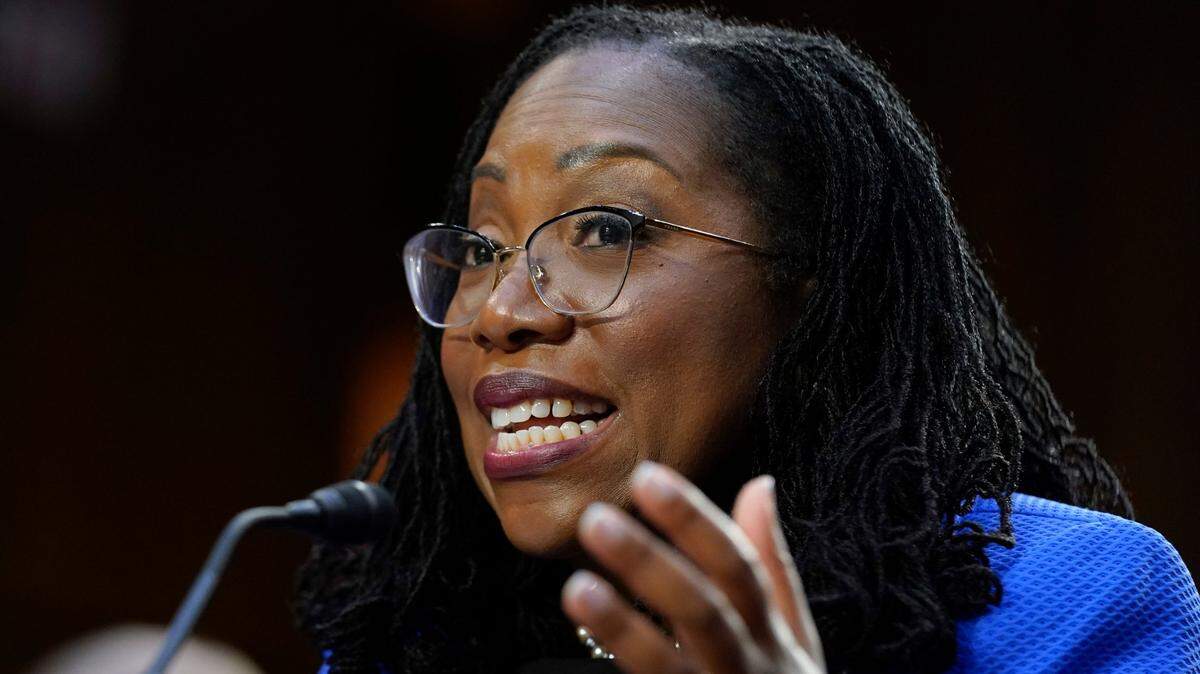
Then, only weeks ago, in the UNC affirmative action case, U.S. Supreme Court Justice Ketanji Brown Jackson powerfully instructed the country and the world on the racial history of North Carolina and the nation. I’m sure Justice Brown hasn’t read HB 187, but her words offer a devastating rebuke to the bill’s entire mission.
Jackson echoed Thurgood Marshall’s foundation: “Three hundred and fifty years ago, the Negro was dragged to this country in chains to be sold into slavery. Uprooted from his homeland and thrust into bondage for forced labor, the slave was deprived of all legal rights. It was unlawful to teach him to read; he could be sold away from his family and friends at the whim of his master; and killing or maiming him was not a crime.” She then deepens and extends the purposeful outrage over time and generations. Pressing it to our faces. Naming that “our country has never been colorblind” and demonstrating “’the intergenerational transmission’ of inequality that still plagues our citizenry.”
“History speaks,” she explained. It “can be heard forever.” The race-based gaps “that developed centuries ago are echoes that still exist today.” No one “benefits from ignorance.” Ignoring race “just makes it matter more.” “The only way out of this morass — for all of us — is to stare at racial disparity unblinkingly...collectively striving to achieve true equality...”
Chief Justice John Roberts’ majority opinion, she argued, “indulges those who either do not know our nation’s history or long to repeat it.” (Maybe she has read HB. 187.)
It occurs to me that soon, if HB 187 becomes law, it will become illegal to read Justice Jackson’s brilliantly homiletic opinion in North Carolina schools. That is exactly, precisely, the wrong answer. It would be wiser to make it, and our broader, brutal racial history, required reading.