Huntersville isn’t a Caribbean paradise. Why do developers want to make it one? | Opinion
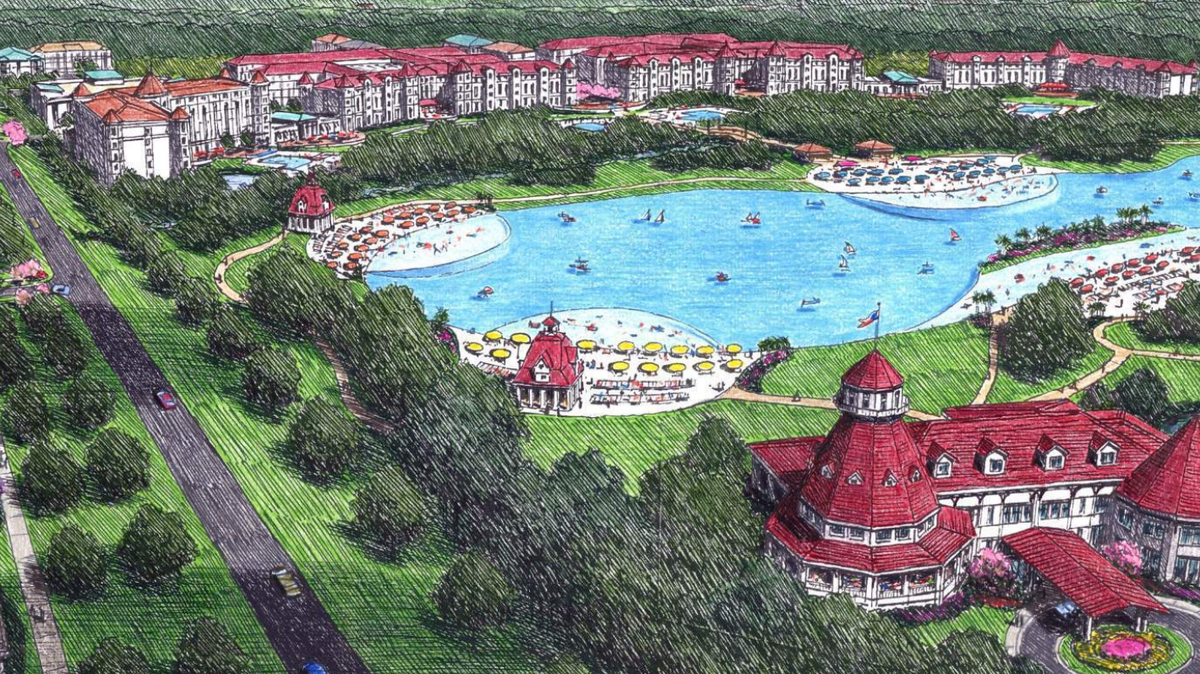
You’re craving an afternoon in the tropics, but you live in northern Mecklenburg County. It’s a classic suburban dilemma. If only a cerulean, clearwater Caribbean paradise existed off of I-77!
A local developer is proposing a different solution: Lagoona Bay, a massive mixed use development that would feature a “modern lifestyle beach resort” — complete with an 8-acre crystal blue lagoon.
“A walk on the beach is in your backyard,” the website boasts. (Never mind that Lake Norman is already in Huntersville’s backyard.)
Spanning 263 acres, the development would also include restaurant and retail space, as well as single-family homes, condos and apartments. The centerpiece is the Lagoona Bay Beach Club, which would include a fitness center, recreational facilities, on-site dining and co-working spaces in addition to the lagoon, according to the community’s website. And while it promises “sand-tastic fun for everyone,” the club is actually quite exclusive, with a $10,000 membership fee and only 1,500 members.
The proposal has been controversial in the fast-growing town of Huntersville, which, despite being a suburb of Charlotte, still retains some smaller-town feel. An online petition opposing the project has more than 5,500 signatures. Residents complain it doesn’t fit the character of the area, and that’s true. Huntersville is not a Caribbean paradise — this is the Piedmont, for crying out loud — and even the most extravagant master-planned community won’t make it so.
So why try to make Huntersville something that it’s not? Huntersville doesn’t really need help attracting new residents — it has experienced rapid growth in the last decade and the real estate market is red-hot. In fact, the development would likely also exacerbate the growing pains of a town that already lacks the infrastructure to support a booming population. With road construction delayed, congestion is a real problem, and a development like this would place further stress on roads and schools.
Huntersville is faced with a task familiar to Charlotte and cities across America: weighing the merits of a development that doesn’t align with a shared vision for the town’s future. Growth, of course, is not a bad thing. Huntersville could certainly benefit from additional space for shopping, dining and entertainment, and a mixed-use development of this size could generate significant tax revenue. That’s not in question. What is in question, though, is whether an upscale beach club community is the right way for that growth to happen.
While the idea may seem bizarre, it’s not the first of its kind. Similar “lagoon communities” are popping up across states like Texas and Florida. In some ways, it’s the modern equivalent of the blossoming of golf courses and country clubs throughout suburbia in earlier decades; the Lake Norman area already has several. But, of course, this isn’t a golf course. The sand traps have been replaced with white-sand beaches; instead of a swimming pool, there’s a man-made lagoon.
Much like McMansions and country clubs, the allure of these lagoon communities says something about us. Luxury and exclusivity indicate status — your coworkers will envy you! Your child’s friends will beg to come over for a playdate! That sells homes, and developers know that, which is why this project is marketed as “high-end” and not “affordable.”
It’s also about having something that others don’t, maybe even indulging in a fantasy of sorts. We look at developments like these the same way they look at other purchases we make. We don’t just see a house. We see a version of our life, and maybe even ourselves, that’s better than it is right now.
There is a loud contingent of Huntersville residents who are opposed to this development, but a smart developer wouldn’t pay this much money for a project if there weren’t also demand for it. If the project is ultimately approved, it probably won’t be too hard to find people who want to live there. It won’t matter that it’s not actually the Caribbean. The novelty — and maybe the dream — is what they’re really after.