
We must ask ourselves: Do we have some culpability for the racist killings in Florida?
Recently, my pastor preached a sermon about how life can be unfair. He told the biblical story of the Samaritan woman at the well who was considered inferior, in part, because of her ethnicity and relationship history.
He also mentioned MacNolia Cox, a 13-year-old Black girl from Ohio who faced hostility on her journey to the 1936 National Spelling Bee in Washington, D.C. She lost the competition when the judges gave her a word that was not on the list.
In life, said Dr. Clifford A. Jones, Sr., pastor of Charlotte’s Friendship Missionary Baptist Church, we will face situations that are evil, wrong and unfair.
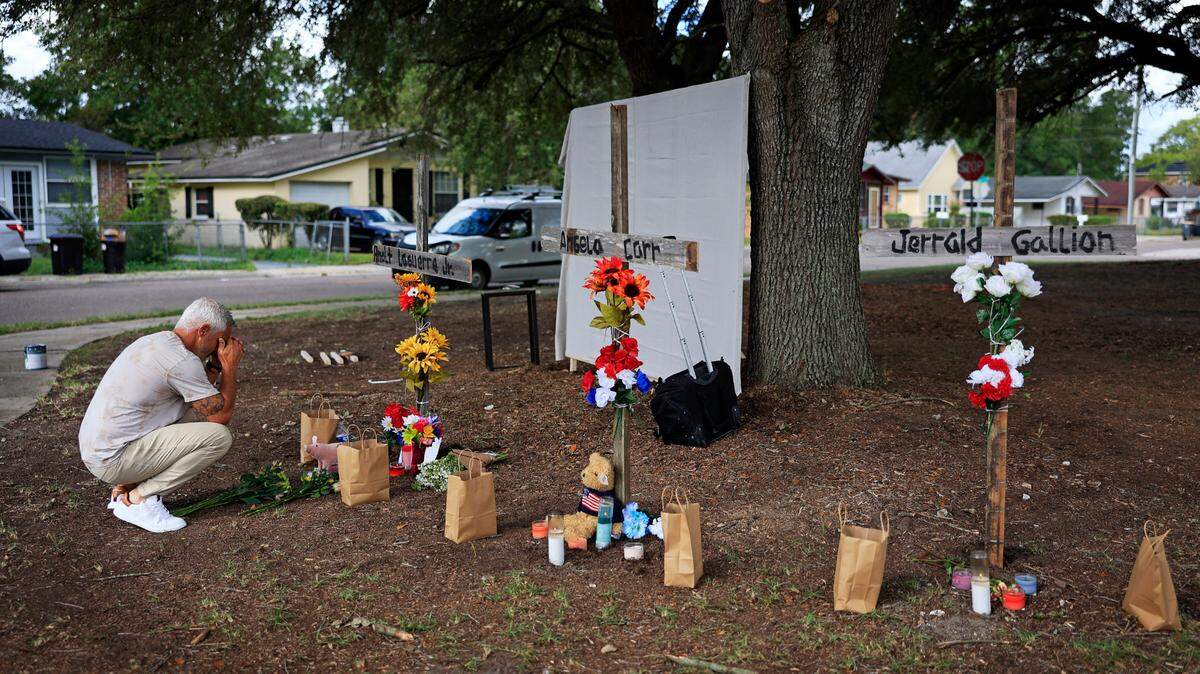
His sermon, delivered before the racially motivated Aug. 26 killings at the Dollar General in Jacksonville, Fla., now seems prophetic. In describing a world that is not always kind, he could’ve easily been talking about the 21-year-old white gunman who took the lives of three African-American people that day.
Unfair because we are still experiencing racially motivated killings in our country. Evil because, as Jacksonville Sheriff T.K. Waters said in describing the shooter, “Plainly put...he hated Black people.”
And wrong because there’s seemingly no accountability for what happened. Let’s be clear: the shooter, who cowardly took his own life, is at fault. He acted alone, the sheriff said.
But, if we’re being honest, we must ask ourselves: Do we have some culpability for the vitriol in Florida? The hatred spewed by the gunman didn’t just occur in isolation. Were there warning signs missed?
Do we, as a community, create the conditions — intentionally or not, that incubate these behaviors, resulting in what happened in Jacksonville? Sitting on the fence or sheer silence supports unfair systems that contribute to tragedies such as this.
I understand some will blame our current political environment, where conspiracy theories seem to be stoked daily. Others will find fault in our failure to address loose gun laws or provide adequate mental health care to those who need it the most. And yet, some will simply say this is but one of the legacies of America’s original sin.
I don’t profess to know why what happened in Jacksonville is not an isolated occurrence. It feels like déjà vu. Think Buffalo and Charleston, to name a few. But I’m concerned that our history seems to reflect one step forward, two steps back.
We will not stamp out racism in my lifetime, but what an indictment on us if we stop trying. We must keep chiseling away, no matter the complexity or heaviness of the lift.
Juxtapose what took place in Jacksonville with a seminal event of the Civil Rights Movement — the March on Washington for Jobs and Freedom, which took place 60 years ago on Aug. 28. Leaders called for, among other things, an end to racism. That didn’t occur, but the march is credited with helping to pass the Civil Rights Act of 1964.
Then, less than three weeks later, the unthinkable happened. On Sept. 15, 1963, a bomb ripped through 16th Street Baptist Church in Birmingham, Ala., killing four Black girls, and injuring more than 20 people inside.
A year ago, my family visited this historic church as part of our civil rights journey. We saw the spot where the bomb exploded. The four girls who died were ages 14 and 11 — the same ages my girls were during our visit. I couldn’t help but think that these girls could’ve been my daughters.
At the March on Washington, Dr. Martin Luther King, Jr., delivered one of the most inspiring and impactful speeches ever. Thirty-five of those words sit with me today: “I have a dream that my four little children will one day live in a nation where they will not be judged by the color of their skin, but by the content of their character.”
We’re not there yet.
We’ve got a long road ahead. A road that will no doubt have its share of unfair moments that “can make you tired,” as my pastor put it. Despite our progressive strides, history has shown us that setbacks are sure to follow. Still, we must press forward.