
Anita Earls is a political NC justice, but she shouldn’t be punished for it | Opinion
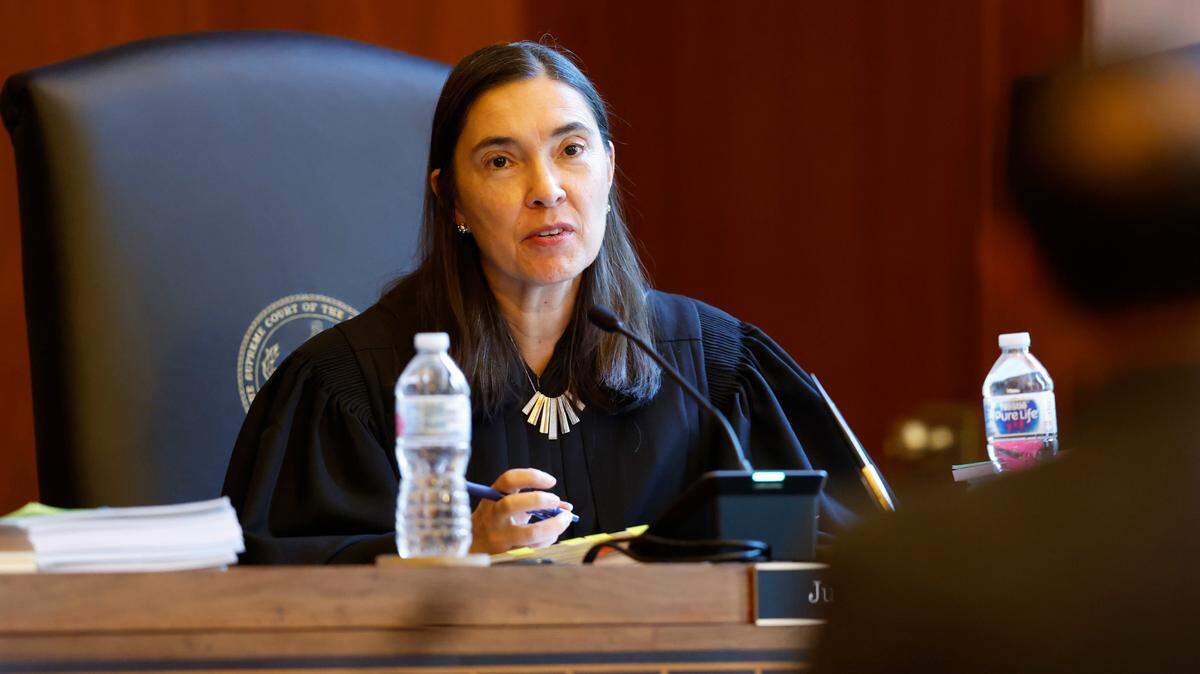
It’s with a heavy heart and a confused soul that I admit I agree with some of columnist Ned Barnett’s points about N.C. Supreme Court Justice Anita Earls.
She filed suit this week against the Judicial Standards Commission, which looks into whether judges broke rules.
Earls alleges the Commission is violating her right to free speech by investigating unflattering public remarks she made about her colleagues.
The remarks, given in an interview with the publication Law360, are mostly a rehash of the racialized speculation that consumes most of our dull political discourse these days.
Earls proposed that “male advocates” and “white advocates” get more respect when arguing cases, and she thinks it’s because of implicit bias. The rest is mostly food from the same trough.
It seems to me there are two questions: 1) Do those comments harm “confidence in the integrity and impartiality of the judiciary,” which court rules frown upon? 2) Even if they do, should judges have different rules about political speech than everybody else?
I don’t think the answer to the first question is obvious. One interpretation, which I hold, is that Earls implied most of her colleagues are racists (even if they don’t know it!). That certainly calls into question the impartiality of the judiciary.
But there’s another interpretation that’s reasonable and that most readers of this page probably hold: Publicly discussing perceived problems on the court is the only way to fix them, and in the long run that helps the judiciary become a better institution. In that reading, Earls is a saint speaking hard truths.
Regardless of which interpretation you find compelling, some panel deciding which one seems truer is probably the worst possible outcome.
That brings us to the second question. Judges, in my opinion, should not face rules about general political speech that differ from everybody else’s. And since I believe the number of rules governing general political speech should approach zero, I think Earls should be able to criticize the court and her colleagues all she wants.
Yes, there are some rules about specific speech that should apply to judges and nobody else, mostly involving particular cases and decisions. But that isn’t at issue here.
Is it obnoxious that Earls gripes to a reporter that she’s surrounded by a bunch of (subconscious!) racists when she goes into work every day? Yes.
She said she often wonders whether it’s race, gender, or politics that cause her to be “treated differently by [her] colleagues.” Well, complaining about those colleagues in public seems pretty high on the list of likely reasons for frosty treatment.
But should Earls be allowed to say those things? Of course.
Amid a debate about censorship and diversity of thought, I don’t think it’s right that some commission might say a Supreme Court justice can’t speak her mind about the judiciary.
If the concern is about impartiality, then Earls and her enablers have done far worse to call that into question than complain to reporters.
Start with her run for Supreme Court in 2018. Eric Holder’s organizations poured six figures into getting her elected. He publicly endorsed Earls and hosted fundraisers for her.
Then, a few months after Earls won, Holder filed a massive lawsuit against state Republicans that Earls helped decide.
Sen. Amy Galey said at the time, “Nobody can argue with a straight face that Justice Earls will rule impartially on a case argued by her former law partner and funded by her campaign megadonor against the same group they spent years [together] suing.” She’s right.
I think Earls has always been a political animal at heart. I think she ran for Supreme Court because she saw it as the more effective route to impose her policy vision for the state.
Regardless of whether the Judicial Standards Commission is right or wrong, all this suggests to me the Supreme Court isn’t a great fit. The proper place for a political warrior is the legislature, not the judiciary.