
Abortion: NC doctor’s collection of heart-wrenching patient stories grows | Opinion
When I learned last year that I would have the opportunity after OB/GYN residency to pursue additional training in contraception and abortion care in North Carolina, I was invigorated at the prospect of providing comprehensive reproductive health care to patients in the Southeast.
Little did I know that the N.C. legislature would soon enact a bill making essential gynecologic care out of reach for many North Carolinians and those in surrounding states. With the passage of Senate Bill 20, most abortions are illegal after 12 weeks of gestation.
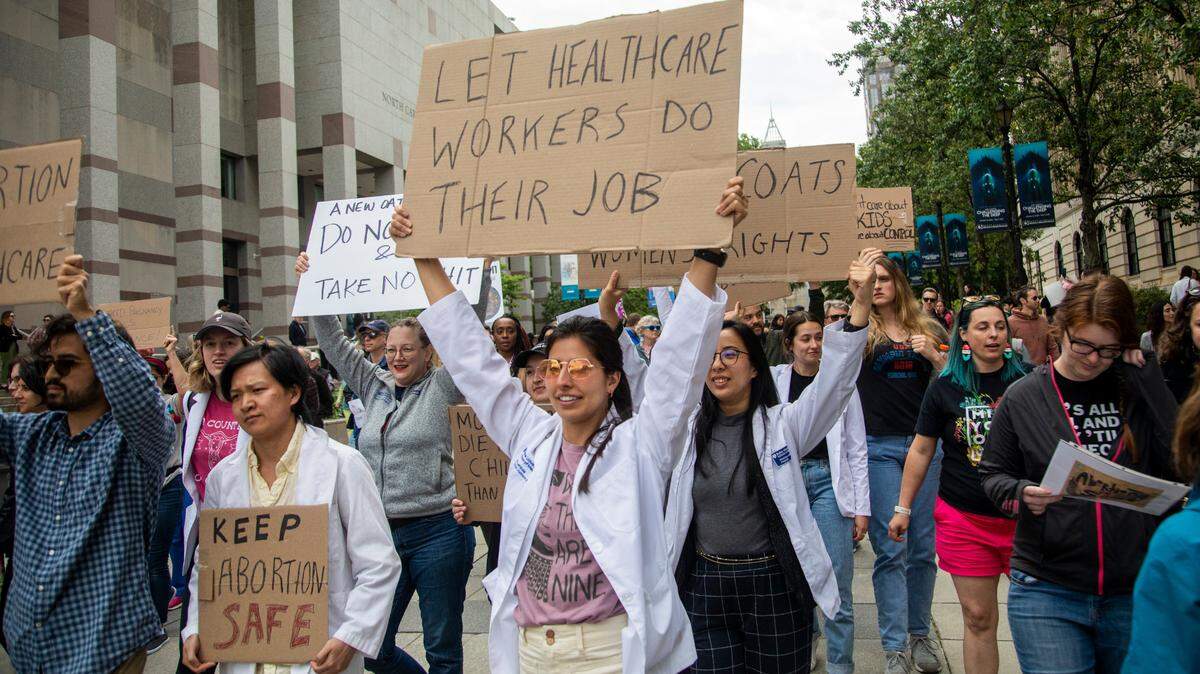
After only a few months here, it’s clear that North Carolina’s abortion restrictions are detrimental to patients and providers — and that this is an unsustainable way to provide health care.
Under the law, which took effect July 1, 2023, patients must present in-person to sign stacks of consent forms at least 72 hours in advance of an abortion — regardless of how far they are traveling or whether they have work or childcare responsibilities.
A new Guttmacher Institute analysis shows that abortions in North Carolina dropped 31% in the month after the law took effect, likely due to restrictions in the law. In my experience, a substantial proportion of patients face obstacles to timely care, such as the need for childcare, challenges finding a provider, limited financial resources, not realizing they’re pregnant, or needing more time to decide.
Prior to relocating, I took for granted my ability to provide unfettered, high-quality care for my patients. Here, I am routinely unable to provide the standard of care, and my collection of heart-wrenching patient stories grows:
▪ A single parent coming from out-of-state for an abortion because she knew she couldn’t take care of another child. She signed her consent forms but never made it back because she was unable to find childcare or transportation.
▪ A teenager who waited too long to admit she was pregnant, scared of repercussions, who was just past 12 weeks and could not be seen.
▪ A woman grieving the diagnosis of a lethal fetal anomaly in the second trimester, who could obtain an abortion under N.C. law, but instead traveled hundreds of miles to another state because she did not trust the law to protect her.
▪ A mother who almost died in her last pregnancy. She wanted another baby, but wanted to be alive to care for her children more. Had she presented only a few days later, we would have had to refuse her care.
Health care providers of all specialties are choosing not to train or practice in North Carolina because they will be unable to provide or refer patients to essential health care, and might not have access to that care themselves.
I cannot blame them.
Caring for patients with complicated or unwanted pregnancies can be challenging. But when the legislature decrees that caring for some patients is illegal, it becomes impossible.
North Carolina providers are having to turn patients away — not for any medical indication, but because politicians have decided that their constituents cannot be trusted to make highly personal healthcare decisions for themselves.
Extensive research confirms that abortion is safer than continuation of pregnancy, and that medications prescribed and procedures performed in abortion care are safe and effective. Providers working under medically unnecessary restrictions have to tell patients, “We have the knowledge, skills and technologies at our disposal, but we still cannot provide you with the safest care option.”
My patients, our communities, deserve better. There is no medical reason for any of the restrictions in SB 20, just political ones. Forcing patients to consent in person, for example, is intended to waste time and run out the clock for patients. The administrative burden must be reduced so that providers can focus on what matters — the patient, not the paperwork.
As bleak as things may seem here, I am reminded daily that it is a privilege to be caring for patients, and to be doing so among resilient providers who are working so tirelessly to fight these senseless laws. These encounters inspire me, but that isn’t enough. I certainly won’t be able to call North Carolina home as long as these laws are in place.