
NC can’t have judicial standards that only apply to Black female Democrat justices | Opinion
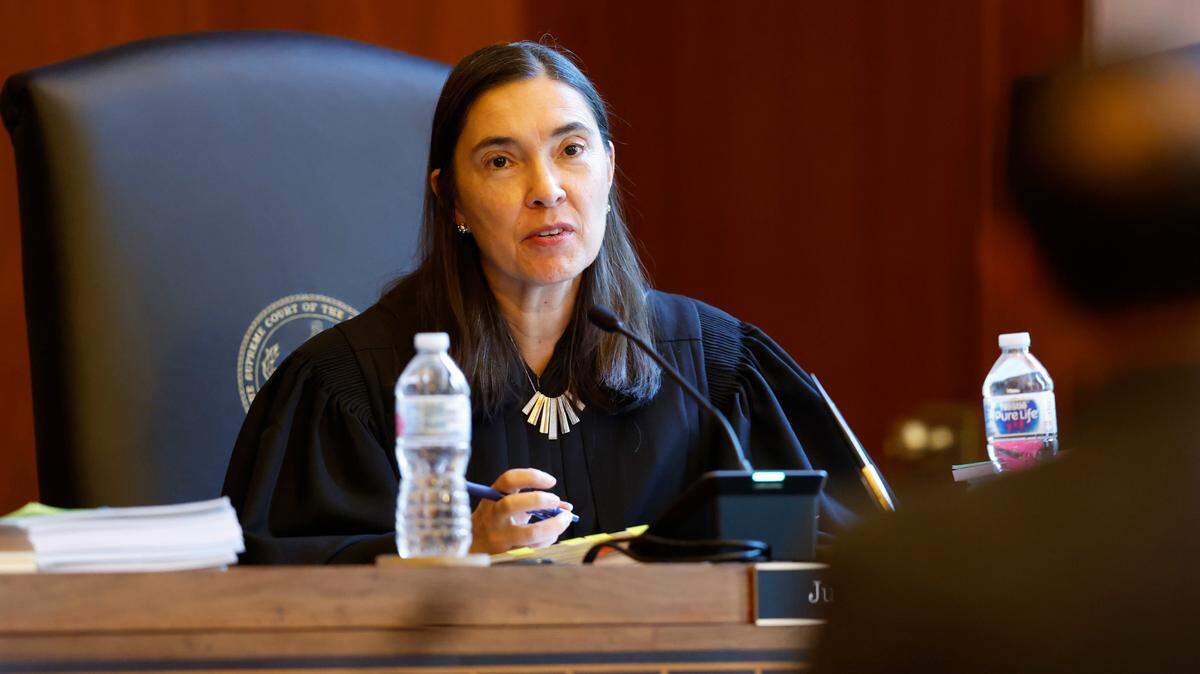
I was disappointed, I’ll concede, that a federal court last week didn’t, even at this early stage, prevent the N.C. Judicial Standards Commission’s continuing harassment of Justice Anita Earls. Not surprised, perhaps, but disappointed.
I’m an old Federal Courts teacher, so I know of the reluctance of federal tribunals to interfere with state investigative processes. And the full contours of freedom of speech in judicial elections remain surprisingly underdeveloped. My expectations, then, were modest. But the moves of the Judicial Standards Commission, and Judge William Osteen’s decision to defer to them, ill-serve North Carolina.
Osteen noted the commission’s purported concern that Justice Earls said to an interviewer “the new members (of the Supreme Court) talk of themselves as a conservative bloc, their allegiance is to the ideology, not the institution.” This, according to the judge, could “suggest that a bloc of justices on the N.C. Supreme Court place their political ideology above the institution — thus reflecting on the integrity of the judiciary.” Well, yes it could.
The problem with sanctioning Earls for saying the new Republican Supreme Court’s “allegiance is to the ideology, not the institution” is that her statement is literally and precisely true. In fact, those eight words may be the truest ever spoken about our new court.
“Political ideology”, as Osteen puts it, does, without doubt, call the shots on our high tribunal. Every time. Nothing else matters so much. It takes only a reading of the case reports to demonstrate it. Can it be that the First Amendment allows the straight-forward truth, spoken by the government official who is the closest and most knowledgeable witness to the massive transgression, to be censured?
Judge Osteen also reminds that the N.C. Judicial Code was “established in furtherance of an independent judiciary which is indispensable to justice in our society.” It is potently ironic that Republican political judges have surrendered the demands and aspirations of judicial independence, but Justice Earls is apparently to be sanctioned for calling it out. It’s the clean sweep of suppression.
There is a second aspect of this charade that a system of free expression can’t tolerate. Speech restrictions can’t be applied selectively, limiting some but allowing others to go forward merrily unregulated.
Paul Newby, the most partisan chief justice in N.C. history, has written that an opinion by former Democratic justice Robin Hudson represented “partisan biases that have no place in a judiciary,” and that his six former Democratic colleagues were “six AOCs” (referring to Alexandria Ocasio-Cortez).
Phillip Berger Jr., the most partisan justice in N.C. history, joyously cited an article declaring “the lasting Republican grip on the N.C. Supreme Court” in an opinion. He referred to Justice Earls’ “ad nauseum fanciful protestations” in another. You can’t have expression rules that apply only to Black women Democratic justices. The Judicial Standards Commission is charged with knowing that.
Finally, the Republican politicization of the N.C. Supreme Court has now effectively constrained the ability of the state standards scheme to operate constitutionally. The Judicial Standards Commission can only seek more serious sanctions — ranging from reprimand to removal from the bench — by recommending them to the state Supreme Court for actual implementation.
But various Republican justices of the high court have proven not only to be among Justice Earls’ most aggressive tormentors, but are themselves the state’s greatest practitioners of partisan, ideological, judicial decision-making. Shall they now sit in judgment of Earls? Talk about rich. This is apparently due process in North Carolina.