
If only our leaders could be as thoughtful as these NC students on the Israel-Hamas war | Opinion
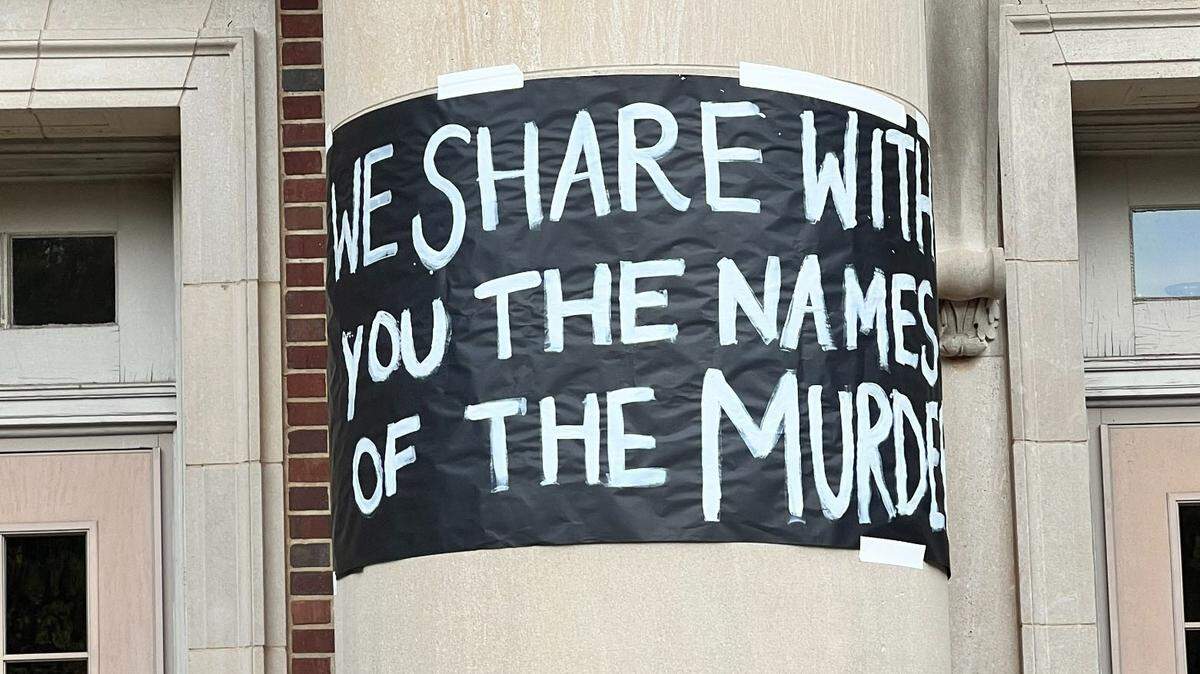
It was the most Davidson College of protests, the kind that usually doesn’t make national news but could dispel the distorted view of what happens on college campuses if it did.
A group of students decided to print the names of thousands of victims of the Israel-Gaza conflict. In the dead of night, they plastered names on the walls of a building at the heart of academic life, making it impossible for anyone walking those halls to miss. It worked. People noticed. Some were heartened. Some laughed. Some were angered. Some grew fearful.
The most curious exchange I saw was between a few concerned Davidson College administrators and the physical plant workers tasked with removing the display. The administrators apologized to the workers.
“It’s no big deal,” one of them told me in response to a question about them having to do extra work. “Because it’s just painter’s tape.”
He chuckled and then went back to tearing down the names.
Painter’s tape, for the uninitiated, is easy to stick on, easier to rip down. In effect, the students had guaranteed there would be no physical damage to the walls even while getting their point across, the most genteel of genteel student protests.
Agree with or despise their actions, in their own way, they wanted to bring more light than heat to a topic that has been overheated for several decades.
More than that, the student protesters had been careful to include the names of Israeli and Palestinian victims. They came to that decision after spending hours grappling with what to do and listening to a variety of voices who supported the protest, those who didn’t, and those who felt it wrong to weigh in at all, saying “We don’t want to get political.” That’s how serious they are about their calls for a ceasefire. They are horrified by the killing and want it to stop. Now. They are not pro-Hamas. They are pro-peace.
I’ve seen other students grapple with this issue across difference, passionately and dispassionately, including one who felt unsafe as a Jew because of their direct ties to Israel and tiny representation on campus, and another who felt unheard as a Muslim-American with ties to Palestinians knowing anything they say might be purposefully misinterpreted by bad actors.
Over the years, I’ve watched students who have seemingly-unbridgeable differences, to the point of nursing a dislike of each other, still work together on class projects and engage in emotional-complex discussions during which it felt like their hearts were going to jump out of their chests, after which they needed breathers to regain their composure.
I’ve watched them struggle to be heard but still find the courage to listen for understanding, for empathy, for compassion. I’ve seen them repeatedly try to do what grownups are supposed to be doing during times such as these, even if they’ve sometimes done things I wouldn’t have, uttered things I would have avoided, and unwisely spoken with certainty on issues in which there is little.
It’s in stark contrast to what I’ve seen on Capitol Hill, with the House of Representatives taking yet another step to suppress the speech of those who dare question the actions of government officials since the Oct. 7 Hamas terror attack. The House overwhelmingly passed a bogus resolution that conflates criticism of U.S. and Israeli policy with antisemitism — effectively labeling even Jewish Americans as antisemitic if they criticize Israel’s right-wing government.
While the people we’ve elected to lead us through troubling times are focused on generating headlines and soundbites that might be good for their reelection campaigns, the young people I know actually want a solution that will lead to a reduction of bloodshed and the loss of innocent life in the Middle East and a decrease of antisemitism and Islamophobia here.
They aren’t perfect. None of us are. But they are trying to learn to listen to each other, which is more than I can say for our “leaders” who garner the most attention and generate the most clicks.