Charlotte leaders, police confront a growing problem: Uptown feels unsafe
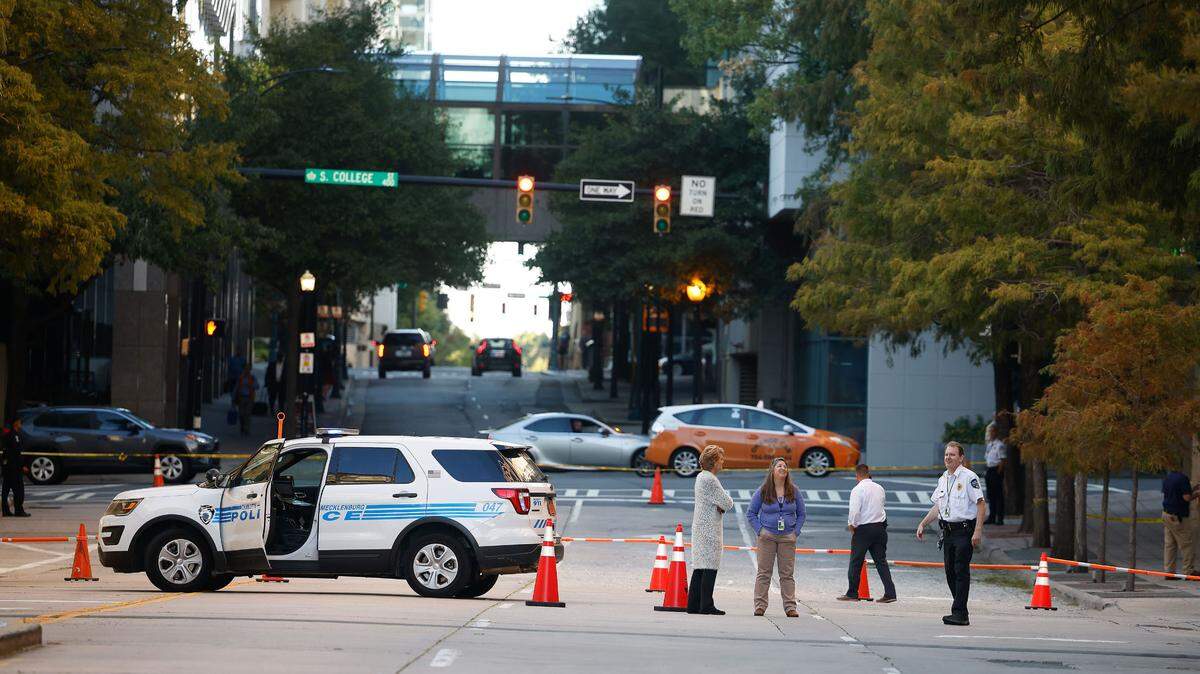
Concerns about public safety in uptown Charlotte have occupied the minds of residents, business owners and city leaders, particularly since 2024 began with a shooting that wounded five in uptown Charlotte. More recently, street takeovers and a drive-by shooting brought even more disturbing headlines over Memorial Day weekend.
Violent crime in uptown has actually decreased this year, according to the Charlotte-Mecklenburg Police Department’s crime statistics from the first quarter of 2024. But a run of shootings and fatal stabbings has left residents questioning whether the center city is safe enough to visit, business owners worrying about the potential effects on the bottom line and city leaders wondering what to do about it.
Bridging the gap between perception and reality has been a priority for city leaders, Charlotte City Council member Malcolm Graham told me.
“I’m of the belief that if you don’t feel safe, you aren’t safe,” said Graham, whose district includes parts of uptown. “But there’s a perception problem that we’re battling, given the reality that crime has actually decreased in uptown, not increased.”
CMPD has also taken steps to target crime and safety in uptown specifically. Earlier this year, the department launched Operation TRIO, which expanded police presence in First and Fourth Ward Parks and Romare Bearden Park to complement preexisting efforts near the Spectrum Center and the Charlotte Transportation Center. TRIO has helped reduce violent crime incidents in Uptown by 13% in 2024, the department announced in April.
Graham said he often hears from property managers who manage hotels and apartment complexes uptown, as well as First Ward and Third Ward residents, who are concerned about crime and safety. Uptown residents, particularly in First Ward, have complained about constant gunfire and property damage on social media.
Matthew Ridenhour, a former Mecklenburg County commissioner, said that his family has changed their behavior as a result of safety concerns. He and his wife still venture into uptown for a show every now and then, but they no longer stop somewhere for a nightcap the way they used to, he said.
“It seems like the overall perception is that uptown just isn’t as as welcoming and and safe as it once was,” Ridenhour said. “And having spoken with neighbors, absolutely, I’ve had conversations with neighbors where they’ve expressed a similar sentiment.”
An additional factor: residents and visitors see behavior such as public intoxication and aggressive panhandling as unpleasant at best and potentially unsafe. Public pooping has also been a problem. In response, the city coucil voted to reinstate criminal penalties for certain ordinances, such as public intoxication, defecation and panhandling. State law decriminalized those ordinances in 2021, which uptown residents say harmed their quality of life and caused health and safety concerns, particularly in regards to drinking and drug use in parks and aggressive panhandling.
CMPD has also begun deploying officers to uptown bars and parking lots during the late night and early morning hours, a department spokesperson told me. People have also noticed an increased police presence at Charlotte Knights games, or during large events like the Lovin’ Life Music Fest.
That increased police presence can be both reassuring and unsettling. Some residents, particularly those from Black and brown communities, may feel uneasy due to a lack of trust in law enforcement. Even those who have had positive experiences with the police may find it off-putting and wonder if the presence of officers in places they may not have seen them before is indicative of a larger problem.
It’s also true that homicides across the city have risen, making Charlotte one of the only major U.S. cities where the homicide rate is on the rise, Axios Charlotte reported in April. CMPD’s first-quarter crime statistics showed a 31% increase in homicides from the same period in 2023. Charlotte is also seeing a concerning uptick in juvenile crime, which led city council to endorse funding for a new youth mental health facility on Thursday.
But in the age of the internet, when every negative experience can be broadcast over social media, perception may trump reality. The tragic headlines, the alarming anecdotes — those are the things that stick with people, far more so than the statistics. It certainly doesn’t help, either, that public safety has become extremely political, with Republican politicians accusing Democrat-led cities of being “soft on crime” or, more outrageously, opening the border to undocumented immigrants supposedly hellbent on terrorizing U.S. citizens.
And as long as people question whether it’s safe to live in, work in or visit uptown, the city has work to do.
This story was originally published May 29, 2024 at 9:09 AM.