
Maps show 2 North Carolinas are fighting to decide our next governor | Opinion
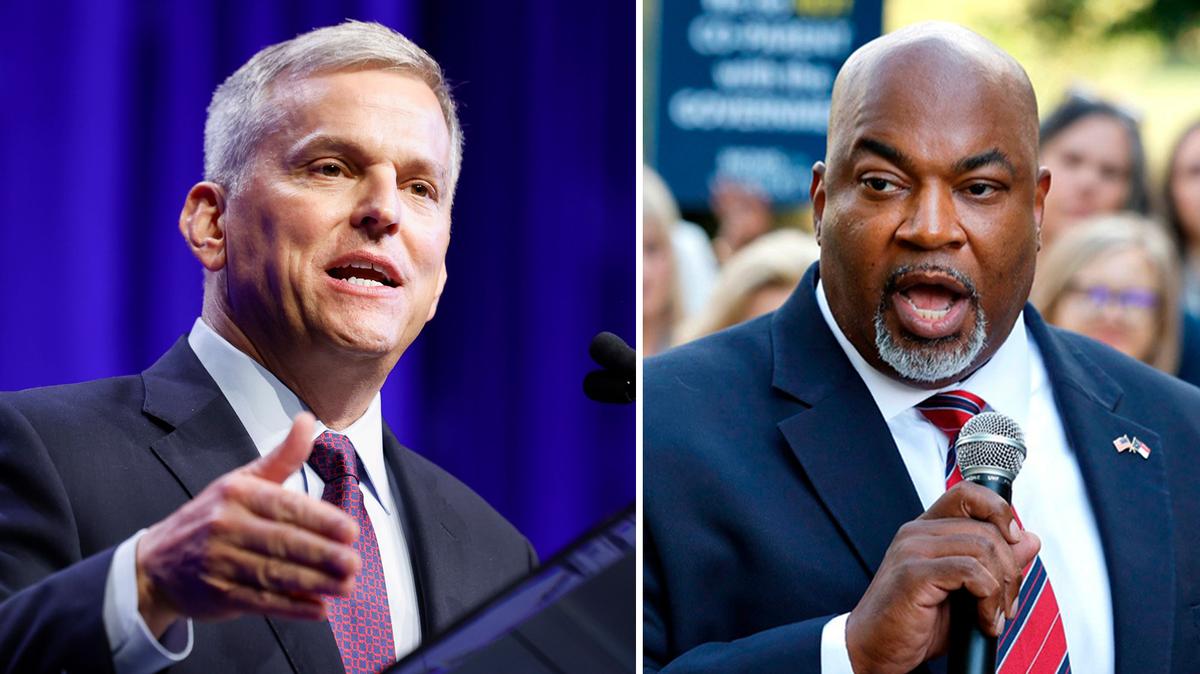
The striking contrasts in the 2020 voter maps for Josh Stein and Mark Robinson reveal how two North Carolinas are fighting it out in this year’s race for governor.
Understanding the two North Carolinas starts with grasping the electoral might concentrated in seven of the state’s 100 counties: Buncombe, Cumberland, Durham, Forsyth, Guilford, Mecklenburg and Wake. These Big 7 counties account for nearly 4 in 10 votes in statewide elections.
Stein won his 2020 Attorney General’s race because of the Big 7. Robinson won the Lieutenant Governor’s race by going around the Big 7.
In 2020, Robinson won 2,800,655 votes. He lost all of the Big 7, by a total of 552,602 votes. In the other 93 counties, Robinson ran ahead by 729,800 votes. In all, he won majorities in 78 counties and posted a statewide victory margin of 177,198 votes.
That same year, Stein won the Attorney General’s race with 2,713,400 votes. He won all the Big 7 counties, by a margin of 606,994 votes.
As for the other 93 counties? In these places (including 20 counties Stein won), Stein trailed by 593,372 votes. This left him with a winning margin of 13,622 votes.
Consider the power of a one large county: In 2020, Stein netted 109,299 votes in Durham County alone. In the other 99 counties, he trailed by more than 95,000 votes.
In a state otherwise divided, the two North Carolinas are colliding in a few places. In 2020, both Stein and Robinson won in Martin, Nash, New Hanover, Pasquotank and Scotland counties. Western Carolina University political scientist Christopher Cooper advises paying particular attention to New Hanover, which he describes as “an interesting -- some might argue schizophrenic -- place politically” and “a pretty good microcosm of North Carolina politics. It’s as close to a bellwether as we’ve got.”
Stein’s map is the more typical one for North Carolina governors. In 30 of the 31 elections for governor since 1900, the winning candidate carried four or more of the Big 7. Republican Pat McCrory is the lone exception; in 2012, his victories in Forsyth, Mecklenburg and Wake neutralized the Big 7. Overall, McCrory won a majority of votes in 77 counties.
For the 2024 governor’s race, a winning map for Stein would include overwhelming margins in the Big 7 and wins in 20-25 additional counties (Gov. Roy Cooper won in 28 counties in 2016 and 29 counites in 2020).
For Robinson, his path to victory must minimize the magnitude of losses in the Big 7 and produce decisive wins in smaller counties. This was Jesse Helms’ pathway to victory in his 1984 Senate race against Jim Hunt, a contest Helms won by 86,280 votes.
Robinson can win with a version of the Helms ’84 voter map. Helms rolled up large margins in smaller counties, netting about 73,000 votes – nearly all of his statewide victory margin – in Alamance, Cabarrus, Catawba, Davidson, Gaston, Henderson and Randolph counties. Helms lost the Big 7 counties but kept it close. For example, Helms netted more votes in Randolph (12,353) than Hunt did in Wake (10,912), proving the value of bigger wins in smaller places.
This year, voters are competing for more than the governor’s mansion. As veteran AP political reporter Gary Robertson described it, the race is a fight for the state’s identity: “One candidate is an Ivy League-educated attorney who over 25 years amassed allies as he climbed North Carolina’s Democratic ladder. The other is a former furniture factory worker with a history of blunt commentary who plowed into Republican politics four years ago after a viral video on gun rights vaulted him to prominence.”
The fault lines depart from the usual red vs. blue divide. In the Big 7, where in-migration, universities, medical centers, technology and the arts fuel prosperity, there are Republican professionals who identify with Stein. In the second North Carolina, where folks are frustrated by higher unemployment, poorer health outcomes, and unaddressed infrastructure needs, there are Democrat working folk who identify with Robinson. Their frustration is multiplied by a perception that political and media elites are failing these communities.
Stein and Robinson are “strangers in their own land,” to borrow a phrase from the sociologist Arlie Russell Hochschild. The distance between them reflects the distance between the two North Carolinas and shines a spotlight on all that is at stake in November.
This story was originally published September 16, 2024 at 9:42 AM.