After learning of her ancestor’s ties to white supremacy, an NC woman takes action | Opinion
A couple of years ago, Sara Merlo’s mother found an old, yellowed newspaper clipping when going through boxes in their family home.
It was an article about Merlo’s great-grandfather, E.V. Reams, who Merlo knew had been a justice of the peace in Mississippi in the days of Jim Crow.
But what Merlo hadn’t known — and would learn from the article — was that her great-grandfather exonerated a fellow justice of the peace who had murdered a Black man in cold blood in 1953.
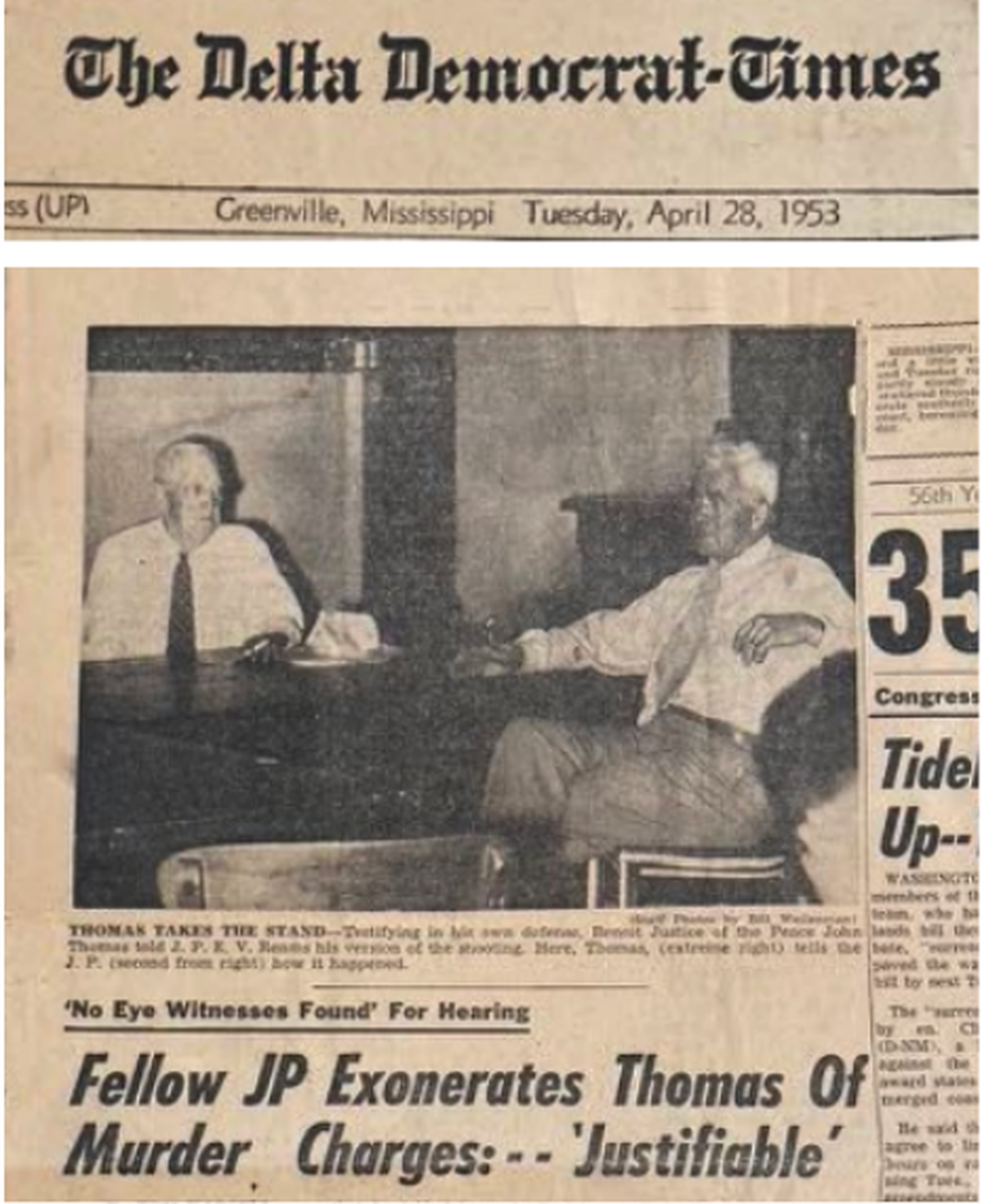
The victim, Claude Otis Johnson, was a 34-year-old man who worked on a plantation in rural Mississippi. According to witnesses, justice of the peace and storekeeper John Thomas fatally shot Johnson three times after an “argument over a small grocery bill.”
Thomas and two law enforcement officers were the only ones to testify at the hearing. The officers said they could not find any eyewitnesses to the crime after “searching diligently,” but the local newspaper “had no difficulty” finding several witnesses, including Johnson’s wife. Thomas argued that the killing was self-defense and insisted he only shot Johnson after the man “jumped out at him.” But witnesses recalled that Thomas was the aggressor, hitting Johnson over the head with the gun before shooting him three times in the stomach and chest.
Reams ultimately dismissed the murder charges against Thomas as “justfiable homicide,” saying, “I don’t think you’ve produced enough evidence to bind him over to the grand jury. My decision is that he was justified in what he did,” according to newspaper clippings.
The discovery was shocking, but not entirely surprising, Merlo said, as she remembered her grandfather, who was E.V. Reams’ son, being an overtly racist man. But Merlo was struck by the details of the case, and by the photograph of Johnson’s five children that was included in the article, so she decided to do some research of her own.
That research eventually led her to the Civil Rights and Restorative Justice Project (CRRJ) at the Northeastern University School of Law, a program that documents anti-Black violence and the failures of the criminal justice system to hold perpetrators accountable. CRRJ’s archive documents hundreds of anti-Black killings in the southern United States between 1930-54, including more than 50 here in North Carolina.
It’s not quite that Merlo feels ashamed of her great-grandfather’s actions. Shame isn’t the right word for it, she tells me.
“The feeling that I have is that this is a tragic story, and I am connected to this. Like this is part of what I come from, and the person who made this shameful choice is part of my DNA,” Merlo told me. “And so I think with that comes a sense of responsibility to try to move in a different direction.”
Merlo inherited her great-grandfather’s dining room table, but it’s not a place she sits with any intention of carrying on his legacy. It’s a table where she sits now to do the opposite — to find ways to achieve restorative justice for victims of white supremacy.
The conversations Merlo had with CRRJ about her great-grandfather eventually led her to where she is today: working with CRRJ as an education consultant, creating lesson plans and case studies for North Carolina high school students to learn more about Black history and the perils of white supremacy. The lessons are designed to teach students about things like lynching, law enforcement violence and the failures of the criminal justice system — and encourage them to think about how this history is still relevant today.
To Merlo, teaching those lessons and telling those stories is more important than ever.
“I’ve always been interested in this history, but the piece that’s been motivating me recently is the onslaught of book-banning and backlash against African American history courses,” Merlo said. “It’s that current climate and context that gives me a sense of urgency.”
None of us are to blame for the actions of our ancestors. But we aren’t detached from them, either. And we all have a moral responsibility — simply by virtue of being human — to do better. Whether that’s having tough conversations with our grandparents at the dinner table or teaching a new generation about the sordid parts of America’s past, every white person has a role to play in dismantling the systems that carry that past into the present. And that’s exactly what Merlo is doing.