
NC voters need to know more about judicial candidates’ stances, not less | Opinion
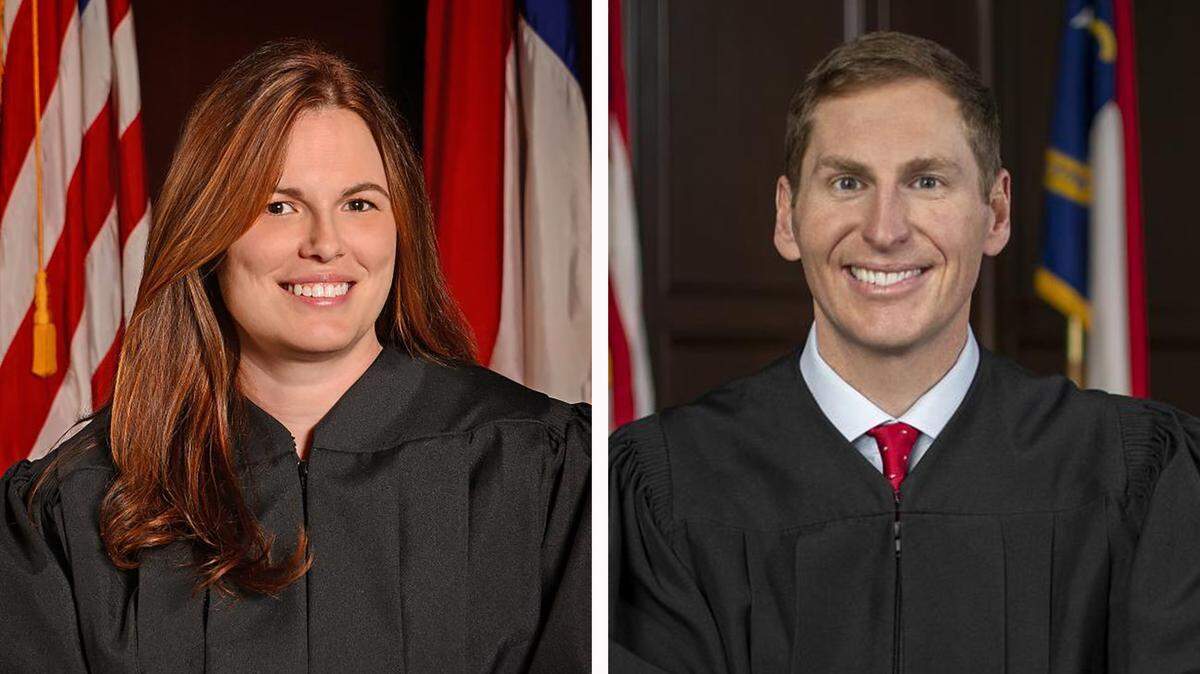
In the only race this year for a seat on the North Carolina Supreme Court, the Republican challenger has accused sitting-justice Democrat Allison Riggs of behaving unethically by advertising her general support for reproductive rights. Judicial neutrality and independence are important, but Justice Riggs sharing her views was an equally important service to voters, consistent with both judicial and democratic values.
Campaigning for judicial office is a walk on a “narrow balance beam.” Voters need enough information about candidates to cast informed ballots, but judges earn and maintain public trust by following the law and refraining from pre-judging disputes that might come before them. So how much should judicial candidates share about themselves, their values and their views of constitutional rights? If we are to ensure an informed electorate, voters deserve to know more than just their party affiliation.
The North Carolina Code of Judicial Ethics prevents candidates from speaking on the merits of pending cases, but does not, and should not, prevent judicial candidates from telling voters who they are, what they stand for and how they would approach unsettled areas of law. This is especially true as previously-settled federal constitutional rights are increasingly decided by state high courts.
The court’s approach to these rights has real-life consequences for North Carolinians. Take the state constitutional right to a “sound basic education,” which has no parallel in the U.S. Constitution. Under then-Chief Justice Cheri Beasley, the NC Supreme Court upheld a lower court ruling ordering a multi-billion-dollar transfer of funds from the General Assembly for the purpose of providing every student a sound, basic education. After current-Chief Justice Paul Newby took the helm in 2023, a new Republican majority prevented the court’s order from taking effect, leading to continued stalemate on funding for public schools. In two other cases, the court overturned recent decisions and held that our state constitution provides no protection against partisan gerrymandering while weakening protections against racially discriminatory voting restrictions. It would have been instructive to hear candidates’ perspectives on the importance and scope of these rights during their campaigns.
In the contested campaign advertisement, Justice Riggs states that “as women we should be in charge of our own reproductive health care, but our rights are at risk.” She reminds viewers the North Carolina Supreme Court would likely determine the constitutionality of a state abortion ban. Voters might find this information instructive, given that her opponent, Court of Appeals Judge Jefferson Griffin, joined an NC Court of Appeals opinion, since withdrawn, declaring that life begins at conception, a perspective with significant implications for access to birth control, IVF, medical care following miscarriages and abortion.
Judge Griffin criticized Justice Riggs’ statements as unethical, and Republican state Sen. Buck Newton complained about her ad to the Judicial Standards Commission. That complaint was quickly incorporated into Judge Griffin’s own attack ad.
In past election cycles, judicial candidates shied away from sharing their perspectives on the scope and significance of our constitutional rights. This reticence does voters a disservice. Deep political conflicts over constitutional vision have always existed in our country. Often, they end up being decided by courts. As the North Carolina Constitution reminds us, its authority is ultimately democratic. “All political power is vested in and derived from the people,” it says. “All government of right originates from the people” and “is founded upon their will only.” When judges have to choose between dueling visions of constitutional rights the people should have the last word.
For voters to exercise our constitutional responsibility, we deserve to know where judicial candidates stand on our rights. We should not vote with less information about the judges than U.S. senators have about the judicial candidates they are asked to confirm. With increasing controversies coming to our courts, we need to know what candidates think. We should thank, not condemn, those who illuminate the stakes of these elections in meaningful ways.