North Carolina Democrats changed their strategy in 2024. The results were mixed | Opinion
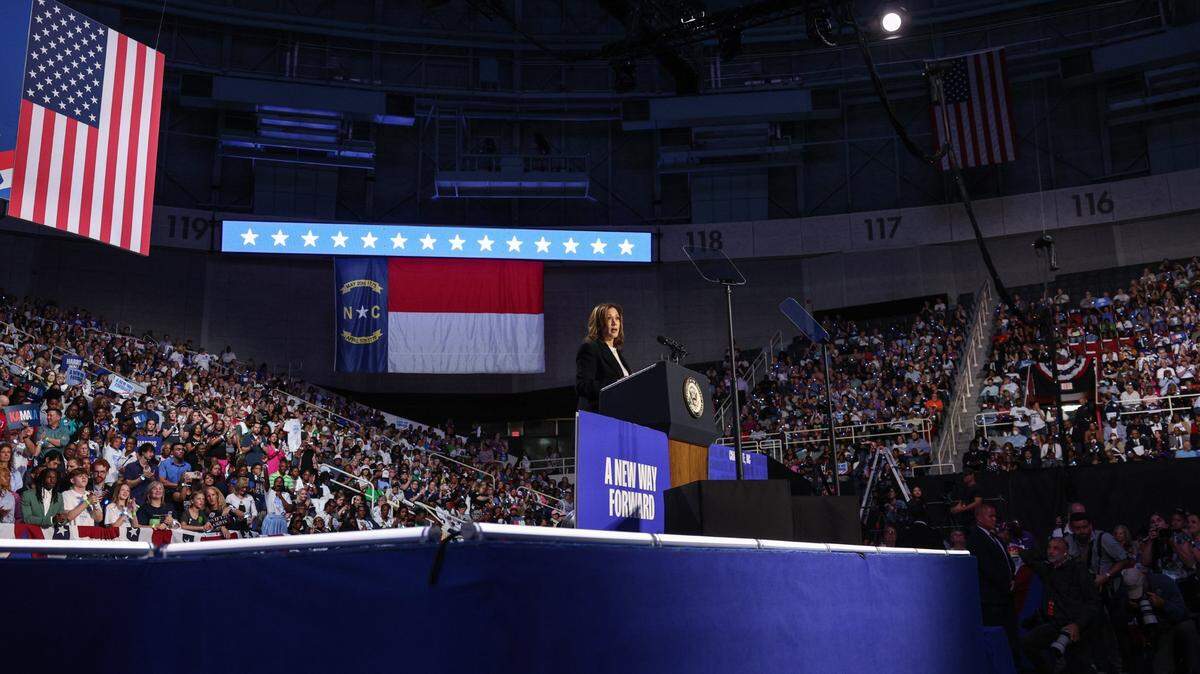
If you don’t look too closely, it may seem like the 2024 election was just more of the same for North Carolina Democrats.
It was the biggest test of new party leadership that promised a major shift in strategy after a disappointing 2022 midterms. Frustration among North Carolina Democrats reached a tipping point then, after the party underperformed relative to Democrats across the country. Republicans came just one seat short of a supermajority in both chambers of the state legislature, as Democrats left more than 40 seats uncontested.
In the aftermath, newly elected state party chair Anderson Clayton vowed to improve the party’s standing with rural and minority voters who felt Democrats had left them behind.
In the end, North Carolina favored a Republican for president in 2024, the same way it has in every election since 2008. But unlike other states, North Carolina didn’t experience such a drastic rightward shift, and Democrats picked up key wins in races further down the ballot — a sign that the party’s efforts still paid dividends this election cycle.
North Carolina Democrats had five things on their to-do list in 2024: vote blue in the presidential election, break the supermajority, win Council of State races, protect their N.C. Supreme Court seat and defend the state’s lone competitive congressional race in the 1st District.
They made a point not to repeat some of the mistakes made in 2022. Democrats left just two legislative seats uncontested this cycle, flipping three seats that likely cost Republicans a supermajority. Two of those seats were ones they lost in 2022.
Democrats also focused heavily on statewide races in 2024, and they won many of them. Voters didn’t have any trouble distinguishing between candidates in Council of State races, splitting their votes between them instead of voting straight down the ballot — an indication that Democrats’ messaging against extreme candidates may have been successful. Democrats won key statewide races for governor, attorney general, lieutenant governor, secretary of state and superintendent of public instruction. The N.C. Supreme Court race remains too close to call.
Douglas Wilson, a Democratic political strategist based in Charlotte, called the election a “mixed bag” for Democrats in North Carolina. Wilson pointed out that while Democrats won key races, their troubles at the federal level may have been hindered in part by low turnout in Mecklenburg County. That’s an ongoing problem that Democrats didn’t solve this time around.
“It’s still up to Democrats to show North Carolina voters why they should vote for Democrats not only at the state level, but at the federal level,” Wilson added.
Overall, North Carolina shifted to the right by about 2 points compared to the 2020 election — less than the country as a whole. It was also less drastic than in other battleground states, including Michigan, which shifted more than 4 points rightward, and Pennsylvania, which shifted more than 3 points to the right, according to an analysis from The New York Times.
Meanwhile, the majority of counties nationwide shifted to the right compared to 2020. Urban counties shifted 5.8 points to the right, suburban counties shifted 4.4 points and rural counties shifted 3.9 points in the GOP’s direction, according to analysis from The New York Times.
North Carolina’s small cities and rural counties shifted to the right by 3.8 points, which puts the state roughly on par with rural areas across the country. But North Carolina Democrats saw much less movement to the right in other areas, particularly in urban and suburban areas. According to a Washington Post analysis, North Carolina’s large and medium metros both saw a less than 2 point shift, while suburban areas actually shifted toward Democrats by half a point. That’s significantly better than the rest of the country, which saw a more than 5 percentage point shift in suburban areas and as much as 7 points in core urban areas.
“The campaigning worked. Putting all that time and money into the battleground states did not get the Democrats the ultimate prize, but it did help them maintain better margins,” Western Carolina University professor Chris Cooper said. “I think it suggests that campaigning still matters and attention still matters.”
There were some counties where Democrats improved relative to 2020, including Cabarrus, Brunswick and Johnston counties. They also made gains in western North Carolina, a part of the state where Democrats felt like they had been overlooked by the state party for years.
But ultimately, Cooper said, the results of the election don’t offer any big revelations for Democrats or for North Carolina.
“North Carolina is kind of stuck, much more than other states are. It’s not going to do a lot of shifting in either direction in any given election,” Cooper said. “This was not a sea change election in North Carolina. This did not signify a new moment in North Carolina politics. It was really a more of the same election, which is messiness.”