
As NC legislators swerve to extremes, bring back the guardrails | Opinion
Ran Coble reached out recently with some thoughts that reminded me of what North Carolina politics has lost and is poorer for.
The email from Coble, a longtime good government advocate, provides an analysis of what’s wrong with radical legislation just passed by Republican state lawmakers. The proposed law, Senate Bill 382, aims to strip powers from Democrats who were just elected to statewide office.
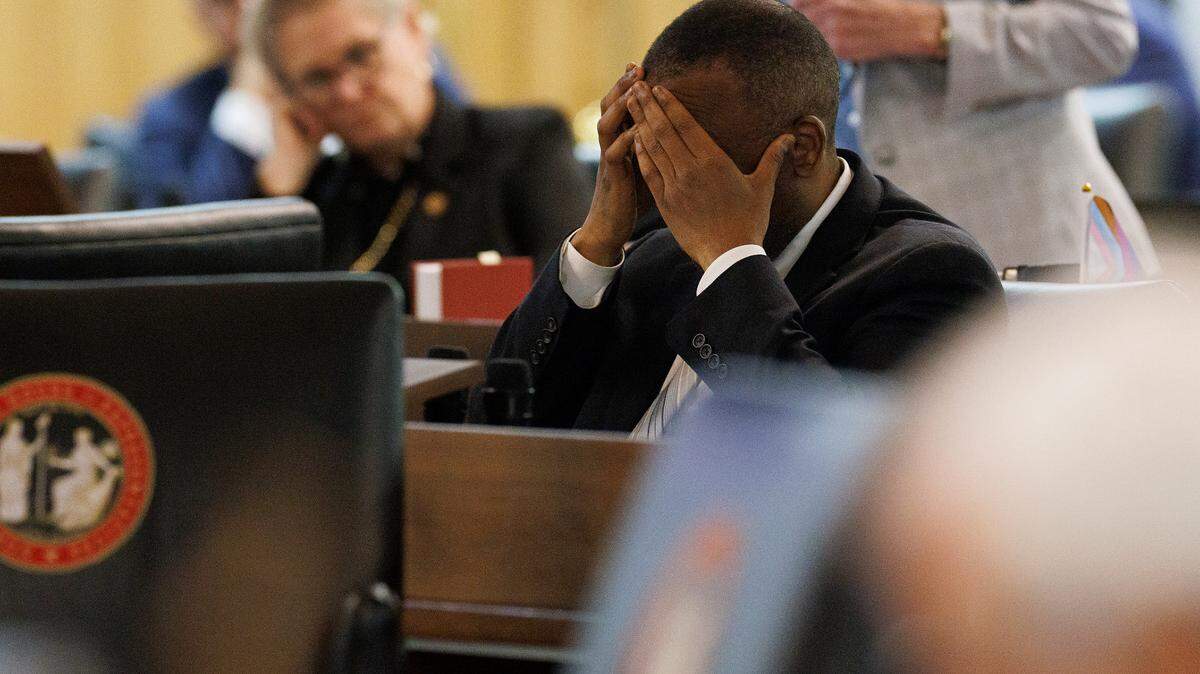
House Democratic leader Robert Reives, a member since 2014, called the bill “the biggest abuse I have seen since I’ve been here — and that is saying a lot.” Gov. Roy Cooper, a Democrat, vetoed the bill, but the veto may be overridden by the Republicans, who have a supermajority.
While in power, Democrats engaged in their own strong-armed tactics, Coble acknowledged, but he wrote that “the power grabs, abuses in legislative process and violations of the Constitution’s separation of powers clause by the Republican legislative supermajorities are far more excessive, far more aggressive, and far more dangerous to a healthy democracy.”
Coble’s analysis is clear and backed by a deep knowledge of North Carolina’s legislative history. You can read it online at newsobserver.com/opinion.
Along with commenting on the news of the day, Coble’s analysis evokes nostalgia for a more purposeful and less combative political climate. It recalls a time when the state’s lawmakers and governors of both parties worked to move the state forward.It’s far different than now, as Republicans wield their supermajority to build legislative power and advance a divisive agenda.
Coble, 75, has deep North Carolina roots. A native of Graham, he graduated from Davidson College, has a law degree from UNC and a master’s in public policy from Duke. From 1981 to 2014, he served as executive director of the N.C. Center for Public Policy Research, a nonprofit think tank governed by a bipartisan board. The Center for Public Policy Research issued in-depth reports on state issues that led to legislation and published the magazine “N.C. Insight,” an even-handed review of state policies and trends.
There are similar research groups today, but they tend to divide along partisan lines in their funding and their focus. The center’s 34-member board of directors was continuously adjusted to mirror the state’s population by gender, race, geography and voter registration.
“That board was whatever the state was and it changed over time,” Coble told me. “It gave us tremendous credibility in the legislature when we would go and testify on what we found in the latest research.Certainly there was no other organization that had that kind of balanced board at the time and I still don’t know of anybody who has it.”
The center, which has since been absorbed into the nonprofit EdNC, thrived during an era when North Carolina sought to be a leader in education through strong support of public schools and early childhood education. Partisan labels were taken off judicial races and the state Supreme Court ruled in ways that appeared nonpartisan. Changes in election laws encouraged wider participation, moving North Carolina from 48th in the nation in voter turnout to the top 10. Environmental protections were passed, including measures to channel development along the coast.
Now Republican lawmakers, insulated by extreme gerrymandering, push an agenda of voting restrictions, less environmental regulation, tax cuts favoring the wealthy and large corporations and expanding private school vouchers while neglecting public schools.
Coble said a veto-proof majority has emboldened Republicans to act to take an extreme path. “Once the supermajority came in,” he said, “it sort of was licensed to go as far as you can go as fast as you can.”
What’s contributed to the shift, Coble said, is a loss of nonpartisan oversight both within and outside of the legislature, particularly the shrinking and closing of the nation’s daily newspapers. “The newspapers were a significant factor,” he said. “Legislators read them everyday and paid attention to both the statewide newspapers and their home paper.”
Some of that oversight could be restored, Coble said. The courts, the media and the nonprofit community are not the guardrails against legislative overreach that they used to be, he said, but “There’s nothing keeping them from going back to a more normal moderating role.”
Legislation being passed with little notice or without allowance for amendment could be stopped by a revolt of legislators of both parties who are fed up with being left out of the process, Coble said.
A legislature run amuck eventually will run into opposition, he said. “At some point people are going to get mad enough that they’ll say, ‘Let’s have some rules.’ “
This story was originally published December 1, 2024 at 5:00 AM with the headline "As NC legislators swerve to extremes, bring back the guardrails | Opinion."