The GOP playbook: if at first you don’t succeed, just try to throw the votes out | Opinion
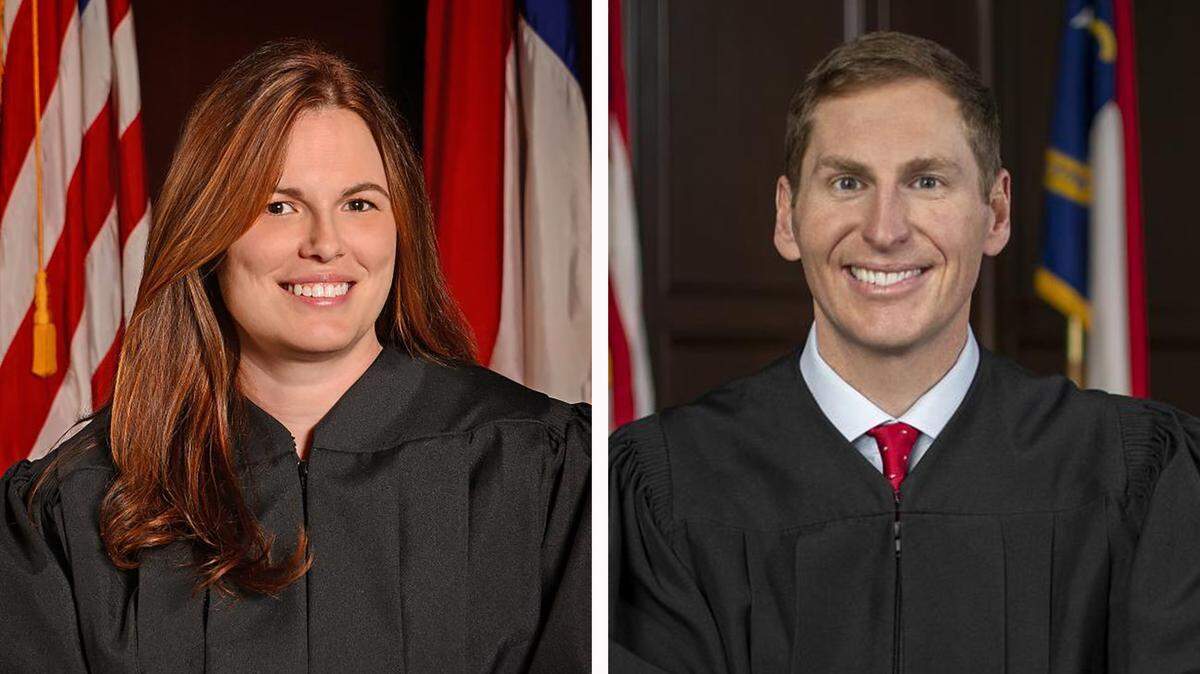
More than a month has passed since Election Day, and the Republican candidate in the race for North Carolina Supreme Court has yet to concede.
Jefferson Griffin trails Democratic incumbent Allison Riggs by 734 votes, a margin that did not change even after Griffin requested a statewide recount in the race. The state will not conduct a full hand recount after Riggs’ lead held in initial reviews of the results.
So Griffin is trying a different strategy: challenging the validity of votes he believes should not have been counted.
The strategy itself is not unusual. Candidates in close races often file challenges to ballots they believe were erroneously counted or wrongfully thrown out.
But what is unusual is the breadth of the protest. Griffin and his fellow Republicans argue that 60,000 votes were cast by ineligible voters and should therefore be thrown out. Three Republicans in close legislative races have joined the protest.
For context, 60,000 is roughly the number of people registered to vote in a mid-sized county. Removing 60,000 votes would be the equivalent of negating all of Carteret County’s votes, for example.
The protests fall into six categories — the largest of which involves a 2004 law that requires the state to collect a driver’s license or Social Security number when a person registers to vote. However, the form used by the state for decades didn’t emphasize that filling out that field was a requirement, so many voters may have left it blank. The form is clearer now, and election officials said in 2023 that the identities of the estimated 225,000 voters who did not provide that information on their voter registration form would still be verified through other means when they showed up to vote.
That is, in effect, asking to disenfranchise 60,000 people because of a technicality. Election officials are right: those voters did have their identities verified, because state law already requires them to provide a photo ID upon voting. These people likely had no idea that there was any issue with their voter registration, and many of them may have registered before the law was even put in place.
Republicans at the state and national level have already made this argument in federal court, but a judge rejected part of their argument earlier this year. The judge said that the voters in question could not be removed under the National Voter Registration Act of 1993, which prohibits election officials from removing ineligible voters from the voter rolls in the 90 days preceding an election.
There’s nothing wrong with Griffin waiting to concede the race until after the completion of a recount. Requesting a recount is well within Griffin’s rights under state law, and it’s something that candidates from both parties do in races as close as this one, despite how rarely it actually changes the outcome.
After all, it was around this time back in 2020 that Democrat Cheri Beasley conceded the race for state Supreme Court chief justice to Republican Paul Newby after a recount and protests filed by both sides. That race was separated by a margin of just 401 votes.
But suggesting that tens of thousands of votes be thrown out in order to sway the election in Griffin’s favor? That’s just wrong.
There’s also nothing wrong with arguing that the registrations should be fixed before the next election, no matter how logistically difficult that may be to execute. But it’s ridiculous to assert that those tens of thousands of votes should be thrown out in the aftermath of an election, without ever giving those voters a chance to correct an error that they likely did not even know existed.
The result of this mess is that one of the most important races on the ballot this year has yet to reach an official conclusion, even though an exhaustive recount did nothing to change the outcome. That’s ironic, considering that Republicans complained weeks ago that the vote-counting process was taking too long and could lead voters to be distrustful of the outcome. They’re the ones dragging it out now.
But it seems to be the Republican playbook these days: If at first you don’t succeed, just try to throw the votes out.