
As government secrecy rises in NC, use the law that can pry open closed doors | Opinion
Pate McMichael, an Elon University journalism instructor and advocate for improving access to public information, is getting ready to celebrate the 90th birthday of North Carolina’s public records law.
Unfortunately, the more fitting event might be a funeral.
The milestone occasion arrives as public officials – starting with Republican state legislators – are throwing up obstacles to disclosing records and are conducting the public’s business in secret.
“Transparency is fading and government secrecy is increasing,” said McMichael, who is director of the Sunshine Center of the North Carolina Open Government Coalition.
The law that is intended to prevent such erosion was passed in 1935 as one of the nation’s first to require the preservation and disclosure of public records. It was the pioneering work of Albert Ray Newsome, a UNC history professor and secretary of the North Carolina Historical Commission.
McMichael said the center’s hotline (336-278-5506) has been busy with complaints from journalists and regular citizens about the difficulty of obtaining public records. “We see a lot of government agencies decline (record requests) for reasons that don’t make any sense,“ he said. “It is really a dogfight. People have to either give up or file a lawsuit.”
Stonewalling public records requests isn’t just a concern for journalists or activists. It’s a concern for democracy. When the public can’t see into the mechanics of government, government accountability is reduced. Elections are not enough, especially when voters can’t know how elected officials are operating.
The best way to protect the public records law is to use it vigorously. Media and public interest groups should join and support the North Carolina Open Government Coalition and be willing to support the cost of lawsuits that seek compliance with the law.
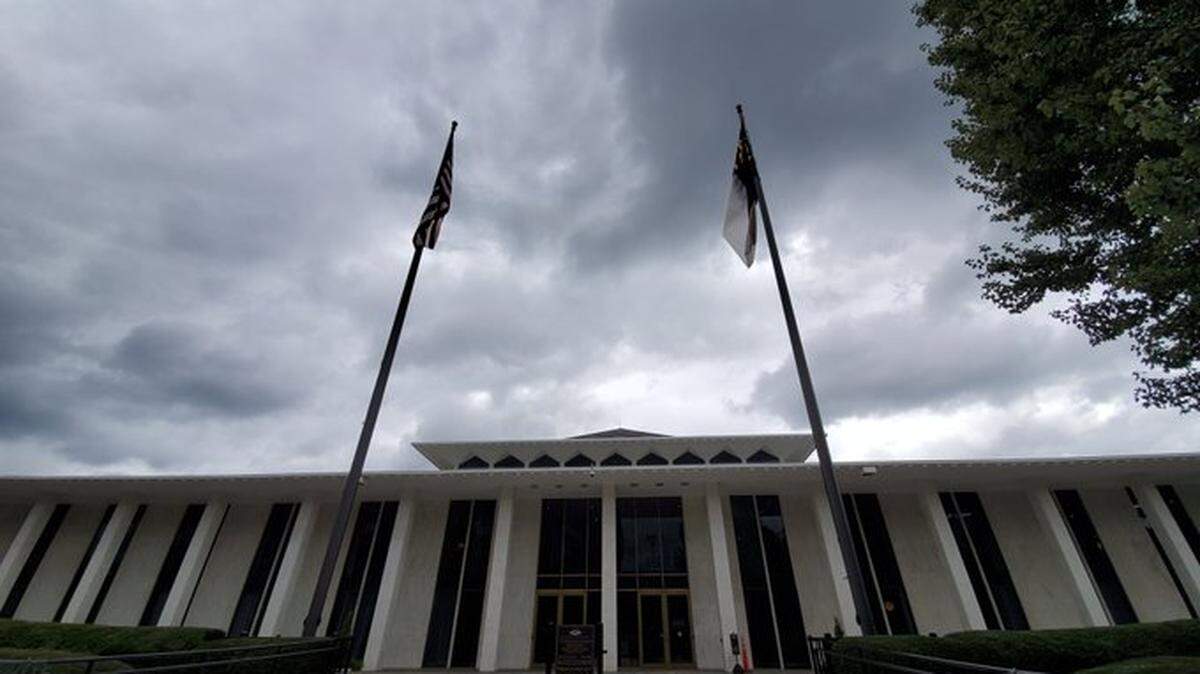
At the state level, the rising wall between the public and public servants has reached a crisis point. The Republican-controlled General Assembly recently exempted its members from having to disclose documents and communications. That exemption includes information related to what is arguably their most consequential action – redistricting.
McMichael said the move by Republican lawmakers “is going to have a trickle-down effect” by emboldening officials at all government levels to resist records requests.
The News & Observer’s Dan Kane turned a spotlight on the state legislature’s retreat from public view in a series of investigative reports titled “Power & Secrecy.”
Lawmakers exempting themselves from disclosing their records is a blatant example. But Kane’s series also focuses on major policies buried in the state budget or stuffed into unrelated bills. Those bills become law without public hearings and often with little notice to rank-and-file lawmakers of both parties. Legislative leaders have used this subterfuge to allocate millions of dollars to special interests and to make investigations into alleged campaign finance violations confidential.
Meanwhile, groups that are not required to disclose their donors are catering to lawmakers. One group, Opportunity for NC, hosted six Republican lawmakers, including Senate leader Phil Berger, in Paris during the Summer Olympics.
The rise of secrecy in North Carolina is part of a national trend. With the proliferation of surveillance cameras, license plate readers, facial recognition software and social media accounts, the government is gaining vastly more information about people even as people are losing access to information about their government.
One way to prevent this pattern from becoming full-blown Orwellian is for the public to be able to keep close track of what governments are doing. McMichael hopes that celebrating the birthday of North Carolina’s public records law can remind people of why access to public records matter. “This is a good time to remind everybody that we’re going backward – not forward – when it comes to disclosure,” he said.
It’s a needed reminder. When it comes to keeping a democratic government, what you don’t know can hurt you.
This story was originally published December 20, 2024 at 5:00 AM with the headline "As government secrecy rises in NC, use the law that can pry open closed doors | Opinion."