NC school board member’s scandal is result of making education political | Opinion
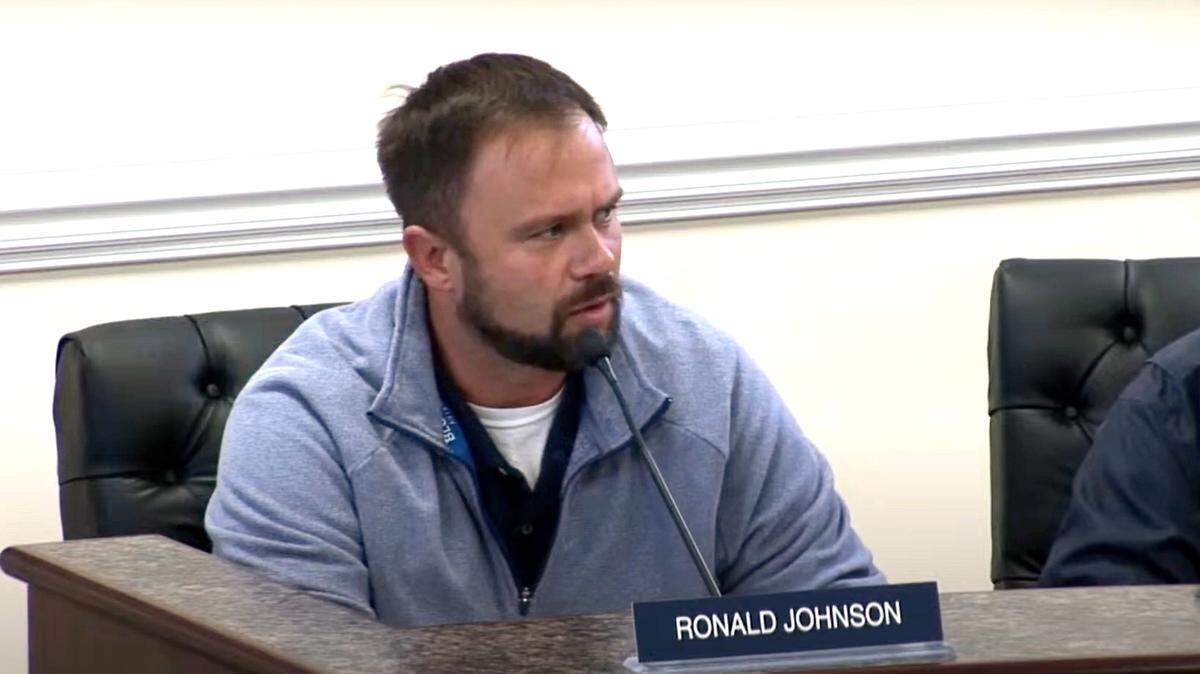
The cost of politicizing education is becoming abundantly clear in Johnston County, where a school board member is on trial for extortion and obstruction charges.
Johnston County school board member Ronald Johnson, a Republican, has been a lightning rod for controversy in recent years. First elected in 2016, Johnson was censured by his colleagues twice in 2022 and indicted in 2023 on the charges for which he now stands trial. Despite this, voters reelected Johnson in 2024, albeit with just 50.5% of the vote.
The allegations against Johnson are obviously disqualifying. Johnson is accused of trying to blackmail a congressional candidate and cover up his affair with a school teacher. According to indictment documents and testimony, Johnson threatened to release a recording of an incident involving congressional candidate DeVan Barbour if Barbour did not pressure a teacher to sign a letter stating she and Johnson did not have an affair. Johnson is also charged with obstruction of justice for allegedly removing evidence from his office after he knew a criminal investigation had begun.
Johnson also took an oath to fulfill the duties of a school board member — an oath that he has been accused of violating. In addition to extortion and obstruction of justice, Johnson has been charged with three counts of willfully failing to discharge his duties. Those charges stem from separate allegations that he secretly recorded closed session meetings — a violation of school board policy — and attempted to transfer two high school students with special needs in retaliation against a parent.
What this has become is a spectacle — a distraction from Johnston County schools and their students. Every day of the trial brings a new headline and new details that nobody wants to learn about a member of their school board. Instead of productive dialogue about budgets and student outcomes, the conversation is one about blackmail and salacious relationships with teachers. Johnson promised voters that, if elected, he would “ALWAYS be about helping children.” How is this helping children?
The whole situation is a lesson in why injecting partisanship into traditionally nonpartisan roles can be destructive. While school board races in Johnston County are nonpartisan races, that hasn’t stopped politics from playing an outsized role in school board elections. Johnson, for example, was endorsed by the Johnston County Republican Party and other conservative groups. Given how politicized education itself has become, phrases like “keeping harmful things out of the classroom” and “protecting the integrity of girls’ sports” can be a clear signal of where a candidate stands.
But when we elect someone based on beliefs rather than character, we risk finding ourselves in situations like this one. We might ignore red flags or obviously disqualifying behavior — such as censures and criminal charges — that suggest someone might be more of an embarrassment to our community than an upstanding public servant.
We’re seeing something similar happen at the federal level, as confirmation hearings for Donald Trump’s Cabinet nominees begin in the U.S. Senate. While these nominees may reflect the ideology of Trump and his supporters, some of them also carry personal baggage that raises fundamental questions about whether they should be confirmed at all. Not only should it be disqualifying, it also distracts from serious conversations about the critically important positions they’re hoping to hold. The nomination of Secretary of Defense hopeful Pete Hegseth, for example, has prompted far more conversations about his history of sexual misconduct and alcohol abuse and his views on women in combat than it has about his plans for the department he could soon lead.
Of course, Johnson and Hegseth may not be guilty of what they’ve been accused of, and he’s entitled to that presumption of innocence until proven otherwise. But, true or not, the allegations alone are a distraction, and a distraction of this size is still a disservice to the public.
This is what happens in an increasingly politicized world — one in which our votes are conditioned more on ideology than on morality. We can — and should — expect more from the people who lead us.
This story was originally published January 15, 2025 at 1:38 PM with the headline "NC school board member’s scandal is result of making education political | Opinion."