
Former Wake Forest president: We need rules for the new values of college sports | Opinion
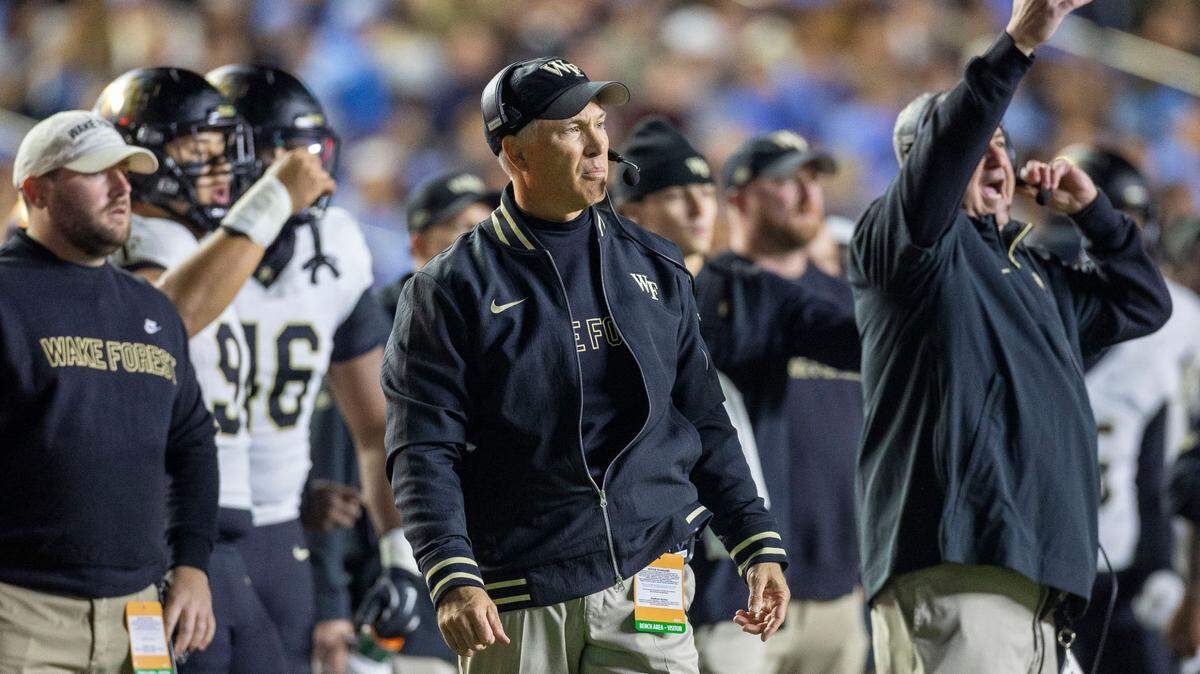
Last month, Dave Clawson suddenly resigned as the head football coach of Wake Forest University. The vastly altered landscape in college football convinced him that his developmental approach to the game no longer worked. Like Tony Bennett, the Virginia basketball coach, Clawson raised the white flag before the commercial enterprise that elite college sports have become.
Clawson had been a remarkable leader and coach. One year ago, I wrote a profile of him as one among a set of leaders in the book The Gift of Transformative Leaders (Cambridge University Press, 2024). His teams had played in seven straight bowl games, winning five. In 2021, they boasted an 11-3 record, 7-1 in the Atlantic Coast Conference, and Clawson was named ACC Coach of the Year.
Beyond success on the playing field, Clawson embodied the finest ideals of intercollegiate sports: excellence in competition, commitment to collegiate education and character development. He and his players exemplified the core identity of Wake Forest University.
Over the last two years, the changing landscape created by name, image and likeness (NIL) money and the transfer portal undercut the kind of developmental program at which he excelled.
It is no wonder that Ohio State University won the national championship, given their $20-$25 million investment in building a roster. A superb college quarterback can now fetch between $5 and $8 million.
Student-athletes deserve to be paid, at least those in revenue sports, but the uncontrolled scramble for NIL money, accelerated by a new army of agents, threatens a set of values at the heart of collegiate athletics.
Education
The current football scene has greatly diminished the value of a collegiate education. The term “student-athlete” now rings hollow. All the incentives are on immediate payment and almost none on any long-term educational value.
This might be acceptable if most college players were headed to the NFL. But that is hardly the case. Less than two percent of NCAA Division 1 football players will make NFL rosters. What happens to the rest? What responsibility do universities have to the long-term interests of players who will never see an NFL paycheck?
Character and Resilience
In the current climate, coaches and agents tell players the grass is greener at another institution. Much media attention is given to those quarterbacks who transfer and then go on to great success — like Heisman trophy winners Joe Burrow and Jayden Daniels. Moving on seems the ticket to success.
Yet there is virtually no attention given to players who transfer and do not succeed. Are they experiencing sports as a long-term builder of character — learning the virtues of endurance, teamwork, accepting defeat, pushing beyond normal limits? Clawson’s genius was taking players of average ability and, through persistence and hard work, turning them into great players. Coaching was more than short-term and transactional.
Teamwork and Commitment
I once asked Clawson why he went into coaching, and he told me there was a power and satisfaction of being on a team. Clawson’s greatest satisfaction came from the wholistic development of young men in the context of a team.
Today, winning, self-interest and profit maximization are the principals of the realm. Universities and conferences can be blamed for this downward spiral. In their relentless drive to win, they built lavish facilities and raised coaches’ compensation tenfold over 20 years.
Conferences dismissed any semblance of loyalty and tradition in their mad reshuffling for maximum television revenue, making it no longer credible to speak of collegiate programs as amateur.
Coaches, who preach loyalty and commitment to their teams, don’t bat an eye to jump to a higher-ranked program.
Competitive Equity
Collegiate football and basketball are becoming more like the NFL and the NBA. Athletes are paid a fair remuneration for their services. But unlike collegiate sports, professional sports are committed to some form of competitive equity.
Both professional leagues aim to level the playing field by revenue sharing, an annual draft and salary caps. College football shares revenue within a given conference, but almost all other trends advance stark inequity.
Today, more-wealthy conferences and programs annually harvest the best players from less-wealthy programs. With guard rails removed, the rich get richer, and their fans love it.
I am not naïve enough to call for a return to the world in which a leader like Clawson could prosper. That world is gone. I am saddened that in the next generation there will be fewer Clawsons who have deep and long-lasting commitment to all student-athletes. That is an incalculable loss to universities.
There are notable universities still struggling to hold onto an older ideal that prizes education, commitment and character. But a rip-tide sweeps in the opposite direction.
The best thing that can happen, as former Alabama coach Nick Saban has suggested, is for football and basketball to become more like the NFL and NBA — with strict rules, contracts with student-employees for more than a single year and better competitive equity.
Big-time college sports once had some resemblance to the educational values of the larger institution. What is now emerging in elite college sports is a set of minor league professional teams, flushed with cash, which on Saturday afternoon will happen to don university uniforms.
This story was originally published January 27, 2025 at 11:15 AM with the headline "Former Wake Forest president: We need rules for the new values of college sports | Opinion."