
Thom Tillis, Donald Trump and the last road left to success in North Carolina | Opinion
Success in today’s Republican Party can come in one of two ways.
On path one, you’re a reliable yes-man for President Donald Trump. You don’t need to be a firebrand, just a banked vote for his agenda. You agree with the positions you take about 90% of the time — not bad! — and staying in the good graces of the most influential GOP figure since Ronald Reagan keeps the money rolling in and your seat secure.
It’s not a bad deal. You avoid headaches, get things done for your state, and if you’re smart, it’s a ticket to influence—just look at Vice President J.D. Vance or Sen. Ted Cruz.
Path two is harder. You build a reputation for standing firm on a set of values and pick your battles carefully. You have a clear vision, strong ties to the grassroots, and a backbone of steel. You don’t pick fights with Trump over minor issues, but if something truly matters, you dig in and let your goodwill carry you through.
A prime example is Georgia Gov. Brian Kemp. Nobody doubts his conservative credentials, and he overwhelmingly defeated a Trump-backed primary challenger after defying the party boss.
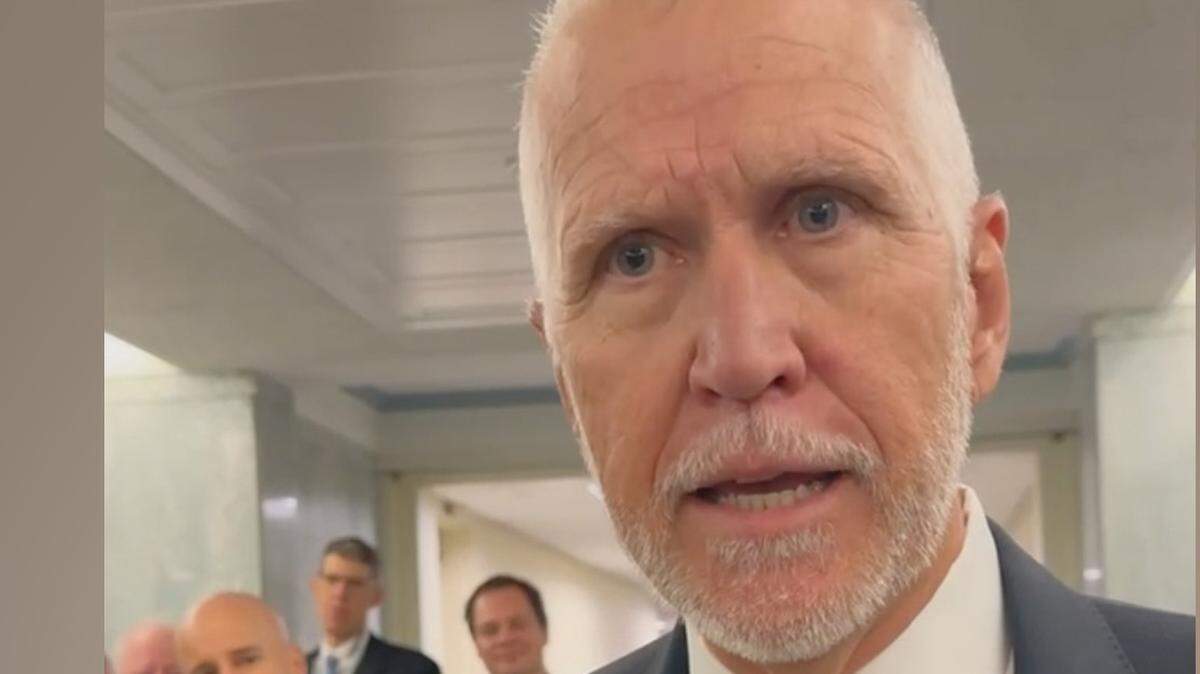
So where does U.S. Sen. Thom Tillis fit in? The short answer is, he doesn’t. And that’s why he gets in trouble so often.
A typical Republican, most of the time
Tillis isn’t a bad guy. He’s just the type of politician who manages to frustrate everyone.
Most of the time, he’s a standard-issue Republican. He helped orchestrate the GOP’s takeover of the General Assembly in 2010, setting the stage for a decade of conservative governance. In the Senate, he’s delivered disaster relief to North Carolina and worked on VA hospital reforms. His voting record isn’t overly conservative, but it’s right in line with other Republican senators.
But then there’s the part where he goes off-script. When Democrats control the Senate, Tillis enjoys working across the aisle—drawing fire for supporting red flag laws and codifying same-sex marriage into federal law. During Trump’s first term, he initially opposed border wall funding before ultimately voting for it.
Last week, it happened again. As the Senate weighed Pete Hegseth’s nomination for Secretary of Defense, a handful of moderate Republicans had already signaled they were a “no.” Then came headlines saying Tillis was on the fence. He ultimately voted to confirm, sending it to a tie-breaking vote by the vice president.
Hegseth was confirmed — but not before Tillis had, once again, made everyone mad.
This is just who Tillis is
None of this is new.
Tillis has never been an ideologue, and he’s faced criticism from the right since the beginning. His rise to power was less about grassroots support and more about being the safe, establishment-backed option. The GOP wanted someone who could flip a Senate seat in 2014, and he fit the bill. Super PACs poured in money, and a divided primary field helped him win. His 2020 reelection wasn’t much different—he didn’t excite the base, but he survived because his opponent imploded.
That’s the Tillis formula: survive, adapt, but never quite inspire.
If you want to be charitable, you’d call him a “maverick” or a “bipartisan leader.” Unfortunately for him, not many people have that desire. The grassroots right calls him a RINO, while the left calls him gutless. But neither quite hits the mark. What’s actually driving Tillis is being a little too comfortable in Washington at a time when that’s decidedly not what North Carolina Republicans are looking for.
He enjoys being seen as a “swing vote” and courted by Republican leadership, but without the corresponding convictions to go with it. He doesn’t want to be just another GOP backbencher, but he also hasn’t carved out a defining set of principles that make him a leader in his own right.
The toughest job in politics
Luckily for Tillis, the resentment from the right doesn’t matter much right now. The toughest job in politics may be unseating a sitting governor, but beating a sitting senator in a primary is right up there.
No GOP senator has lost a primary since 2017. The money hurdle is just too great, and Tillis has a war chest he can empty if his internal polling shows trouble.
His bigger threat would be Gov. Roy Cooper, should he choose to run. If that’s the case, America’s most vulnerable senator might have to choose one of the two paths to success.
At this point, the harder path is likely closed off to him. That leaves just one road left.
This story was originally published January 5, 2025 at 12:00 AM.