NC chief justice thoughtlessly dismisses Jefferson Griffin’s critics | Opinion
Republican Jefferson Griffin’s effort to challenge more than 60,000 votes in the North Carolina Supreme Court race that he lost has generated plenty of criticism from those who rightfully believe that his argument is frivolous and dangerous.
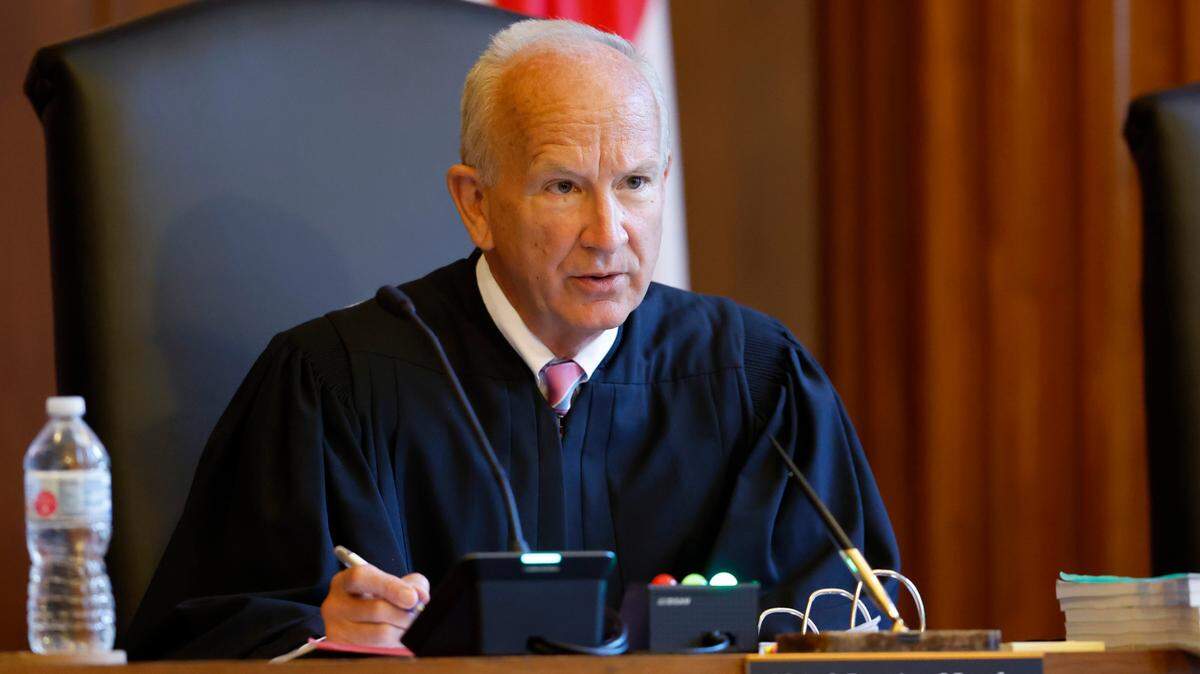
Chief Justice Paul Newby isn’t buying it. Late last month, the court denied Griffin’s request to expedite the lawsuit by sending it back to a trial court. Newby concurred with the order in his own separate opinion, which he said he wrote to emphasize that the case was not about determining the outcome of an election, but about “preserving the public’s trust and confidence in our elections through the rule of law.”
Newby took issue with the idea that Jefferson’s protests might be “anti-democratic” and called it “unfortunate” that some have accused Griffin of seeking to disenfranchise voters and intentionally seeking to overturn or delay the election results.
“Such statements mischaracterize the election protest process, hindering its efficacy and breeding distrust in our elections,” Newby wrote. “Blaming citizens for using the legal processes afforded them by law only discourages some from voicing their concerns and wrongfully taints those who do.”
Newby is right: candidates who genuinely suspect an irregularity have every right to challenge that irregularity through the process set out by state law, just as they have the right to request a recount in close races. Griffin was well within his rights to do both, though the sheer number of votes he is challenging is certainly without precedent. But when those efforts are not fruitful, and the vote count remains unchanged, there comes a point when one must accept the results. That should be a familiar concept to Newby, who was elected to the position of chief justice by an even smaller margin that prompted his Democratic opponent, Cheri Beasley, to request a recount and challenge votes. When that process did not change the outcome, Beasley conceded.
But that is not what Griffin has done. Instead, Griffin has remained determined to bend the law to his will by putting his case in front of the only body that might agree with him: the Supreme Court itself. Newby’s comments — which were co-signed by two other justices — suggest that Griffin was correct in thinking that at least some of the court’s conservative majority might be sympathetic to his cause. It’s for that reason that Griffin is insistent that his case be heard in state court rather than before a federal court less tainted by partisanship.
Within Newby’s concurrence there exists a number of contradictions. He decries those who accuse Griffin of attempting to disenfranchise voters while also suggesting that allowing the votes to stand is itself a form of disenfranchisement. He worries that criticism of Griffin’s protest could “breed distrust in our elections,” but fails to recognize how the protest itself breeds distrust by undermining the outcome of a race Griffin clearly lost.
There’s an element of hypocrisy, too: the Newby that frets about how even one ineligible vote could dilute the power of lawful voters is the same Newby that suggested that partisan gerrymandering, another form of vote dilution, is allowed because North Carolina’s constitution only guarantees free elections, not fair ones.
Based on his concurrence, it’s reasonable to conclude that Newby is aware of the criticism that Griffin’s case has received. Presumably, then, he’s also aware that the criticism isn’t just coming from his opponent’s lawyers and other Democrats who don’t want Griffin to win. It’s coming from Republicans, too, plenty of whom voted for Griffin in November but simply don’t agree with what he’s trying to do now. Even one of Newby’s fellow Republican justices wrote that some of Griffin’s claims are “almost certainly meritless” and that permitting such litigation could invite “incredible mischief.”
Telling 60,000 legitimate voters that their right to vote hinges on a technicality will almost certainly alienate them as well as North Carolinians of all political stripes who believe elections should be decided at the ballot box and not in a courtroom. It will send the message that the will of the voters is less important than the will of an increasingly politicized judiciary looking to add another ally to the bench.
This story was originally published February 5, 2025 at 11:23 AM.