
Jeff Jackson is treating the NC attorney general’s office like a networking event | Opinion
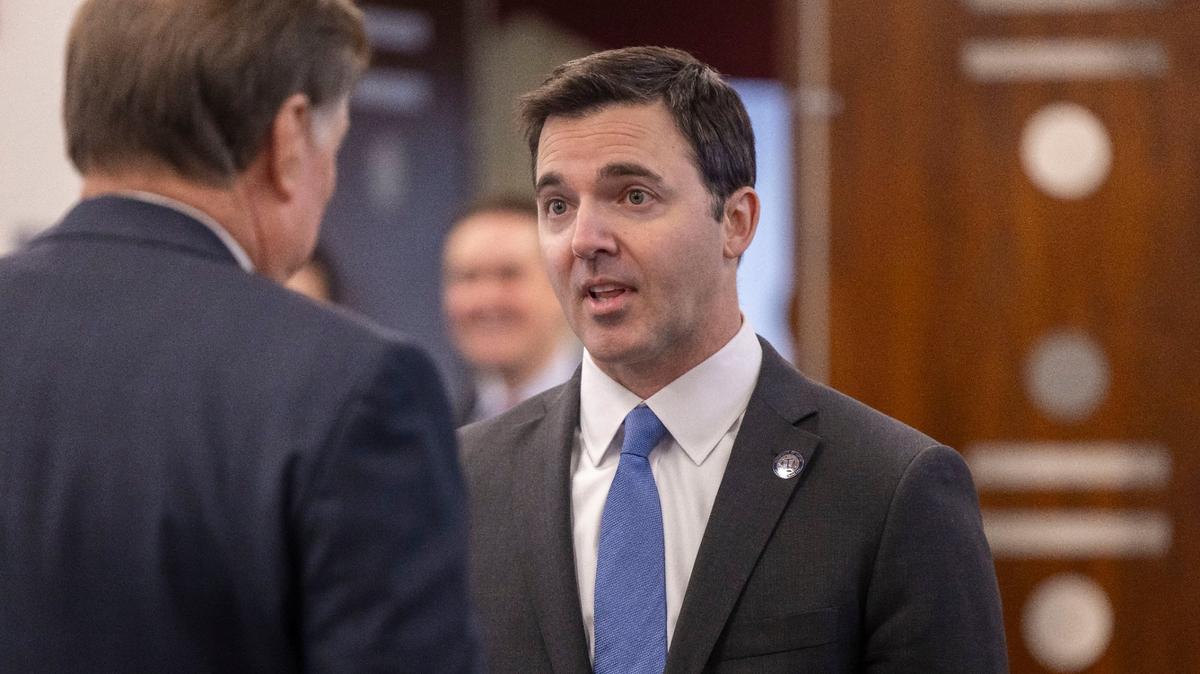
From the moment Jeff Jackson started his campaign for attorney general, everyone knew the job was a stepping stone.
But few expected him to be this blatant about it.
Just weeks into the job, the former Charlotte state senator and congressman has already used the office to inject himself into a half-dozen high-profile lawsuits alongside other Democratic attorneys general. He’s touting legal challenges against the Trump administration at every turn.
It’s not hard to see why. Jackson isn’t approaching this job as North Carolina’s top lawyer — he’s treating it as a launchpad.
Sadly, that’s what the attorney general’s office has become.
The cases tell the story
The attorney general’s role, in theory, is to run the state’s Department of Justice — prosecuting criminal appeals, managing the state crime lab, and training law enforcement.
But in practice, attorneys general can take different approaches. They can focus on protecting state interests, or they can go looking for fights. Jackson has chosen the latter.
In his first few weeks, he’s filed legal action to:
▪ Stop changes to how the federal government funds research projects.
▪ Block the federal Department of Government Efficiency from accessing U.S. Treasury data.
▪ Prevent the Trump administration from freezing federal grants.
▪ Challenge a Trump executive order ending birthright citizenship.
▪ Push for new environmental regulations.
▪ Punish real estate companies for using algorithms to set rent prices.
The environmental and rent regulation cases may have legitimate policy arguments behind them. Whether they hold up in court is another question, but at least they address issues that directly impact North Carolina.
The lawsuits against the federal government, though, are pure political posturing. They serve no real function for the state beyond giving Jackson a platform to fight high-profile battles that raise his national profile. These cases are about headlines, donor relationships, and cementing his place as a rising star in Democratic politics.
The Democrat’s formula
Jackson isn’t the first to use the attorney general’s office this way. Gov. Josh Stein did it before him, and former Gov. Roy Cooper before that. But Jackson is accelerating the process.
Cooper spent 20 years as attorney general before running for governor. Stein lasted two terms. Jackson might not even make it through two years before running for U.S. Senate.
This is how North Carolina Democrats have maintained control of the attorney general and governor’s offices, even as Republicans have built legislative supermajorities. Candidates with star power don’t just emerge — they methodically build name recognition, fundraising networks, and relationships within the party.
Following a well-worn path, Jackson was identified as a rising star years ago. His stint as a state senator was marked by a sharp focus on media engagement, so much so that fellow legislators privately called him a “show horse,” according to Politico, and some Democrats even referred to him behind his back as “Baby Jesus.”
A lot of that was just petty jealousy. But it also reflected an obvious truth: Jackson has never been great at disguising his ambition.
The wrong response
Jackson is a talented politician, a gifted communicator, and certainly the North Carolinian with the best shot at one day becoming president of the United States. He knows exactly what he’s doing.
But North Carolina voters didn’t elect an attorney general to be a national Democratic surrogate.
If Republicans want to hold him accountable, they need a better strategy than simply trying to strip power from the office. A bill introduced this session would bar the attorney general from challenging any executive order issued by the president — an absurd overcorrection rooted in the idea that since Republicans haven’t won the office in decades, they should just kneecap it entirely.
That’s the wrong approach.
The right move is to prosecute the case — consistently and effectively — that Jackson is more interested in fundraising and networking than protecting North Carolina’s interests. It means pointing out every time he picks a fight in Washington instead of handling pressing state issues.
At this rate, the case is writing itself.