
Josh Stein just couldn’t help himself in his State of the State address | Opinion
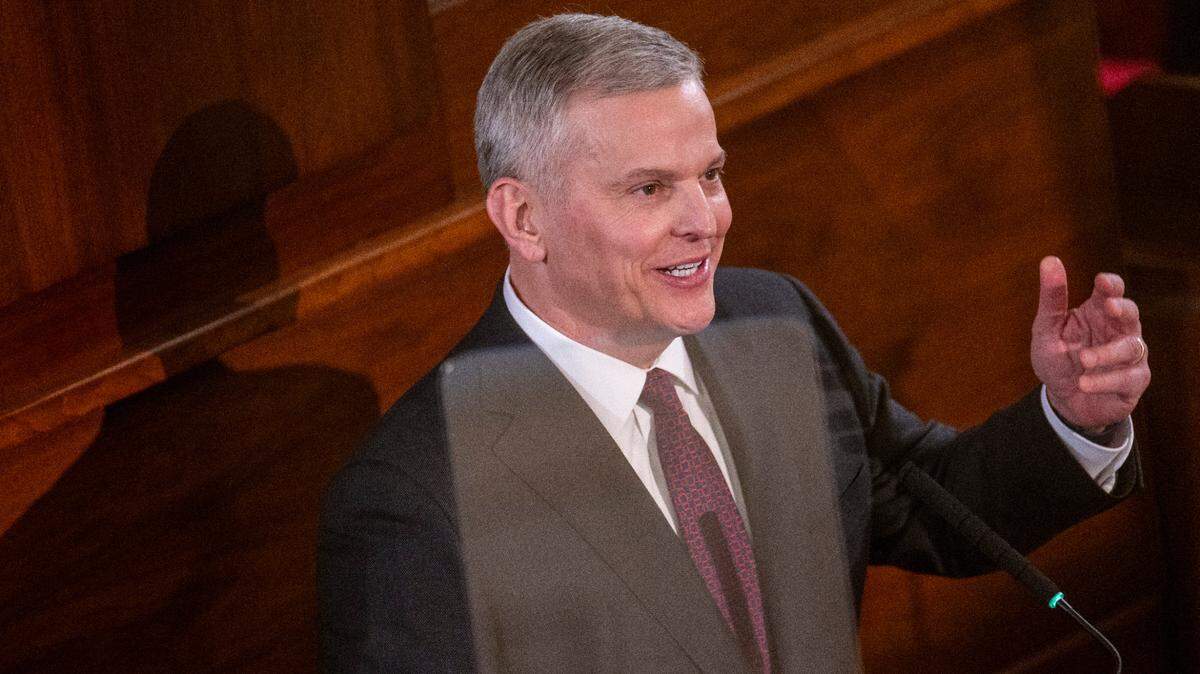
For a while, it seemed like Gov. Josh Stein might offer something new. His State of the State address Wednesday night had the right tone — bipartisan, measured, and even compelling at times.
His messaging on Hurricane Helene recovery was sharp, pushing Republican-led bills that have stalled in committee while wisely avoiding partisan cheap shots. “We need that money now. Heck, we needed it yesterday,” Stein said. “Let’s pass that bill. And when you do, I am ready to sign it.”
It honestly felt like leadership. And his stance on cell phones in schools was also surprisingly strong.
“When students don’t have to choose between social studies and social media, real learning happens,” he declared. It was one of the most effective lines of the night.
But then, he pivoted. Hard.
The second half of the speech pivoted back to the polarized politics that defined the tenure of his predecessor, Gov. Roy Cooper. On two of the most important issues — education and the economy — Stein fell back on the same misleading arguments his party has used for years, framing school choice and tax cuts as threats rather than acknowledging their success.
A tale of two speeches
For most of his address, Stein sounded like a centrist. He praised Republican-led efforts like Rep. Erin Paré’s bill to raise starting teacher pay to $50,000 and Rep. Neal Jackson’s bill to curtail cellphones in classrooms.
Stein endorsed giving experienced teachers more opportunities to mentor and lead, an idea conservatives have championed. He even spoke about the importance of government accountability and wise spending, another key Republican priority.
Then came the sharp turn.
Stein painted a picture of North Carolina barreling toward a “fiscal cliff” and accused Republicans of prioritizing tax cuts for the wealthy over investments in public education. “So what’s it going to be? Give money to out-of-state shareholders, or invest in North Carolina families? We cannot afford to do both,” he said.
This framing was a complete departure from the rest of his speech. For over a decade, North Carolina has indeed done both — lowered taxes while growing its economy, creating jobs, and increasing education funding. The state budget has grown by more than 50% in the past decade, even as tax rates have steadily fallen. Every time Democrats have predicted disaster, they’ve been proven wrong.
The same pattern applied to his attack on school choice. Moments after acknowledging Republican-led improvements in education, Stein repeated the well-worn Democratic talking point that Opportunity Scholarships take money from public schools to benefit wealthy families.
But that ignores how the program is structured. The scholarship awards are tiered, with lower-income families receiving the largest subsidies, and the law prioritizes awarding funds to the neediest students first. While the 2024 expansion opened eligibility to higher-income families, the program remains focused on expanding options for those who can’t afford private school on their own.
More importantly, Stein’s argument reflects a fundamental misunderstanding of school choice. The goal isn’t to protect systems — it’s to serve students. Opportunity Scholarships exist because many public schools are failing children, and parents deserve options. North Carolina has proven it can expand school choice while continuing to increase public school funding. Stein’s framing of this as an either-or scenario is simply false.
It wasn’t surprising that Stein used these arguments. But it was jarring in the context of the speech he had just given. He spent half the night trying to sound like a leader for all North Carolinians. The other half, he was playing to the Democratic base.
Stein’s real message
If Gov. Stein wants to be taken seriously as a bipartisan leader, he needs to be honest about what has made North Carolina successful and stay on the right side of issues where voters overwhelmingly agree.
Corporate tax cuts didn’t cause a budget crisis. They sparked an economic surge. Opportunity Scholarships aren’t defunding public schools — they’re giving parents the ability to choose the best education for their kids. Both of these issues have a fairly bipartisan consensus, at least among voters.
Stein started strong, but he just couldn’t help himself. In the end, the partisan attack wasn’t a detour. It was the destination all along.