
Are Thom Tillis and Ted Budd convinced of Pete Hegseth’s incompetence now? | Opinion
You really can’t make this stuff up: Trump administration officials accidentally added a journalist to a group chat on the messaging platform Signal, where they discussed highly sensitive information about a military strike in Yemen.
The editor in chief of The Atlantic, Jeffrey Goldberg, published a jaw-dropping story Monday about the front-row seat he had as senior Trump officials, including JD Vance, Marco Rubio and Pete Hegseth, deliberated plans to launch airstrikes on Houthi rebels in Yemen.
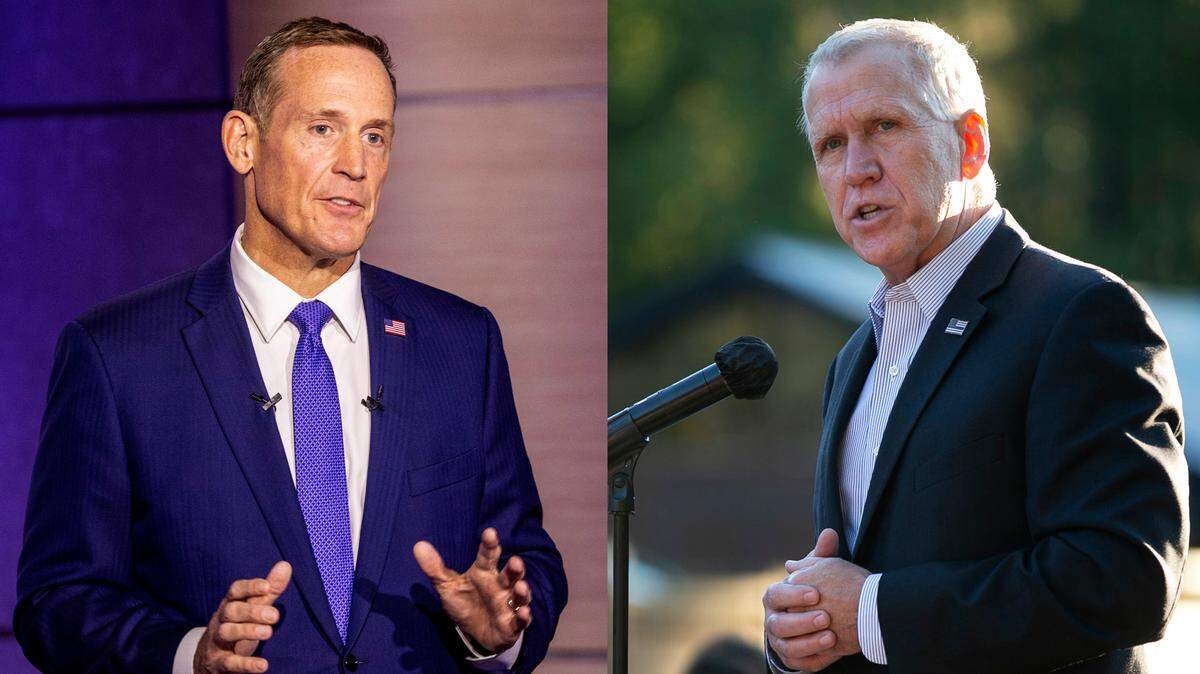
It’s a breathtaking display of incompetence and carelessness from the people in charge of our national security. And it’s exactly what Republican senators like Thom Tillis and Ted Budd voted for when they chose to confirm people like Hegseth for critically important Cabinet positions.
It wasn’t Hegseth, the defense secretary, who committed the grave oversight of adding Goldberg to the group, but it was he who sent actual war plans through a commercial platform that should have never been used for that purpose at all. According to Goldberg, Hegseth shared “operational details of forthcoming strikes on Yemen” that “could conceivably have been used to harm American military and intelligence personnel” if they had fallen into the wrong hands.
It was Hegseth who declared to the group that steps had been taken to keep the information secret, despite the fact that he was sharing it outside of secure government channels. And it was Hegseth who squirmed, deflected and denied the leak when confronted by reporters about it.
Hegseth told reporters that “nobody was texting war plans” and blasted Goldberg as “a deceitful and highly discredited so-called journalist who’s made a profession of peddling hoaxes time and time again.” Unfortunately, that statement directly contradicted that of the White House, which had already confirmed the authenticity of Goldberg’s report.
So what do Tillis and Budd have to say now? How can they look the hundreds of thousands of active-duty service members and veterans who live in North Carolina in the eye and tell them that this country and their lives are safe in Hegseth’s hands?
Tillis, rightfully, had reservations about Hegseth’s nomination from the start, but he ignored those concerns and voted for Hegseth anyway, because when Tillis faces a choice between what’s right and what’s politically expedient, the latter too often wins. He does the wrong thing even when he knows better. Budd, on the other hand, never seemed to express any reservations about Hegseth at all, because if Donald Trump wants something, Budd almost always delivers.
But both Tillis and Budd are smart enough to have suspected that putting a Fox News host in charge of the military wasn’t going to end well. While no one predicted that Hegseth would be part of such a mindblowing breach of national security after just two months on the job, the concerns about his competence, experience and overall fitness for the role were there.
When asked about the news, Tillis’ response was, “You got to know who you’re sending texts to,” according to an NBC News reporter. That severely misses the larger point, which is that war plans just shouldn’t be sent via text at all. When former Secretary of State Hillary Clinton drew criticism for her use of a private email account for official business, Tillis called it a “bad decision” and said that any government employee who intentionally put records outside of official agency systems should be fired. Does he stand by that statement, or does his answer change when the employee in question is a Republican and Tillis is up for reelection?
Hegseth’s actions show a reckless disregard for national security that, in the worst case scenario, could have put American troops in harm’s way. It’s tarnished his credibility as a military leader and cast further doubt on his ability to do his job. If Tillis and Budd aren’t willing to admit they might have chosen the wrong man for the job, their credibility will be tarnished, too.
BEHIND THE STORY
MOREWhat is the Editorial Board?
The Charlotte Observer and Raleigh News & Observer editorial boards combined in 2019 to provide fuller and more diverse North Carolina opinion content to our readers. The editorial board operates independently from the newsrooms in Charlotte and Raleigh and does not influence the work of the reporting and editing staffs. The combined board is led by N.C. Opinion Editor Peter St. Onge, who is joined in Raleigh by deputy Opinion editor Ned Barnett and in Charlotte by deputy Opinion editor Paige Masten. Board members also include Observer editor Rana Cash and News & Observer editor Nicole Stockdale. For questions about the board or our editorials, email pstonge@charlotteobserver.com.