
Davidson College protects free speech — until it’s controversial | Opinion
This column has been updated with a response from Davidson College and new developments.
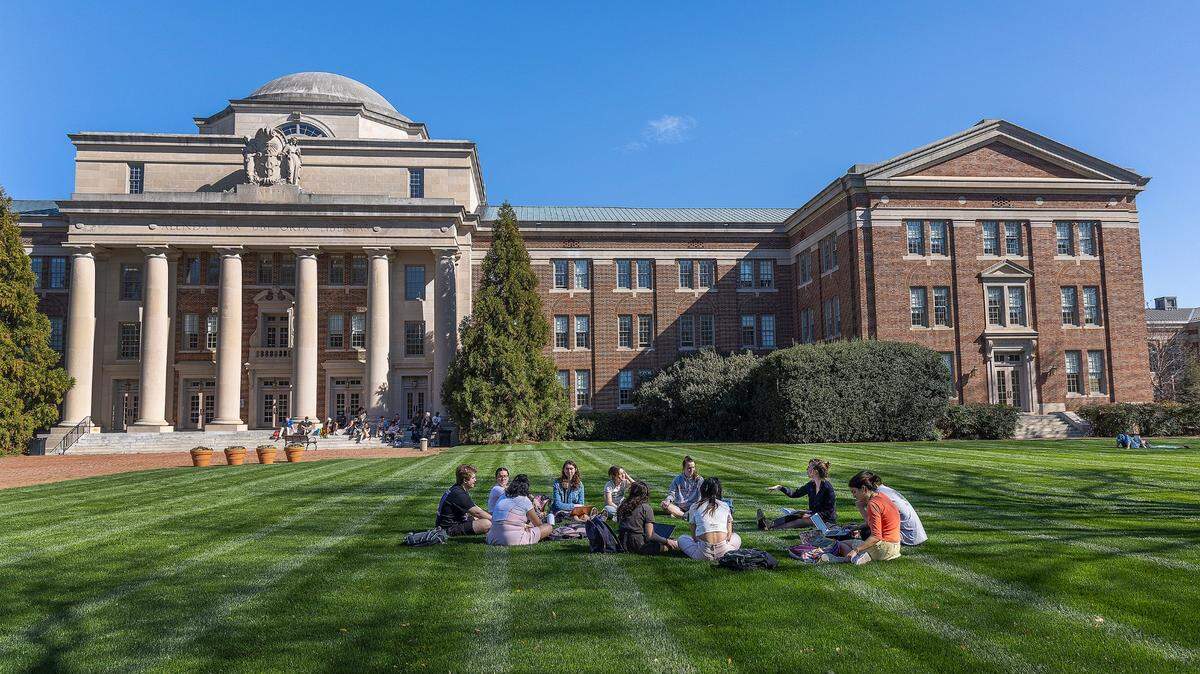
Last fall, a massive Palestinian flag draped the front of Davidson College’s main academic building. The message — “CEASEFIRE NOW” — was impossible to miss. College staff promptly removed the banner, but Cynthia Huang, a senior at Davidson, saw an opportunity to offer another perspective. Her group, Young Americans for Freedom, distributed a pamphlet titled “The Five Myths About Israel Perpetrated by the Pro-Hamas Left,” which pushed back against prevailing narratives on the Israeli-Palestinian conflict. It argued that Palestinian identity is a modern invention, denied Israeli apartheid claims, and framed the conflict as part of a broader ideological struggle.
Provocative? Sure. But isn’t challenging assumptions exactly what a liberal arts education should encourage?
Davidson didn’t see it that way.
In a letter from the Dean of Students Office, administrators accused her and her organization of harassment, claiming their actions created an “intimidating, hostile, or offensive” environment for other students. The office also cited an Instagram re-post from months before that speculated about the gender of Algerian Olympic boxer Imane Khelif.
They gave Huang two choices: accept punishment and waive her right to appeal, or face a hearing before a student conduct council.
Neither option, Huang said, felt fair. So she refused both.
“They’re not just wacko ideas,” Huang told me. “The other side gets to make their arguments on these issues a lot at this school.”
A revealing moment for free speech
Huang’s situation is just the latest test of what higher education actually stands for. College campuses have long been battlegrounds in America’s culture wars.
Free speech isn’t absolute, and the balance can be delicate, especially on campus. Students should be free to speak their minds, but without intimidating others. Colleges should protect open debate while preventing harassment. These lines aren’t easy to draw.
Public university administrators have it easier. They’re bound by the U.S. Constitution, which clearly separates speech from censorship. But at private colleges, the guardrails are looser. Policies shaped by campus culture, donor pressure, and politics leave administrators room to punish speech they dislike — and excuse speech they don’t.
We’ve seen that failure at Ivy League schools like Harvard and Columbia, where administrators stood paralyzed as antisemitism spread. Davidson’s case is similar
‘I wouldn’t say it’s uncommon’
Unsure of what to do next, Huang turned to the Foundation for Individual Rights and Expression (FIRE), which has been advocating on her behalf.
“I wouldn’t say it’s uncommon,” said Jessie Appleby, an attorney with FIRE. She said her organization frequently sees private universities pledge to support free speech, only to label it harassment when it makes someone uncomfortable.
While not bound by the First Amendment, Davidson claims to support free inquiry. In 2023, it adopted the “Commitment to Freedom of Expression,” committing to “the broadest possible latitude” for student speech. In a letter to Davidson administrators, Appleby leaned on that promise, saying the college’s decision “violates its own laudable commitment to expressive freedom.”
Actionable harassment has a very high standard, Appleby told me. But too often, colleges skip the step of determining whether a complaint is about protected speech or something more.
That’s the deeper issue: Policies meant to protect students are instead being used to police the boundaries of acceptable opinion.
Public vs. private: Where free speech stands
For all the hand-wringing over political correctness, North Carolina’s public universities are doing something right.
Six years ago, the General Assembly passed a law requiring the UNC system to uphold the First Amendment. It banned “free speech zones,” mandated neutrality on political issues, and ensured consequences for students who shut down speakers. Today, North Carolina’s public universities rank among the best in the nation for free expression, according to FIRE.
On public campuses, free speech won. But at private colleges, it’s a different story.
Davidson did not respond to an initial interview request for this column. After publication, the college said that while it cannot comment on individual disciplinary actions, it “has not taken and is not taking any action with regard to the status of any student organization in any case such as what Mr. Dunn describes in his column.”
Davidson did, however, send a “warning” letter to Huang that included a reminder about Davidson College’s policy regarding harassment. “The purpose of this warning is to bring attention to the impact your organization’s actions have on other students so that your organization might consider different choices if faced with a similar situation in the future,” the letter said.
I wouldn’t call this dismissing the charges. If expressing support for Israel and questioning gender ideology can trigger disciplinary action, what’s left of open inquiry?
Huang isn’t trying to be a martyr. She’s about to graduate. Luckily, Huang herself isn’t facing expulsion, but after Davidson’s warning, she said she’s worried about a chilling effect on her organization moving forward. She’s speaking out so future students know what kind of environment they’re walking into. What she’s seen is a campus where conservative students self-censor — not out of politeness, but out of fear.
That’s the real cost. Not just to the students in the spotlight, but to those watching from the sidelines. The ones who keep their heads down. The ones who stop asking hard questions.
If Davidson wants to brand itself as a place where students can wrestle with big ideas, then it shouldn’t punish them for doing just that.
Otherwise, Davidson isn’t nurturing bold thinkers. It’s managing a brand.
And if we truly believe that higher education shapes tomorrow’s leaders, we can’t let that mission stop at the gates of private colleges.
This story was originally published April 1, 2025 at 9:01 AM.