
Charlotte’s transit plan would use an unequal tax for unequal results | Opinion
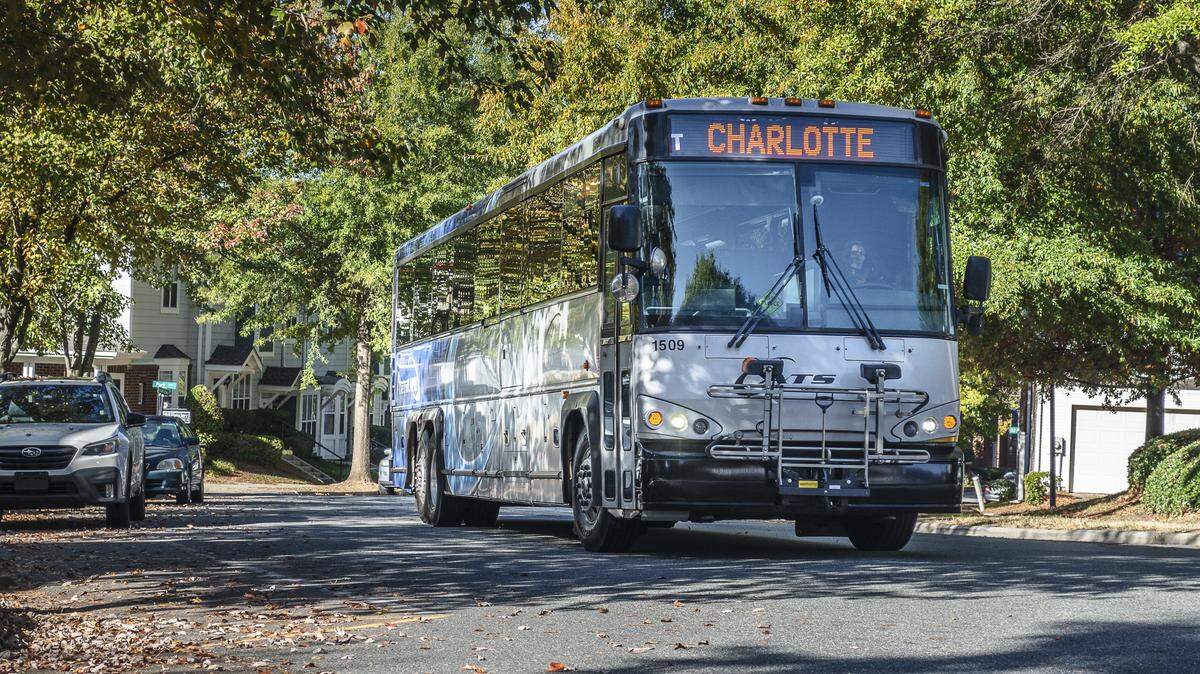
Charlotte’s big transit plan would bring much-needed improvements to the city’s transportation infrastructure. But those improvements won’t be distributed equally, even though the costs will.
The Metropolitan Transit Commission, which oversees policy for Charlotte’s transit system, approved an updated version of the plan last week. The updates further expand light rail and bus service. But the plan still won’t include the construction of the entire Silver Line, a light rail project that was originally intended to run from Matthews to the airport. Instead, only part of the Silver Line will be built, ending near Bojangles Coliseum.
That’s a blow to Matthews, but it’s also a blow to east Charlotte, whose residents tend to be less affluent, more diverse and more transit-dependent than many other parts of the city. Yet those residents will be paying the same price as everyone else for a plan that benefits them less.
The plan, which is years in the making, would be funded by a one-cent sales tax increase, if Mecklenburg County voters approve it. A sales tax is a regressive tax, which means lower-class families will be spending more of their income on essentials than the upper-class.
When a tax strikes the fortunate and the less fortunate evenly, it’s important to break down what Charlotte residents might be getting. Take the proposed Red Line. The commuter rail, which would connect uptown to northern Mecklenburg County, is the first development expected in the plan. A resident of Charlotte’s Thomasboro neighborhood, with a median income of $27,708, would be paying the same sales tax as a Huntersville resident with an income of $119,951.
What will they be getting for their investment? Many working areas that take the brunt of the tax end up with a bus instead of a light rail. The Better Bus Program is expected to cost $522 million, which is 2.7% of the total revenue from the tax. Buses are a critical component of any transportation system and are especially important for upward mobility. But the poorer, more transit-dependent communities that may feel the brunt of the tax increase still won’t benefit as much from the construction of a rail line that they may scarcely use.
The Gold Line streetcar will be expanded too, but it is unclear if it will be subject to the same type of congestion that cars face. Much of the streetcar route takes place alongside cars and traffic congestion. It is unclear whether the trolley will have its own lane in the plan. This is especially important considering that Charlotte is widely considered to have a difficult commute.
The plan’s move to give up building the Silver Line past Bojangles Coliseum due to funding constraints has caused angst for many in east Charlotte, but it isn’t the only issue that residents have raised with the plan.
With other capital improvement plans, east Charlotte’s lack of political capital created scenarios where the projects were scaled back due to lack of funds caused by delays, Greg Asciutto, the executive director of CharlotteEAST, said. At the same time, more affluent areas of Charlotte get new projects expedited. The Comprehensive Neighborhood Improvement Project planned mixed used goals for Charlotte communities in 2015. Projects in wealthier areas like the Barclay Downs Sidewalk are finished, but development in East Charlotte for an intersection along Central Avenue made minimal progress.
Asciutto said the east Charlotte community voiced they may be looking at a similar theme of scaling back with the of the development Gold Line extension down Central Avenue.
While the organization is not explicitly endorsing or opposing it at this point, Asciutto says he feels as if there are “lots of unanswered questions.”
“If this is truly a plan that is beneficial for everyone in Mecklenburg County,” Asciutto said, “I would like to see data that shows the estimated annual cost to residents — disaggregated by zip code — juxtaposed next to exactly what they’ll be receiving under this plan.”