Trump’s big, beautiful bill puts Ted Budd in a big, beautiful bind | Opinion
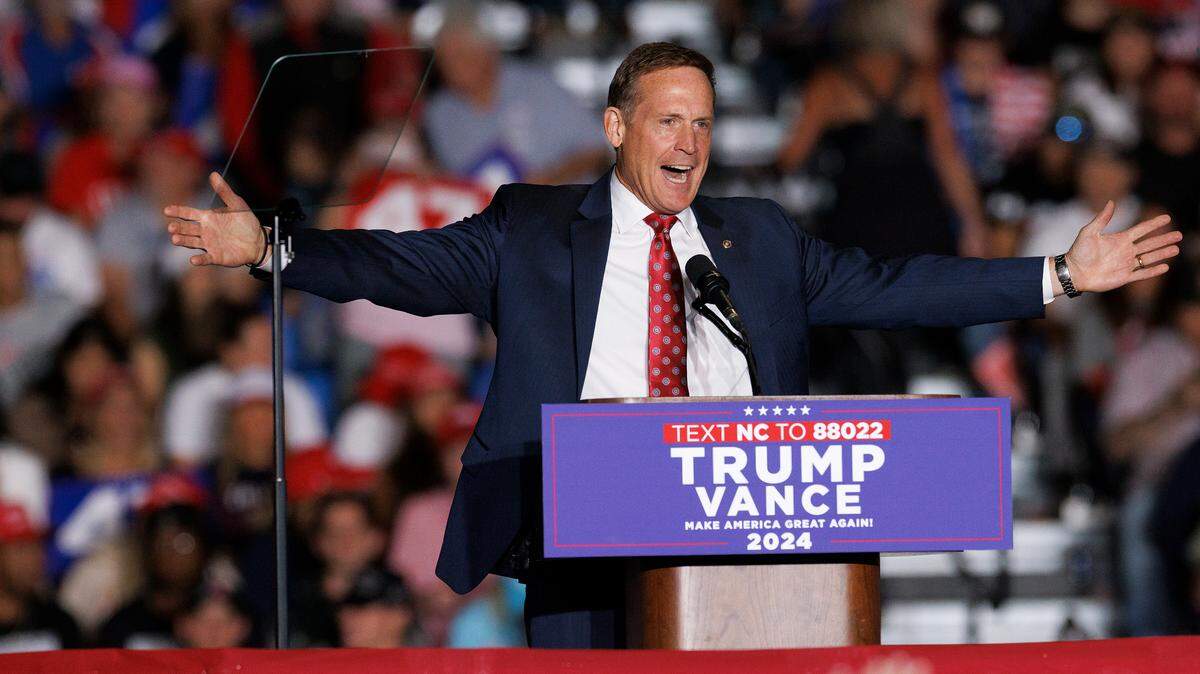
U.S. Sen. Ted Budd has spent most of his political career vowing to tackle the growing national debt. But he’s also been consistent in his support for President Donald Trump.
Now those two positions are in conflict with one another as Congress attempts to pass the One Big Beautiful Bill Act, a massive piece of legislation that Republicans are hoping to move through what’s known as the budget reconciliation process. The bill would implement a lot of Trump’s domestic priorities, such as tax breaks, spending cuts to Medicaid and food assistance and immigration enforcement.
But here’s the problem for Budd: the Big Beautiful Bill comes with a big, ugly deficit. The nonpartisan Congressional Budget Office estimates that it would add $2.3 trillion to the national debt over the next decade. While the bill does include some spending cuts, they’re not enough to offset the new tax cuts and spending the bill would impose. According to the CBO, the bill passed by the House includes $5.3 trillion of tax cuts and spending, which is only partially offset by $2.9 trillion of revenue increases and spending cuts.
Budd has called the current national debt “unsustainable and unacceptable” and has consistently opposed legislation that he considers to be examples of “overspending.” The bill also proposes raising the debt ceiling by $5 trillion, something that Budd has also opposed in the past. In 2023, Budd voted against a bipartisan bill that raised the debt ceiling while cutting some government spending, saying it “does not fundamentally alter our country’s disastrous fiscal path.”
In a statement provided by his office, Budd acknowledged the Big Beautiful Bill has room for improvement.
“Throughout my career, both in the House and Senate, I’ve warned that before we raise the limit on the national credit card, we need to get serious about Washington’s spending addiction. We don’t have a tax problem — we have a spending problem,” Budd wrote. “I share my colleague’s concerns that the House Bill needs improvement, and I’m working to reduce spending as this bill makes its way through the Senate. One thing is clear — if Congress does not act and allows President Trump’s tax cuts to expire, North Carolina families will face the highest tax hike in American history.”
But there may be a limit to just how much the bill can be improved. The problem with the bill is that achieving its desired goal — extending corporate and individual tax cuts from Trump’s first term — without adding to the deficit is a Herculean task.
The White House and some congressional Republicans have dismissed or cast doubt on the CBO’s analysis, calling the office “irrelevant” and “Democrat controlled.” But the math here is pretty simple. Offsetting the expensive tax cuts requires slashing a tremendous amount of spending, which can’t be done without seriously cutting into spending for social safety net programs. The House’s version of the bill does include some cuts to Medicaid and SNAP, but Senate Republicans may have to cut even more if they want to soften the bill’s impact on the deficit. Already, the cuts in the House’s version of the bill put hundreds of thousands of North Carolinians at risk of losing health coverage and food assistance. Further cuts would be even more devastating.
When it comes time for the Senate to vote on the bill, Budd may face a difficult choice. If the bill’s price tag doesn’t change, does he vote for his principles, or does he vote for his party? If the Senate opts to slash benefits further, will he side with his constituents or with Trump?
For Budd, though, that choice may not be too difficult. After all, he votes with Trump the vast majority of the time and is rarely, if ever, publicly critical of him. He was elected to the Senate in large part thanks to the support of Trump and the fiscally conservative Club for Growth, which propelled him to victory in a competitive primary. Voting against the bill could cost him politically, but voting for it could cost the country a lot more.
This is Budd’s chance to finally prove that he’s more than just a Trump mouthpiece. Will he meet the moment?