
Duke leadership is letting down higher ed in a moment it should be fighting back | Opinion
American higher education is facing the gravest menace to its mission in our history. Never, not even in the McCarthy era, have colleges and universities experienced such direct federal attacks on academic freedom and institutional autonomy. With President Donald Trump shaking down institutions to extract hundreds of millions of dollars and gain partisan control over internal decision-making, no college or university administrator has an easy job. The risks are existential.
That is why it is so important to keep university leadership’s eyes on the prize: protecting all higher education so that it can fulfill its primary role of sustaining democracy by instructing upcoming generations with state-of-the-art knowledge enhanced by rigorous discussion.
Our colleges and universities must offer a powerful counterpoint to the bullying slash-and-burn edicts coming from the White House. They must act in ways that are principled and collaborative. They must be brave. To do that, they need robust, vocal public support as well as solidarity within institutions and across the sector.
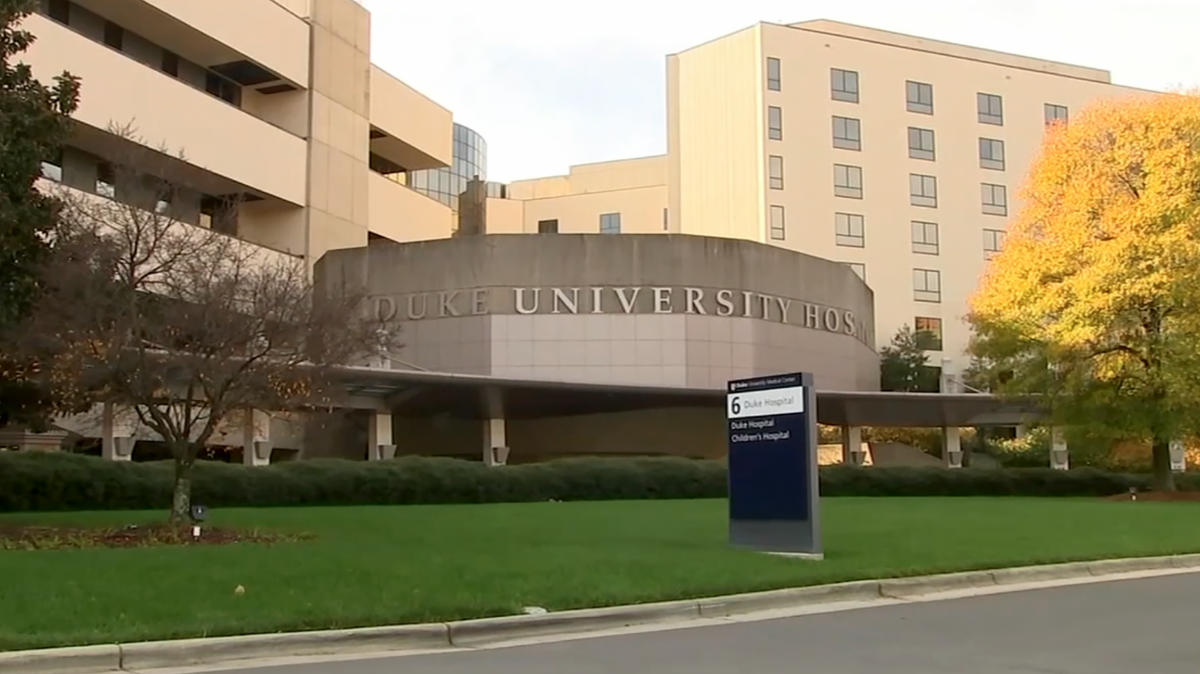
I’ve watched with sadness and alarm as a faculty member as Duke University’s senior leadership has locked itself in a self-protective bunker, failing to work in coalition and consultation with its employees, other universities and our surrounding communities.
Faced with Trump-inflicted projected budget shortfalls ranging from $350 million to as high as $750 million, Duke’s top administrators turned to cuts affecting the very people who make Duke an educational powerhouse: library collections experts, global studies leaders, office staff and even directors of core student programs, like the independently endowed university scholars. Leadership announced to employees on July 25 that 599 staff and faculty have accepted so-called “voluntary separation” (really, a Hobson’s choice whose alternative was likely forced layoffs on worse terms within a few months). This month, Duke begins involuntary layoffs that will take jobs from another several hundred people.
On June 2, a coalition of concerned faculty, staff, students and Durham residents sent university President Vincent E. Price and other highest-paid administrators an open letter urging a more ethical plan based on shared sacrifice and shared decision making. The coalition pointed out that Duke could save $6.6 million a year if the president and the senior managers who make over $1 million a year would take voluntary pay cuts of 25% and those making between $500,000 and $1 million would forego 10% of their salaries so that other loyal employees could keep working. (If top earners waived bonuses and some benefits, the amount saved could triple).
They also noted Duke’s $11.2 billion-dollar endowment, which might be tapped to meet this emergency while leaving plenty for the future.
Their letter has gone unanswered.
As a historian of U.S. political economy and social movements, I see that snubbing of stakeholders as a severe blunder. By making pain-inflicting decisions on their own, with no broader consultation or transparency and refusing to address reasonable suggestions from those affected and the many now feeling fear, even panic, Duke’s senior leadership is creating a rift with those who serve the university’s core mission of education and research in the service of society. The rift extends to Duke and Durham more generally — the people who live and work in the surrounding community and depend on the university for their livelihoods.
Conduct like this reinforces the stereotype that higher education leaders are overpaid and immune to fair criticism, more interested in fundraising than in ensuring the wellbeing of their home communities.
Duke leadership’s “go it alone” approach is similarly eroding its relationships with other higher education institutions, wounding its national reputation. True, President Price signed an April letter along with over 600 college presidents and educational leaders “oppos[ing] undue government intrusion in the lives of those who learn, live, and work on our campuses” and calling, instead, for “constructive engagement.”
But words are no substitute for action.
When 24 other top research universities came to the support of Harvard’s lawsuit against Trump’s funding freeze, Duke abstained. Its top leaders failed to realize that fear is an aphrodisiac to a strongman. Now we, too, are in Trump’s crosshairs — with fewer allies than we might have, had Duke shown the courage of these peer institutions.
Self-absorbed strategy in this existential crisis harms not only Duke, but also the whole state because Duke is the second-largest private employer in North Carolina.
It doesn’t have to be this way. A wiser course is possible.
Duke’s top leaders won respect for the ethical way they handled the financial crisis caused by the COVID pandemic. Then, they made a priority of avoiding layoffs, coming up with savvy workarounds that shared the burden of financial loss more fairly.
Reversing course could help the university build up the local, alumni and sector-wide goodwill that will be the best protection in this perilous political environment, in which MAGA is holding higher education hostage.
Nancy MacLean is the William H. Chafe Professor of History Emerita at Duke University, a Fellow at the AAUP Center for the Defense of Academic Freedom and author of the National Book Award finalist, Democracy in Chains: The Deep History of the Radical Right’s Stealth Plan for America.
This story was originally published August 13, 2025 at 5:00 AM with the headline "Duke leadership is letting down higher ed in a moment it should be fighting back | Opinion."