Trump is making Charlotte light rail killing a partisan issue. It’s not that simple. | Opinion
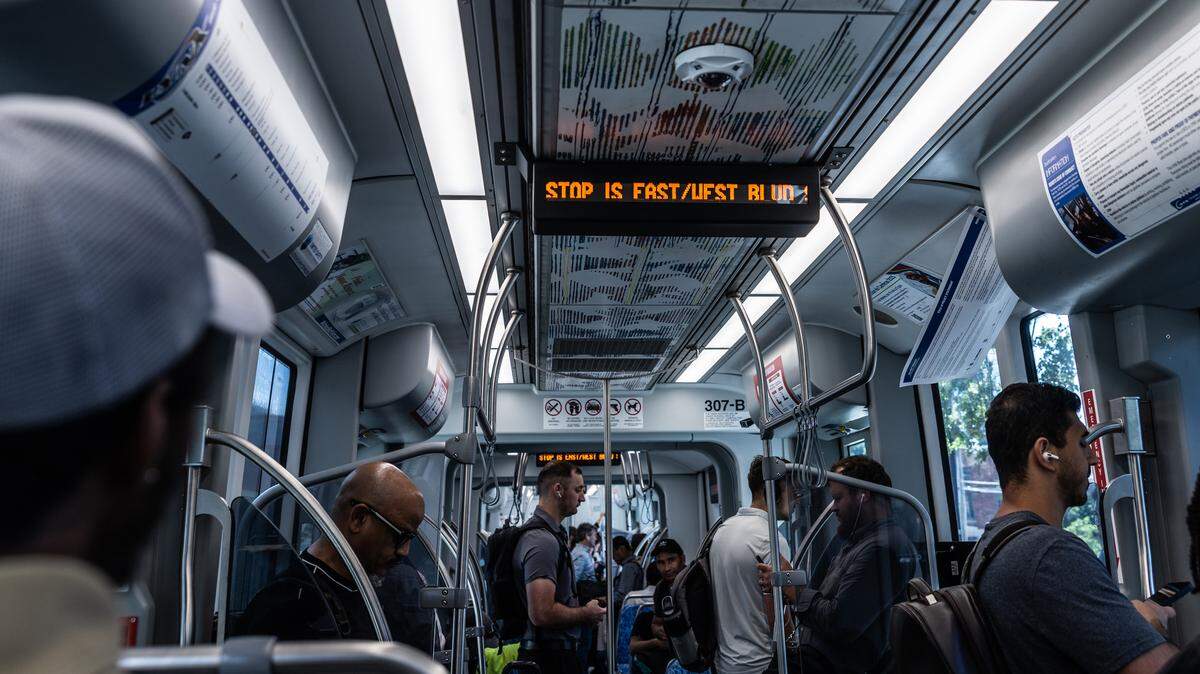
The tragic stabbing death of a 23-year-old Ukrainian refugee on Charlotte’s light rail last month has sparked national outrage. But it’s also become a political rallying cry in an ongoing debate about crime in Democratic-led cities, which President Donald Trump and his administration have vowed to crack down on.
Trump himself weighed in on the matter in a social media post Monday, saying “her blood is on the hands of Democrats who refuse to put bad people in jail, including Former Disgraced Governor and ‘Wannabe Senator’ Roy Cooper. North Carolina, and every State, needs LAW AND ORDER, and only Republicans will deliver it!”
A White House press release, also released Monday, called the killing “the culmination of North Carolina’s Democrat politicians, prosecutors, and judges prioritizing woke agendas that fail to protect their citizens when they need them the most.”
Since the incident, many have questioned how the perpetrator, a man with a long criminal record and documented mental health struggles, was able to freely roam the streets. He had most recently been arrested and released in January on charges of misusing 911. Just one month before the stabbing, a judge had ordered him to be mentally evaluated to determine if he was able to proceed in the legal process.
The press release contained a lengthy list of policies and initiatives as examples of “Democrat failures” and “woke policies” that could be to blame for the killing.
The first listed example is a 2020 decision by Charlotte City Council to divert select 911 calls away from police and toward professionals who might be better equipped to handle them. The city has a team of trained mental health professionals to respond to low-risk mental health, substance abuse and homelessness calls for service. It’s unclear how, if at all, that decision is related to last month’s incident.
Also included in the list is Mecklenburg County’s ongoing efforts to address “racial disparities at all levels of the criminal justice system,” and the equity and inclusion consultants it hired to help achieve that goal. The White House and Trump don’t explain how these policies are at all related to last month’s incident.
Of course, there is a legitimate discussion to be had about public safety in Charlotte, and legitimate questions about the failures that might have allowed this incident to occur. Safety is an issue that has dogged the city for some time, and it’s one that leaders can’t afford to ignore. Mayor Vi Lyles announced in a statement Monday that the city is taking action to increase transit safety, including increasing fare enforcement and police patrols, and she called for a bipartisan solution to “address repeat offenders who do not face consequences for their actions and those who cannot get treatment for their mental illness and are allowed to be on the streets.”
That’s a start, but it’s unfortunate that it took such intense politicization of this tragedy to get Lyles and CATS to finally act on one facet of it. The action, and calls to action, that city leadership began to voice this week should come much earlier. In fact, leaders opened the door even further to criticism by failing to respond forcefully and promptly to the tragedy before now. There have been no press conferences or public appearances, just a series of statements that, until now, haven’t shown much leadership on the matter.
But this isn’t a Democrat vs. Republican issue, and it’s wrong to treat it as one. While the focus is often on crime in blue cities and blue states, it’s an issue in red cities and red states, as well. In fact, data shows that homicide rates tend to be highest in blue cities located in red states, suggesting that neither party is solely to blame. In fact, red states tend to have higher homicide rates than blue states, in part due to higher rates of gun homicides. That’s something Trump and Republicans don’t tend to acknowledge.
Using a tragedy like this to advance a particular political narrative, or promote one candidate over another, is distasteful and divisive. It’s easy to point fingers at one policy, or one party, that could be to blame for problems in our communities, but the likely reality is that it’s much more nuanced. Unfortunately, nuance is too often missing from conversations that need it most.
This story was originally published September 9, 2025 at 1:39 PM.