Report: Vaccination rates are declining, leaving some NC counties vulnerable | Opinion
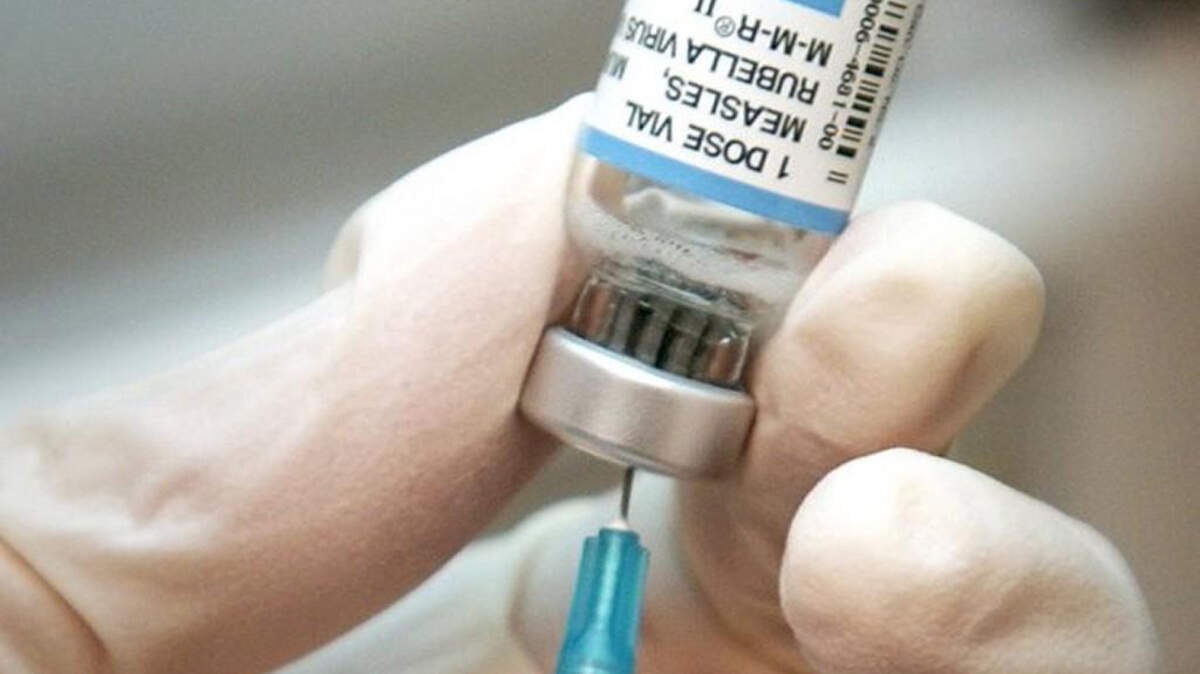
A new report from NBC News has raised alarms about backsliding vaccination rates across the country. According to the investigation, the vast majority of counties across the U.S. are experiencing declining rates of childhood vaccination and don’t have the protection needed to stop the spread of deadly diseases like measles.
That includes here in North Carolina, where the average vaccination rate decreased by about 2.5 percentage points between 2018 and 2024.
That dip is not severe as in other parts of the country, but it’s still worrisome. Currently, the percentage of North Carolina kindergarten students who have received the measles, mumps, and rubella (MMR) vaccine is at a four-year low, with just 93.8% getting the shot in the 2023-24 school year. That means that North Carolina is below the 95% threshold required to reach herd immunity, leaving the state vulnerable to a measles outbreak.
While a drop of only a couple percentage points may seem small, it represents a few thousand students every year. Also: vaccination rates are not evenly spread, so in some counties, it’s more worrisome than others. In Polk County, for example, just 84% of students are up to date on their vaccinations — down from 95% in 2020, the NBC News analysis shows. Onslow County also has an 84% vaccination rate, which is almost eight percentage points lower than it was five years ago. Even in urban counties, the numbers are below 95%. In Mecklenburg and Wake counties, the vaccination rates are 92% and 94%, respectively.
State law allows parents to opt out of required childhood vaccinations on religious grounds, but since it doesn’t require any real verification, there’s virtually no way for the state to decline it. In Polk County, where vaccination rates are among the state’s lowest, more than 14% of students have claimed a nonmedical exemption to vaccination. Statewide, the percentage of students claiming religious exemptions has more than doubled since 2020, according to the most recent data available from the N.C. Department of Health and Human Services.
We can already see the warning signs. North Carolina already had one reported case of measles in 2025, and there was one in 2024. But for the five years before that, there were none at all. Meanwhile, there have been more cases of whooping cough in North Carolina in 2025 than in the last 70 years, and such cases are on track to break a record. That’s not a record we should want to break.
Despite the troubling drop in vaccination rates and the threat it poses to public health, North Carolina lawmakers are still looking for ways to accelerate that decline. Republican legislators have introduced two bills this year that would loosen or repeal vaccine requirements. One bill, dubbed the “University Vaccination Freedom Act,” would repeal immunization requirements for anyone who attends a college or university in North Carolina. There’s also House Bill 380, which would create a third category for exemptions to vaccine requirements. That category would allow anyone with a “conscientious objection” to opt out of being vaccinated, essentially allowing people to refuse vaccinations for any moral or philosophical reason. While neither bill has progressed through the legislature, they still represent a disturbing trend.
It doesn’t help, either, that the nation’s leading public health official is someone who has spent years sowing distrust in vaccines, including by spreading false claims about vaccines and autism. Health and Human Services Secretary Robert F. Kennedy Jr. has raised unnecessary and unfounded doubts about the measles vaccine in particular, and downplayed the severity of the disease. Even now, he says he does not believe the vaccine should be required, despite admitting it “is the most effective way to prevent the spread of measles.”
That kind of rhetoric is dangerous, and it’s the reason we’re now seeing a possible resurgence of diseases that were once considered eradicated in the U.S., like measles. Nationwide, there have been more measles cases in 2025 than in any other year since it was declared eliminated in the United States in 2000. When we treat vaccination as something that’s optional, it results in deaths that are entirely preventable. We can’t let that become the new normal.
Paige Masten is an opinion writer and deputy opinion editor for McClatchy’s North Carolina opinion team.