
Political sides must compromise to combat mass shootings and violence in NC | Opinion
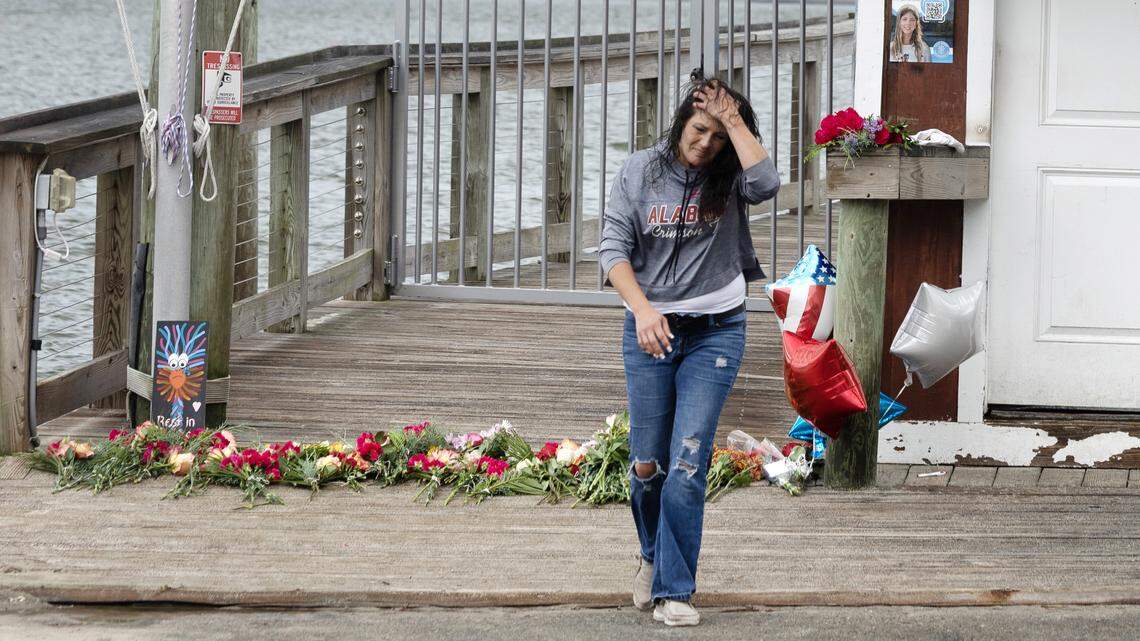
When a man opened fire at a Southport restaurant last week, Gov. Josh Stein traveled to the coast and said what politicians always say after senseless violence: We must do more.
He’s right, of course. But “more” has become a placeholder that sounds like urgency while delivering nothing of substance. Both sides grab their preferred fix, claim the moral high ground and move on. Meanwhile, nothing changes.

A real solution won’t come from a single policy or a bigger budget. It’s going to take an approach that will make both sides of the aisle uncomfortable.
Republicans will have to give a little on gun laws. Democrats will have to accept more incarceration and a stricter approach to crime.
But after a month crowded with American tragedies, now feels like the time. The same day Stein was in Southport, Charlotte hosted a congressional hearing that discussed failures in the justice system that have led to tragic deaths across the region.
We can debate whether the data say violence is up or down. But when a man shoots up a restaurant or stabs a woman on a train, the public doesn’t see nuance. They see terrorism. And they’re right.
No simple answer
People who insist any single lever will fix this aren’t being serious, on the left or the right. But typically, that’s all we get.
Banning guns is neither realistic nor moral. Hardening targets — things like adding security at schools and public transit — is worth doing, but it won’t be enough. And “fund mental health” is just a slogan unless we fundamentally change the rules.
To his credit, Stein also pointed to a deeper issue in Southport.
“There are too many people who are profoundly troubled, who are obsessed, whose paranoia gets stoked by what they read on the internet every day,” the governor said. “And we’ve got to figure out ways so that those folks don’t pose risks to the community.”
He’s right there, too, but it’s not the whole story. Random crime and premeditated attacks have different patterns and require different approaches. But they often stem from a common source: Both our prisons and our mental-health “system” operate like revolving doors.
A coordinated response
Public demand for real change has never been higher. What’s missing is a serious plan.
Step one: North Carolina needs a “red flag” law. In both Southport and Charlotte, the families saw it coming. The Southport suspect’s mother pleaded for the VA to intervene. The Charlotte suspect’s mother begged for help, too.
We need a judge-led process that can temporarily separate dangerous individuals from firearms and require meaningful treatment. The process must be bound by fast hearings, corroborated evidence and due process every step of the way.
That goes hand-in-hand with reforms that will make Democrats bristle: more involuntary commitments and tougher sentencing.
Right now, mental health holds are too short, and the bar to intervene is too high. We need legal authority and more beds to keep deteriorating individuals long enough to keep dangerous people off the streets.
On the criminal side, North Carolina must strengthen the Habitual Felon Law to get repeat violent offenders behind bars earlier and for longer. That includes more pretrial confinement and swifter resolution in serious cases.
We’ll also need to go one step further: more intelligence and, within limits, surveillance. These aren’t just crimes, they’re targeted efforts to destabilize civic life.
The State Bureau of Investigations should build threat-assessment units to track and, where lawful, infiltrate radicalization pipelines and coordinate intelligence before violence erupts.
None of it is easy. The right will worry about government overreach. The left will worry about disparate impact. Those concerns deserve respect, which is why plenty of due process must be written into the law.
Not a real fix — but necessary
In the long run, no statute is strong enough to replace what holds people together. If we want fewer shattered lives, we have to rebuild the basics — stable marriages, present fathers, vibrant churches.
Policy can buy beds and write guardrails. Only families and faith can form souls, steady minds and give young men a reason to choose responsibility over ruin. The state can keep the peace. Homes and churches teach people how to live in it.
I wish the governor had used his Southport visit to announce a full plan. But I also understand the fog that follows tragedy. Political courage is rarely found in the first days of grief.
Still, if we want different outcomes, we have to take different actions. This isn’t about scoring points. It’s about changing trajectories.
If both sides feel a little uncomfortable, maybe that’s the best sign yet that we’re finally ready to get serious.
Welcome to governing. The goal isn’t to make either party feel vindicated. It’s to make fewer families bury their loved ones.
Contributing columnist Andrew Dunn is the publisher of the Longleaf Politics newsletter, which offers thoughtful analysis of North Carolina politics and policy from a conservative perspective. He can be reached at andrew@longleafpol.com.
This story was originally published October 2, 2025 at 5:00 AM.