
National Guard in Charlotte? Don’t write off the idea so quickly | Opinion
Ask a random person to describe the Third Amendment to the Constitution and you’ll likely get a blank stare. Fair enough; a ban on quartering troops in private homes certainly feels a little dated.
But the principle still matters. America’s founders were rightly wary of a standing army patrolling city streets, and such caution remains in our cultural DNA.

That’s why the prospect of uniformed soldiers in Charlotte naturally makes your stomach turn.
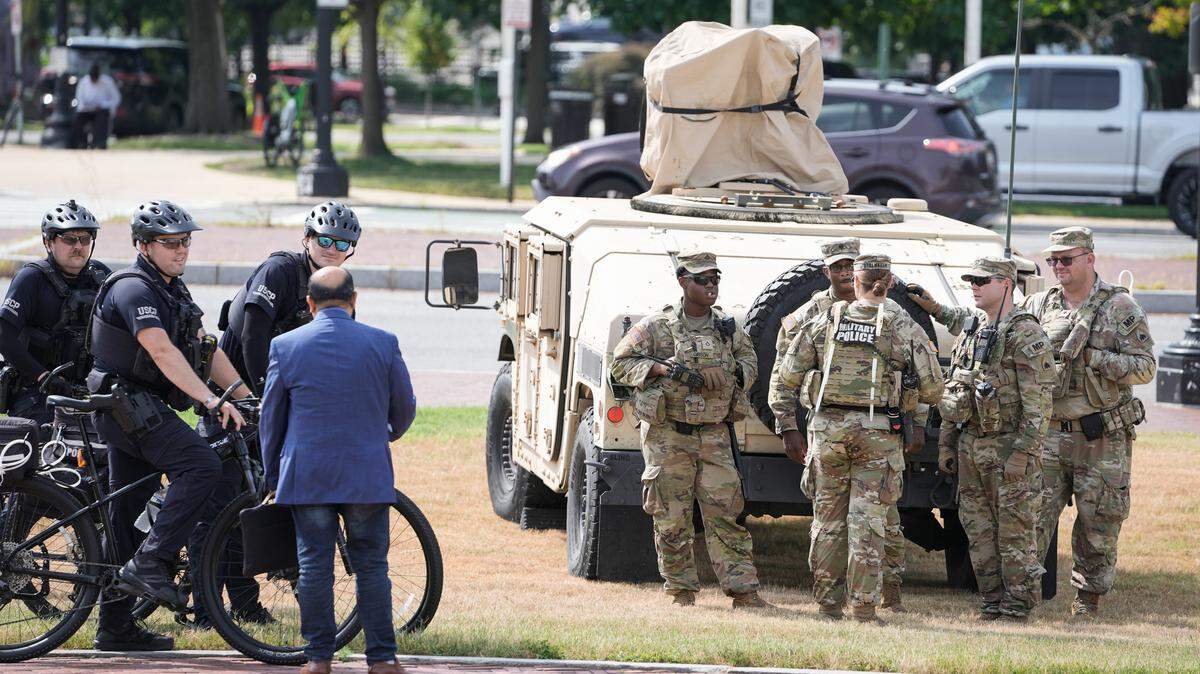
Last week, the local Fraternal Order of Police chapter publicly asked city leaders to call in the National Guard to shore up an overworked police force. We’re no strangers to seeing the guard in action during riots or natural disasters, but this would be something else entirely.
Understandably, Mayor Vi Lyles and council members have recoiled at the idea. But after the past few weeks, it can’t simply be waved away.
This isn’t a call for soldiers on every corner. But it is an argument for keeping a last-resort tool available, narrow and temporary, while Charlotte fixes a staffing crisis years in the making.
Short on sworn officers
Undeniably, Charlotte’s in a rough stretch. Since the stabbing of Iryna Zarutska, at least 15 more people in Charlotte have been fatally shot, according to the local Fraternal Order of Police.
At the same time, the Charlotte-Mecklenburg Police Department is woefully understaffed. As Charlotte’s population has boomed, the city budget for sworn officers hasn’t kept pace.
The current fiscal year’s budget allotts 1,936 full-time officer positions, a number that’s steadily decreased since hitting 1,973 in 2018. Even those numbers are largely on paper. Charlotte has battled an officer shortage since at least 2020, with the number of vacancies fluctuating between 200 and 300 since then.
I asked CMPD for the current vacancy count, but the department declined to provide it. Instead, they directed me to file a public-records request.
Power politics
National politics complicate the picture even further. President Donald Trump has already deployed guardsmen to Washington D.C. and Memphis to fight crime, and to cities like Chicago and Portland to protect federal officers and facilities.
The courts are sorting out whether all of that is legal, but the perception is troubling nonetheless. As usual, Trump is correct in some respects but grotesque in his rhetoric.
Yes, American cities have become too complacent when it comes to violent crime and too lenient toward criminals. But Trump seems to be revelling in the show of force and punishing cities rather than trying to solve problems.
Because of that, big city mayors have become defensive and dismissive of the problems of crime. That’s not healthy either.
North Carolina should resist federal force, but accept federal help where it makes sense.
What a lawful, limited assist could look like
To bolster rail safety, the city offered hundreds of off-duty shifts to CMPD officers to serve on transit lines. On paper, that’s a safety surge. In practice, though, these kinds of shifts have been a struggle to fill in the past.
That’s where the National Guard could conceivably come in.
Guard units are not beat cops, and shouldn’t be asked to be. Where they excel is securing buildings, platforms and perimeters. We don’t want soldiers marching down neighborhood streets. But stationing some on transit platforms? That could make sense.
A responsible deployment would be state-led and time-limited. Any National Guard role in North Carolina must start with Gov. Josh Stein and be carried out with Lyles.
They could start where risk is concentrated. Stations and platforms on the Blue Line. Trains at peak hours. Romare Bearden Park in the evenings and vulnerable parts of Uptown on weekends.
Preparation matters, too. Stein should ensure now that North Carolina guardsmen are trained for this kind of domestic role if the day comes.
In that light, the concept is not so foreign. CMPD has long used federal–local task forces to go after gangs and serve warrants. And in 2016, after protests over the police shooting of Keith Lamont Scott spiraled into violence, Gov. Pat McCrory activated the National Guard to protect buildings while CMPD handled the streets.
Of course, even the best National Guard plan is a bridge, not a cure. City leaders must accelerate sworn officer recruiting and retention, and rethink how we incentivize off-duty work. Right now, off-duty structures and pay rules are working against the city’s own safety goals. Fix that or you’ll be stuck in emergency mode.
Last resort — but still on the table
Using the National Guard should be a last resort. It should also remain on the table.
Nobody should want soldiers at rail stations. But no one should accept a city where families avoid trains and parks.
A limited, state-commanded National Guard presence at fixed sites could buy the time Charlotte needs to rebuild the force and restore everyday safety. That would be how a city protects both its people and its principles.
Contributing columnist Andrew Dunn is the publisher of the Longleaf Politics newsletter, which offers thoughtful analysis of North Carolina politics and policy from a conservative perspective. He can be reached at andrew@longleafpol.com.