
NC’s top watchdog is getting political buzz — and more scrutiny | Opinion
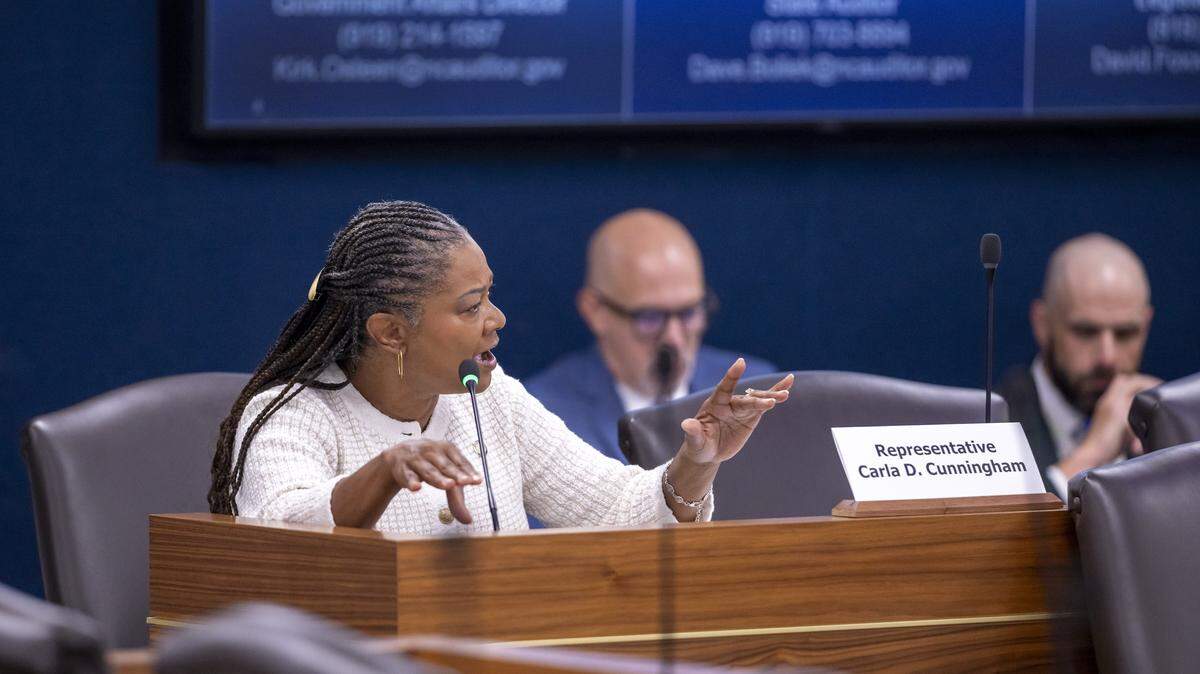
The North Carolina state auditor has long been influential, but the office has worked more like a coroner than an EMT.
Auditors tended to show up after something went wrong, carefully pieced together the facts, and explained what needed fixing. It wasn’t always fast, but it was trusted.
Now the job moves at a different pace. Under State Auditor Dave Boliek, the auditor’s office is responding quicker, turning around audits faster, and landing findings in time to shape real decisions.
In Charlotte, his team flagged how spending on transit safety went up even as officer numbers went down, just weeks after a deadly train stabbing made headlines. In Winston-Salem, the office broke down a school district’s financial collapse while the state was still figuring out how to bail it out.
Boliek didn’t inherit a broken office, but he’s added urgency, visibility, and purpose — mostly by force of will. It helps that the General Assembly gave him new tools and resources, but what’s really turned heads is how he’s used them.
Boliek is reshaping the office into something unusually useful in state government and building a powerful platform in the process. That makes his next challenge all the more precarious.
More power, more risk
Alongside extra staff and investigative horsepower, the legislature handed Boliek something he likely didn’t ask for: control of the State Board of Elections. It’s more power, yes — but it’s also his biggest liability.
The public expects the state auditor to be above the political fray. Now, even if Boliek runs the board with integrity, the perception alone could taint the institution’s credibility.
You don’t have to be cynical to see the risk, and Boliek got his first real test last week.
On the final day of early voting in this year’s municipal elections, the state’s online voter lookup tool briefly failed in 94 counties. Voters could still register and cast ballots in person, but it was harder to look up your polling place. The outage sparked a predictable round of political outrage, led by the North Carolina Democratic Party.
They tried to tie the outage directly to the new elections structure — and to Boliek himself. “Where in the hell is State Auditor Dave Boliek?” Democratic Party chairwoman Anderson Clayton wrote on X.
The elections last Tuesday ultimately went off without a hitch. Still, the incident showed how quickly the auditor’s office can get pulled into partisan crossfire, now that elections fall under its purview. The scrutiny will only grow heading into 2026.
A revitalized watchdog
The balance Boliek now must strike is one Beth Wood knows well.
Wood served as state auditor for nearly 15 years. A Democrat, she was one of the most respected public officials in the state, admired across party lines for her toughness and refusal to play favorites. Her audits forced change even when it earned her political blowback.
“It’s what I promised on the campaign trail, that I would take the politics out of the office,” Wood told me, and her track record backs it up. Over her tenure, leaders of both parties sat in the Executive Mansion, and the General Assembly switched control from Democrat to Republican.
“The only way we could have gotten it done is the fact that I showed the Republican General assembly that we were nonpartisan,” Wood told me. “We just went where the biggest dollars had the most possibility of being wasted.”
Her tenure ended in controversy, with a hit-and-run charge leading to her resignation. But the professional culture she built remains. She later endorsed Boliek in the 2024 election.
With all that as a backdrop, I asked her what she thought about the auditor’s office overseeing elections. Her answer was blunt: “The state auditor’s office shouldn’t be overseeing anything. We should be auditing everything and overseeing nothing,” she told me.
That’s hard to argue against.
Results speak louder than spin
Boliek wasn’t available to speak with me for this column, but his office sent a statement.
“Our team is delivering results to the people of North Carolina,” it read. “Whether it’s a financial statement audit or a special report, we conduct our business transparently and while maintaining independence. No matter what side of the aisle you sit on, if you want to make a tip, our phone line is open.”
That last part is the key. The auditor’s office works when it’s trusted by everyone and weaponized by no one. To date, Boliek hasn’t significantly challenged any GOP institutions. But it’s very early in his tenure, and audits tend to focus more on executive agencies, anyway.
To keep the right balance, he’ll need to figure out a way to keep his office out of the political scrum and show that he’s unafraid to challenge leaders in his own party.
There’s early talk that Boliek could be the GOP’s best option for governor in 2028. If that’s the path he wants, the next three years are key. Stay fast. Stay useful. And stay out of the partisan brawls.
If he can, it’ll be good for Boliek’s future — and even better for North Carolina.
Contributing columnist Andrew Dunn is the publisher of the Longleaf Politics newsletter, which offers thoughtful analysis of North Carolina politics and policy from a conservative perspective. He can be reached at andrew@longleafpol.com.