
Border Patrol leaves Charlotte, but hard reality remains: We need deportations | Opinion
There is nothing compassionate about open borders.
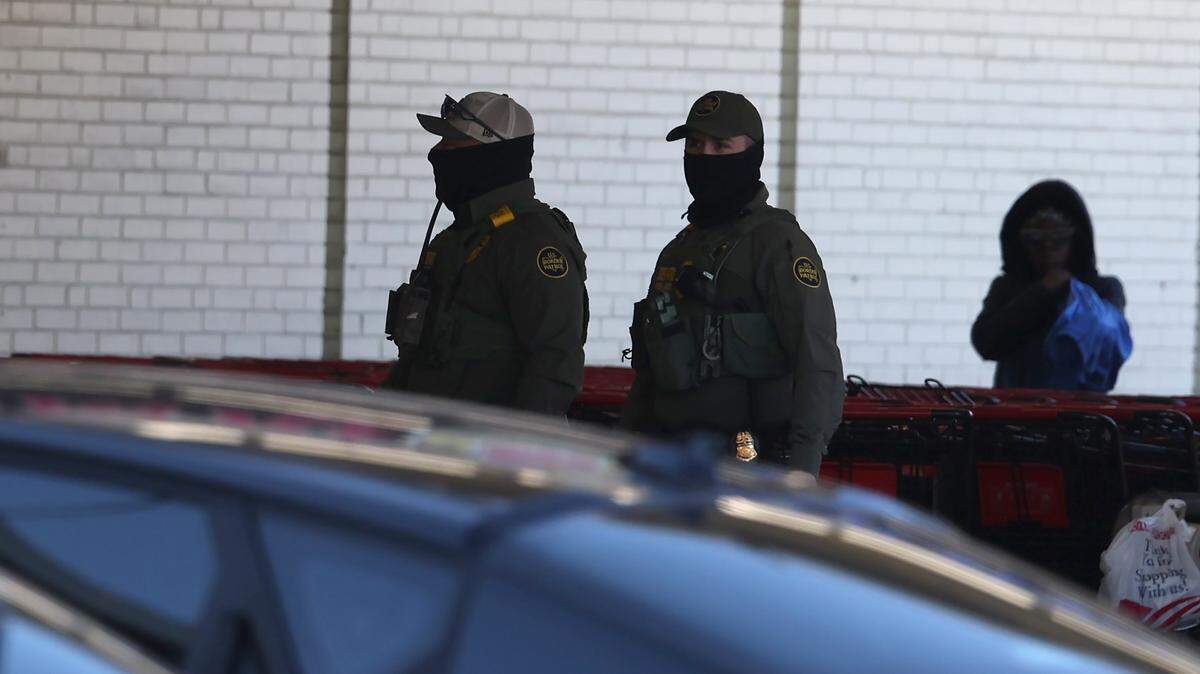
That’s easy to forget when the U.S. Border Patrol is suddenly on Charlotte’s streets. I don’t think this kind of flash operation gets us much closer to the immigration system North Carolina needs.
But it’s just as wrong to demonize federal agents for doing the jobs Congress gave them, or to pretend there’s no place for deportation in America at all. According to the Department of Homeland Security, the operation has already netted immigrants here illegally who are accused of serious crimes — people the Mecklenburg County sheriff previously released instead of holding for federal authorities.
When we refuse to enforce our laws, we haven’t chosen mercy. We’ve chosen a system that leaves people to die in the desert, drown in rivers, be assaulted by cartels and then live in a permanent shadow class here in the United States.
There is no honest path forward on immigration that doesn’t include enforcing the law — including deportations.
Cruelty by neglect
The progressive left often treats loose borders as an act of compassion. In reality, they produce something close to lawless cruelty.
The journey north is one of the most dangerous in the world. People die of heat and dehydration or suffocate in tractor-trailers after paying smugglers everything they own. Women and children are sexually assaulted so often along the way that aid workers talk about it as an expected part of the trip.

The border isn’t just a humanitarian crisis. It’s a national security risk. A country that lets criminal organizations manage large stretches of its frontier is giving an open lane to anyone willing to pay the price.
Compassion and the American idea
My argument is not with hard-working people who make that journey. Under our current system, if I lived in some of the countries they’re fleeing, I’d be tempted to do exactly what they did.
But compassion for the individual can’t blind us to what’s best for our country, our citizens, and immigrants themselves. A system that lures people into a deadly journey and then traps them in a permanent underclass is not mercy. It’s a moral failure.
North Carolina has seen that up close. In 2008, the Observer’s “Cruelest Cuts” series exposed how poultry plants here used immigrant labor, including people here illegally, in some of the most dangerous jobs in our economy. Injuries were hidden. Workers were threatened. Children were put in harm’s way. Those workers weren’t living the American Dream; they were living in fear.
Somewhere along the way, we’ve moved from a legal process designed to bring people fully into the American family to a shadow system that tolerates illegal entry, looks the other way at illegal work, and then acts surprised when we end up with a large, vulnerable population living permanently on the margins.
No path forward without deportations
The hard truth is that there is no credible path forward on immigration that doesn’t include deportations.
If crossing the border illegally or overstaying a visa carries essentially no risk of being sent home, we don’t have an immigration system. We have a suggestion. That’s why broad amnesty is not an option. We tried it in 1986 under President Ronald Reagan, and the country’s illegal population grew right back.
Doing it again would send a clear message: If you can get here and hide long enough, America will eventually reward you — with more deaths in the desert and more exploitation in plants and fields from Duplin County to Henderson County.
A serious, humane system has to require that people who entered the country illegally, and have no legal claim to be here, return home and re-enter through lawful channels. That doesn’t mean tearing apart every family overnight. It does mean ending the wink-and-nod approach where illegal status quietly becomes permanent.
It also means changing incentives here in North Carolina. We should move toward universal E-Verify, not just for larger employers, and give the N.C. Department of Labor the tools to enforce it. We should be just as tough on companies that knowingly exploit illegal labor as we are on illegal entry itself.
At the same time, we need smarter legal immigration. On the high-skilled side, that means sharply reducing H-1B visas that are too often used to replace American workers with cheaper foreign labor. On the low-skilled side, it means a modern guest-worker program modeled on the old Bracero system that brought Mexican farmworkers here legally for seasonal work.
A new version should have one key feature: The total cost to the employer, in wages and fees, should be comparable to hiring an American worker. If farmers and builders still can’t find enough people at that price, we’ll know the labor shortage is real. If they suddenly can, we’ll know that “Americans won’t do these jobs” was at least partly an excuse to underpay people.
That’s the balance we should be aiming for. A North Carolina that welcomes people as full participants in our civic life, but insists they come through the front door, under laws we actually intend to enforce.
Contributing columnist Andrew Dunn is the publisher of the Longleaf Politics newsletter, which offers thoughtful analysis of North Carolina politics and policy from a conservative perspective. He can be reached at andrew@longleafpol.com.
This story was originally published November 21, 2025 at 5:00 AM.