
The dangerous decline of North Carolina’s “Happy Warriors” | Opinion
The concept of the “happy warrior” has become a political cliché, but it comes from a very specific place in history. Two centuries ago, William Wordsworth coined the phrase in a poem about Admiral Horatio Nelson after his death at Trafalgar, trying to capture what made him the model of national leadership.
In Wordsworth’s telling, the happy warrior is the rare leader who sees the world clearly, yet carries an inner steadiness and “owes to virtue every triumph that he knows.”
I can’t say how accurate that is as a description of Admiral Nelson, as I’ll admit that I’m far from an expert on British naval history. But while the poem was written in earnest, it’s impossible not to read it today without laughing. Our politics spawns the opposite type.
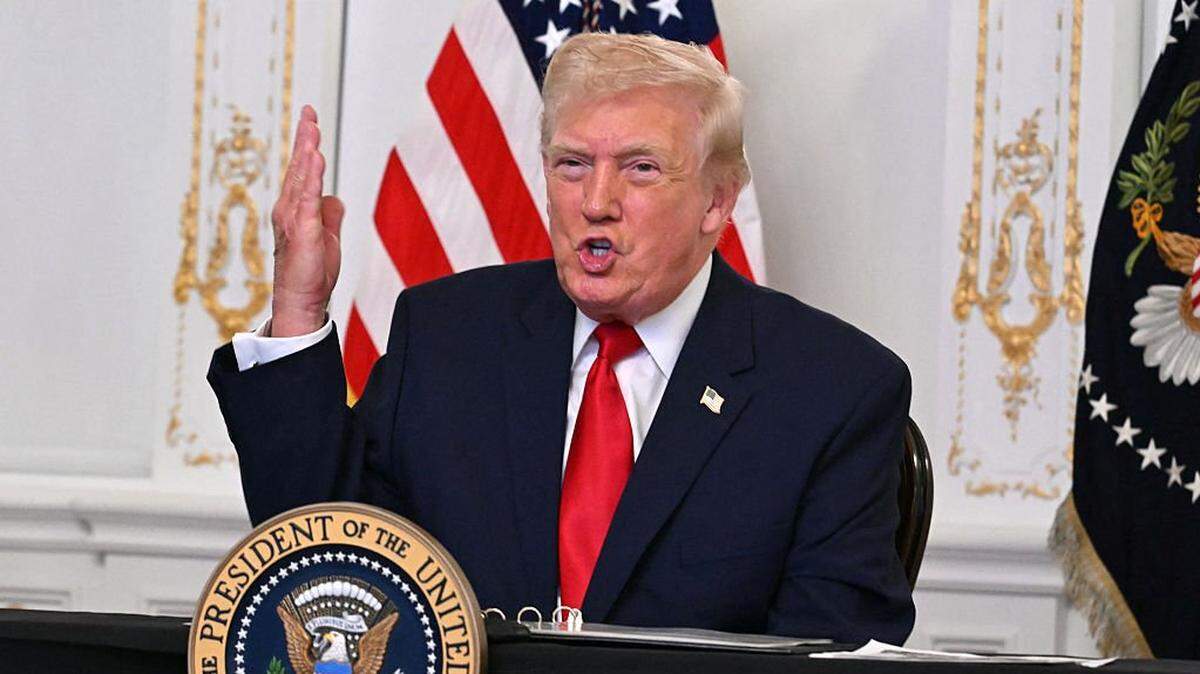
Democrats talk as if democracy is always one election away from collapse. Republicans replay President Donald Trump’s upper-case outrage on a loop. Fear and anger are about the only bipartisan projects left.
But in North Carolina, that style is especially risky for Republicans, because they’re the ones actually running the state — and too many have started talking like it’s already lost.
Outsider rhetoric from people on the inside
Republicans in North Carolina are not insurgents. They’ve controlled the General Assembly for nearly 14 years. They write the budget, redraw the maps, and shape the rules for schools and elections. On most big questions in Raleigh, the GOP is the system.

You wouldn’t know it from how they talk. Many of the state’s most prominent Republicans are trying to be mini-Trumps, channeling the rhetoric that made him famous.
We can see it in the way some talk about crime and immigration enforcement, treating crackdowns as proof that our cities are full of “bad people and bad things,” as Border Patrol Commander Gregory Bovino described Charlotte on cable news, rather than places where families are trying to live their lives.
You hear the same tone from some of the GOP’s rising stars.
Monroe mayor Robert Burns recently posted that “North Carolina is sick,” blaming a century of Democratic rule. Before that, Lt. Gov. Mark Robinson built a statewide brand on the idea that America, and North Carolina with it, is morally and culturally on the brink.
Of course, there are real issues North Carolina faces that underlie all of that. Crime is not imaginary. Neither is the high cost of living. And Democrats absolutely lean into their own worst-case scenarios when it suits them.
But when the party that actually holds power keeps insisting the state is sick and broken, voters don’t stop and do a decade-by-decade blame assignment. They look at who’s been in charge.
Trump’s script doesn’t fit Raleigh
It’s obvious what Republicans are trying to replicate. Trump showed that a candidate who talks like everything is falling apart can win. But look at when that worked for him.
Trump has only really succeeded as the outsider. In 2016, his dark “American carnage” inauguration speech matched his role: the wrecking ball aimed at both parties’ establishments. When he can cast himself as the guy pounding on the door, anger is an asset.
When Trump is clearly on the inside, the story changes. As the incumbent president in 2020, the same tone helped fuel an anti-incumbent mood that pushed him out. As de facto party leader in 2018 and 2022, Republicans underperformed in midterms they expected to dominate.
It’s hard to tell people everything is failing and then ask them to keep you in charge of it.
That’s exactly the trap North Carolina Republicans are edging toward. If you keep saying public spaces aren’t safe, institutions are corrupt and the state itself is “sick,” voters eventually ask a simple question: If it’s really this bad, why should we stick with you?
Bring back the happy warrior
This is where the happy warrior stops being a quaint literary reference and starts sounding like practical advice.
A happy warrior Republican in North Carolina would still be tough on crime but would talk about making the city safer because it’s worth fighting for, not because it’s already gone.
On immigration, he’d demand serious enforcement, and still acknowledge the immigrants who are running businesses and filling pews across the state.
On the economy, he’d be honest about grocery bills and housing costs — and also talk about the strengths we have and how to build on them.
That isn’t naïve. It’s confident. It sounds less like a pundit and more like the kind of leader Wordsworth sketched out — someone whose first instinct is reason, not rage.
Both parties could use more of that. But right now, Republicans hold the levers of power in Raleigh, so the political cost of constant doom falls on them first.
If they want to keep governing, they don’t need to give up fighting. But they may need to change what kind of fighters they are — fewer prophets of carnage, more happy warriors. Leaders who can see the cracks, name them honestly, and still sound like they believe North Carolina is worth the work.
Contributing columnist Andrew Dunn is the publisher of the Longleaf Politics newsletter, which offers thoughtful analysis of North Carolina politics and policy from a conservative perspective. He can be reached at andrew@longleafpol.com.