
Mecklenburg’s jail ‘crisis’ is self-inflicted | Opinion
North Carolina never stops talking about growth.
We redraw school maps, argue over new interchanges, and commission glossy studies about where another million people will live. But there’s one basic piece of infrastructure Charlotte and Mecklenburg County have treated as optional through all of this: the jail.
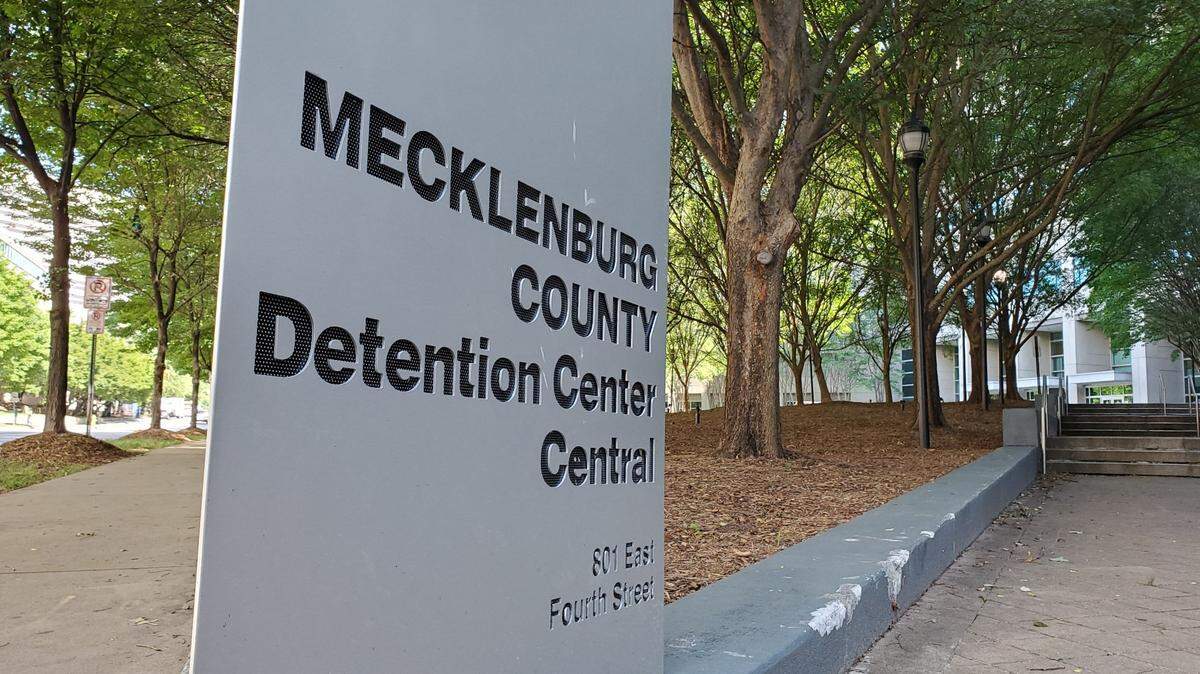
Despite the region’s growth, Mecklenburg actually has less jail capacity than it did a decade ago, even as counties across the state — from Wake to Henderson — are building new jails right now. There’s an entire vacant jail in the northern part of Charlotte.
This hasn’t been an accident, but a strategic decision. So when county leaders now describe the newly implemented Iryna’s Law as a burden, it’s hard to take seriously. The law did not create Mecklenburg’s jail problem. It exposed it.
Bracing for a “storm”
Iryna’s Law was crafted after the killing of 23-year-old Ukrainian refugee Iryna Zarutska on a Charlotte light-rail train, allegedly by a man with a long criminal history and serious mental health issues. The law’s core idea is simple: People accused of serious violent crimes should be harder to turn back onto the street on a promise and a handshake.
Though it passed in September, it took effect Dec. 1. In a presentation just before then, Mecklenburg Clerk of Superior Court Elisa Chinn-Gary said her office was “bracing” for the law, likening it to a hurricane or tragic storm.
Sheriff Garry McFadden leaned on the same script. He talked about “unfunded mandates,” transport costs, staffing shortages and mandatory overtime.
It’s a familiar political playbook to blame Raleigh and insist that “they” created a problem for “us” to solve. But in this case, it rings hollow. Mecklenburg is almost alone in talking this way.
Everyone else is making it work
I called Eddie Caldwell, executive vice president and general counsel of the N.C. Sheriffs’ Association, and asked how implementation has gone so far across the state. “I have not been contacted by any sheriffs with concerns,” he said.
Far from being blindsided, the association backed the bill and spent long days and nights working with legislators. “Every change that we asked for in the bill, the legislature agreed to make,” Caldwell told me.
To sheriffs, the law goes right at problems they’ve flagged for decades: dangerous repeat offenders walking out on low or unsecured bonds, and a growing share of inmates with serious mental illness who sit in county jails without real evaluation or treatment.
Former CMPD Chief Johnny Jennings was blunt about the first problem. His officers kept arresting the same violent people, only to see them quickly released.
The killing that prompted Iryna’s Law — a woman stabbed to death by a man recently released on a written promise to appear — is exactly the nightmare he warned about.
An empty jail, and shrinking capacity
At its peak, Mecklenburg County had just over 3,000 jail beds. But as the Great Recession raged, county leaders made a choice. They didn’t modernize and plan for the next surge in growth. They shut things down.
A proposed jail annex was mothballed. Jail North — a full-scale jail with hundreds of beds — stopped housing inmates at all and today sits unused as a detention facility.
To make that work, the county leaned heavily on diversion and looser pretrial release to drive the daily headcount down instead of building for the future. Iryna’s Law lands right on top of that structure and says that era is over.
Of course that will mean more people in jail in a county that chose to close one jail and let another sit empty. Of course it will stress a detention staff that’s been allowed to hollow out. But those are not acts of God. They’re the foreseeable results of local decisions.
The rhetoric falls flat
That’s why the hurricane talk and unfunded-mandate rhetoric fall so flat.
If detention staffing is a problem, that is not something the General Assembly did to Mecklenburg County last week. It is something Mecklenburg County has allowed to happen over years of budgets and hiring decisions. Staffing is not a storm; it’s a choice.
Some county commissioners made the point pretty directly. “Our priorities are going to be cut into because of this,” Commissioner Laura Meier said at the briefing.
But what priority could be more important than public safety?
Iryna’s Law is not extreme. It is a belated attempt to fix problems sheriffs themselves have flagged for decades: dangerous people cycling in and out of custody, and mentally ill inmates going unevaluated and untreated.
If Mecklenburg is unprepared to handle that, the solution isn’t to complain about Raleigh or hope the law gets watered down. It’s to turn on the lights in the parts of our system we shut off, and finally treat public safety as the non-negotiable priority it always should have been.
Contributing columnist Andrew Dunn is the publisher of the Longleaf Politics newsletter, which offers thoughtful analysis of North Carolina politics and policy from a conservative perspective. He can be reached at andrew@longleafpol.com.