
Are ICE, Border Patrol following good police procedure? McFadden has thoughts.
A federal immigration agent’s killing of protester Renee Good in Minneapolis raises a familiar question at the center of many police shootings – could the situation have been de-escalated before it turned fatal? The sheriffs in North Carolina’s two largest counties have thoughts.
The shooting occurred after two Immigration and Customs Enforcement agents wearing masks approached Good’s vehicle, which was obstructing one traffic lane. One ordered Good to “Get out of the car, get out of the f***ing car!” Then he pulled on the door and reached through an open window to try to open the door.
Good drove off despite another agent standing near the front of her car. That officer fired three shots as the car moved forward.
Would things have unfolded differently if the first agent had calmly approached Good and said, “Ma’am, you have to move your vehicle”?
That’s how police, ideally, are trained to approach people. But agents with Immigration and Customs Enforcement (ICE) and Customs and Border Protection (CBP) agents are taking a more military approach.
I asked two urban county sheriffs, Garry McFadden of Mecklenburg County and Willie Rowe of Wake County, to assess whether the aggressive approach is consistent with good police procedures.
The two sheriffs agreed that angrily approaching a person and lacing an order with profanity isn’t the way to start a police encounter.
“We are trained in de-escalation. We don’t know if they are trained in de-escalation,” McFadden said. Beyond that, he added, “It is common courtesy to be polite to the public.”
Rowe said he wouldn’t comment directly on how the federal agent approached Good because videos of the incident don’t show what preceded the encounter. But he did say that his deputies are expected to remain calm when engaging with the public.
“One of things we stress is that we’re the only ones at the scene who are trained to be professional,” Rowe said. “We carry out these situations in a professional manner.”
Rowe said deputies “can’t control the language of the person we’re engaged with, but we don’t want it to lead to you using profanity or shouting.”
McFadden said the appearance of the federal agents, usually in combat gear, armed and wearing a mask forms a negative visual language of its own.
“It looks very military, a lot of heavy gear and a lot of automatic weapons,” he said. “That approach leads to a lot of fear and confusion.”
Rowe is sympathetic to the federal agents’ appearance. He said the masks protect them from being harassed for their work.
Rowe does take issue with federal officers who refuse to identify themselves when asked.
“We have to identify ourselves. We know there is a risk to it,” he said. “If people ask our name, we provide it because they have a right to know who is serving them.”
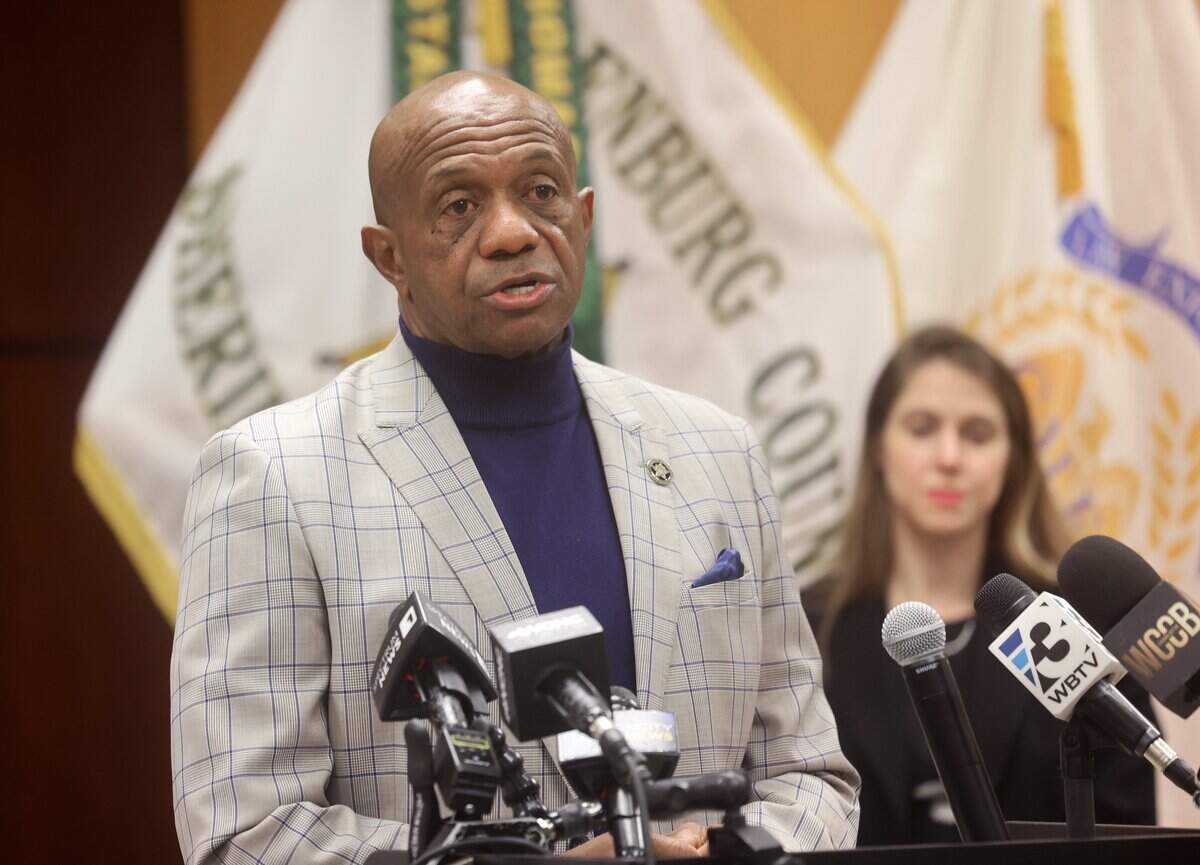
McFadden sees trouble ahead if federal agents ignore standard police procedures and fail to work in cooperation with local law enforcement.
“If they know violent offenders, if they want to seek out those people with us, we can be in agreement,” he said. “But just to do what you want to do has become a problem.”
ICE has communicated well with his office, McFadden said, but the CBP has not. That can lead to local law enforcement being caught between federal agents acting without notice and protecting local residents.
“Citizens are going to question local law enforcement on what will you do, how will you defend us? I think it’s going to come to that very soon,” McFadden said.
If people feel unprotected, they may take action on their own, McFadden said. The approach federal agents are taking “is very violent,” he said. “People are going to get upset. I’m worried about the community retaliating.”
Associate opinion editor Ned Barnett can be reached at 919-404-7583, or nbarnett@newsobserver.com