
Trump’s new attack on climate change will cost all of us more in Charlotte | Opinion
This month, the Trump Administration rescinded a scientific finding on climate change that underscored the harm caused to both individual health and planetary health by carbon emissions. The “endangerment finding” that was rescinded had served for nearly two decades as a guide to reducing harmful greenhouse gas emissions in the US.
In addition, the Trump Administration ordered the Pentagon to buy coal-powered electricity. The Pentagon is one of the largest consumers of electricity on the planet.
Now, the exhaust and emissions from vehicle tailpipes and power plants are no longer subject to federal regulations. The EPA announcement claims it will save taxpayers “over $1.3 trillion” but fails to say how many years it will take for those “savings” to be realized.
In reality, there are no savings, and this policy will cost all of us more.
Electricity produced from coal is the most expensive of all forms. The cost of new coal powered generation is $69 - $168 per megawatt hour (MWH). The cost of natural gas, also a fossil fuel contributing to our warming planet, is $45 - $108 per MWH for combined cycle but $110 - $228/MWH for peaker plants. The cost of wind or solar is markedly less, and has been going down over the last several years: Onshore wind costs $27 - $73 per MWH, while solar varies from $38 - $92 per MWH.
Consumers have already been seeing their utility bills rising, and this change will accelerate that. In addition, going forward, coal plants cost more to run in maintenance and fuel costs, whereas sunshine is still free. There are additional hazards with natural gas and coal, ranging from the cost of building miles of underground pipelines, subject to leaks and explosions, to the costs of storage tank leakage and the clean-up of coal ash spills. Over the last 20 years, there have been 10–12 fatalities and over 50 injuries per year from gas plants and pipelines. A major gas pipeline incident (mass leak, explosion, and/or fire) occurs every 11 days in the United States. I think we all know that solar panels do not explode.
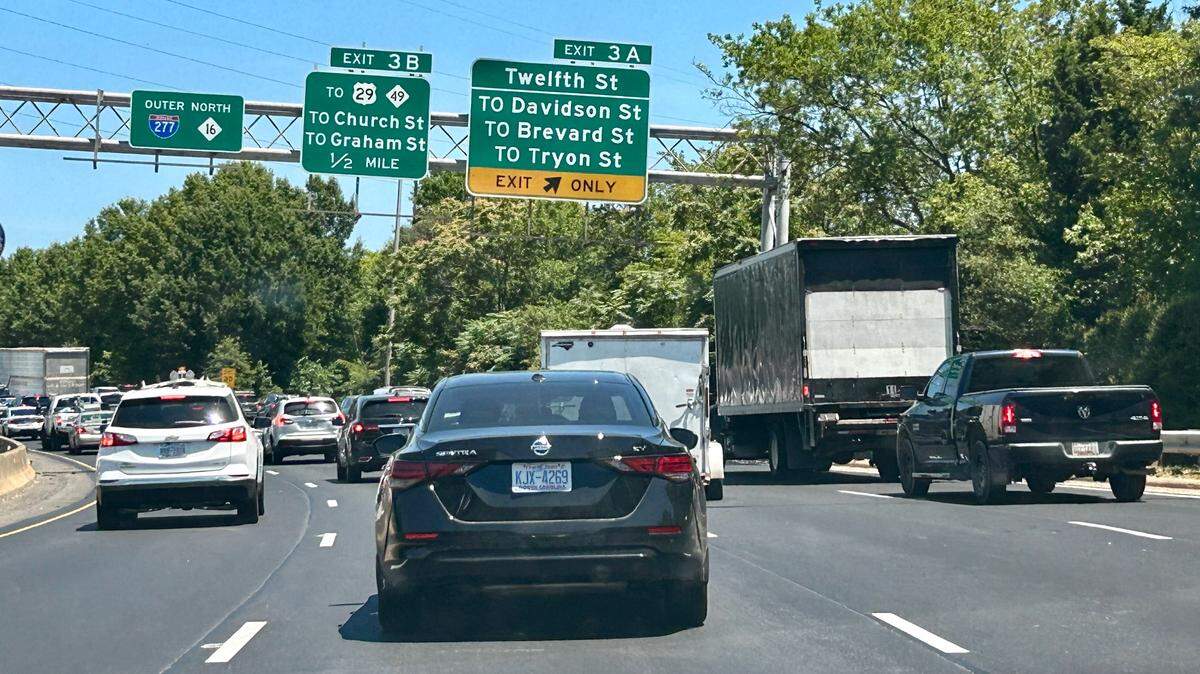
And there is more to the human cost of fossil fuels. A Centers for Disease Control and Prevention map of Charlotte that measures the incidence of chronic respiratory illnesses in the “Crescent,” the areas of town that lie along the emission-producing highways of I-77, I-85 and US-74, shows that COPD and asthma rates are 2-4 times higher than areas away from these major highways, such as the “Wedge.”
And coal emissions not only leave a fine black dust on your porch furniture, they do the same to your lungs, contributing to lung disease. Nationally, There have been 460,000 American deaths linked to coal pollution in the past 20 years. Coal PM2.5 (that is the size of the particulate matter in the air) is twice as deadly as other air pollution, according to research published in Science.
Finally, this new policy is not supporting US jobs. The coal industry is not a major employer. Currently, it employs 44,000 people nationally, whereas the clean energy sector employs 3.5 million.
The Trump Administration’s removal of the endangerment finding is a reckless and expensive decision, actually endangering all of us, with our health, our wallets, and our livelihoods. We hope that auto manufacturers and utility companies - who take years to develop new products – will see this as temporary, and continue to hold their emissions steady. Our children’s and our planet’s future depend on that long term view.
Jennifer Roberts, mayor of Charlotte from 2015 to 2017, is co-founder of the Charlotte Mecklenburg Climate Leaders.