
North Carolina lawmakers just found out nobody is safe | Opinion
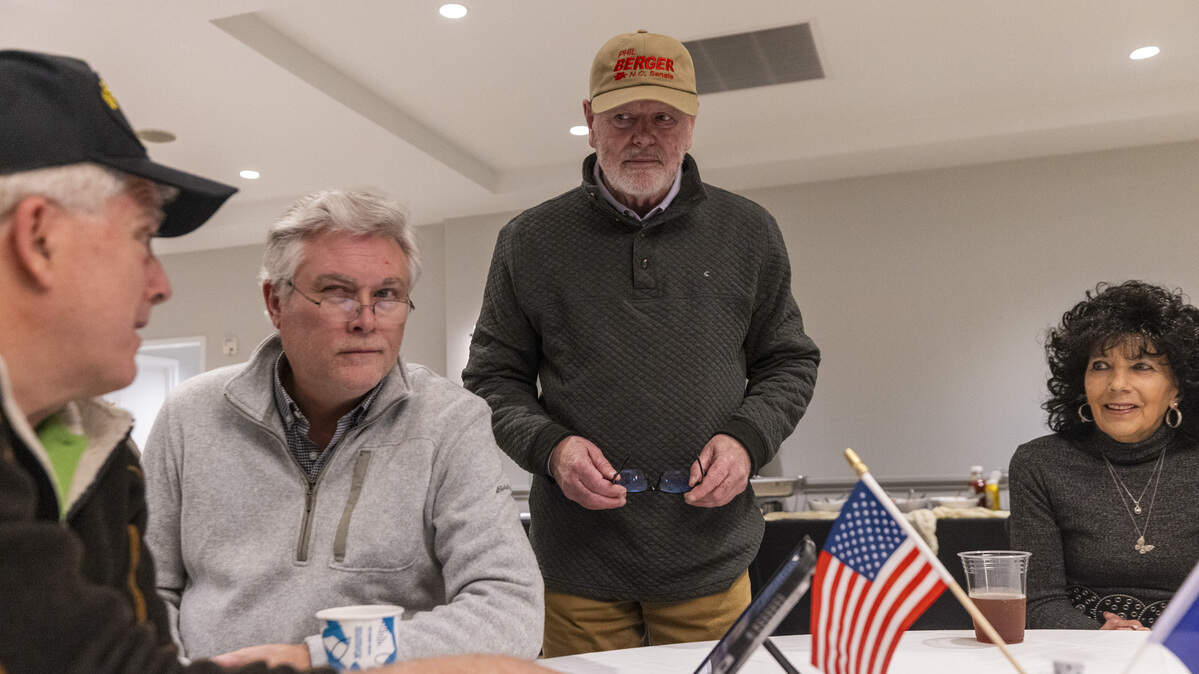
It will be days or weeks, perhaps even months, until we know the final outcome of the Republican primary between Senate President Pro Tem Phil Berger and Rockingham County Sheriff Sam Page.
With all precincts reporting, Page led Berger by two votes. There could still be hundreds of votes to count, depending on overseas and provisional ballots, and we’re almost certainly headed to a recount.
It’s an astonishing result, regardless of what happens next. But even with that up in the air, the 2026 primary election has already delivered a historic shakeup to the North Carolina legislature.
Eight General Assembly incumbents have lost their primaries so far, five Republicans and three Democrats. North Carolina hasn’t seen that many incumbent defeats since 2018, but that year came with an asterisk. It was the first election held under court-ordered maps that double-bunked several incumbents.
This year doesn’t come with that excuse. Same lines, and this many incumbents still fell. That hasn’t happened in North Carolina politics in more than a generation.
Republican incumbents who lost: Rep. Reece Pyrtle (Rockingham), Rep. Kelly Hastings (Cleveland, Gaston), Rep. Mark Pless (Haywood, Madison), Rep. Keith Kidwell (Beaufort), Sen. Chris Measmer (Cabarrus).
Democratic incumbents who lost: Rep. Shelly Willingham (Bertie, Edgecombe, Martin), Rep. Nasif Majeed (Mecklenburg), Rep. Carla Cunningham (Mecklenburg).
At the top of the ballot, the night went mostly as expected. Democratic former Gov. Roy Cooper and former RNC Chairman Michael Whatley cruised in their U.S. Senate primaries and will face each other in November, setting up one of the country’s marquee Senate races.
Incumbents largely survived in U.S. House primaries as well. The General Assembly was a different story.
Stein a big winner, and GOP rebellion
On the Democratic side, the results were a sign of Gov. Josh Stein’s power to shape his caucus. All three incumbents who lost had shown themselves willing to vote to override Stein’s vetoes, and Stein vocally endorsed Cunningham’s opponent, Charlotte pastor Rodney Sadler.
The state House will likely have fewer opportunities to override vetoes now, because fewer Democrats will want to be the next member catching heat from their left with the governor watching.
On the Republican side, the results don’t fit into one clean narrative.
Pyrtle represents Rockingham County and is closely allied with Berger. Rockingham voters didn’t just drift away from Berger. They voted against him, in big numbers. Pyrtle’s loss is hard to separate from that.
Kidwell, the head of the state’s relatively weak Freedom Caucus, has been a thorn in leadership’s side for years. GOP leaders backed his challenger, Darren Armstrong, a Beaufort County farmer, and voters agreed.
But the biggest takeaway is broader than any one race. The power of incumbency is at an all-time low. It still exists. It still brings donors, name recognition, and the default support of people who don’t follow politics closely. But in a lot of places, that advantage is small enough that a challenger with a real campaign can take the seat.
The clearest example is Rep. Kelly Hastings. The eight-term representative from Gaston County lost to 28-year-old pharmacist Caroline Eason of Lawndale. There weren’t obvious warning signs that Hastings was about to go down. Eason just ran the better campaign.
If you’re an incumbent in either party, that’s the kind of result that changes how you see your own district.
Voters are restless
The North Carolina electorate is in a particularly restless mood on both sides of the aisle. A poll from liberal activist group Change Research last month found only 17% of voters say the state is on the right track, while 56% say it’s on the wrong track. Only 10% think children growing up here will be better off than their parents; 56% think they’ll be worse off.
Younger voters are especially doubtful about the future, looking at housing prices and an entry-level job market that feels broken. Rural, conservative voters are more pessimistic about where the country has headed in the 21st century. Black voters are more satisfied with how things have gone, but less optimistic about what comes next.
That’s a combustible mix. Different groups are unhappy for different reasons, but they share the same baseline assumption that the big institutions don’t deserve much trust.
In that type of environment, incumbency can be a liability.
That’s the message of this primary. It’s not that voters have become ideological purists, or that one faction is suddenly ascendant. It’s something simpler.
In 2026, the old protections are thinning out. Incumbency isn’t a moat. For some voters, it’s motive.
Even if Berger survives the recount, the lesson is the same. In 2026, nobody is insulated anymore. Not even him.
Contributing columnist Andrew Dunn is the publisher of the Longleaf Politics newsletter, which offers thoughtful analysis of North Carolina politics and policy from a conservative perspective. He can be reached at andrew@longleafpol.com.